Living in a compact home often feels like a constant battle against clutter. You need storage, but you don’t have the floor space for bulky bookshelves or cabinets. Enter the magic of vertical design. Floating shelves are the ultimate solution for small-space living, offering a way to display your personality without sacrificing precious square footage. Here are 10 inspired floating shelf ideas to transform your walls into functional, stylish masterpieces that actually look good.
1. The Monochromatic Wall Gallery
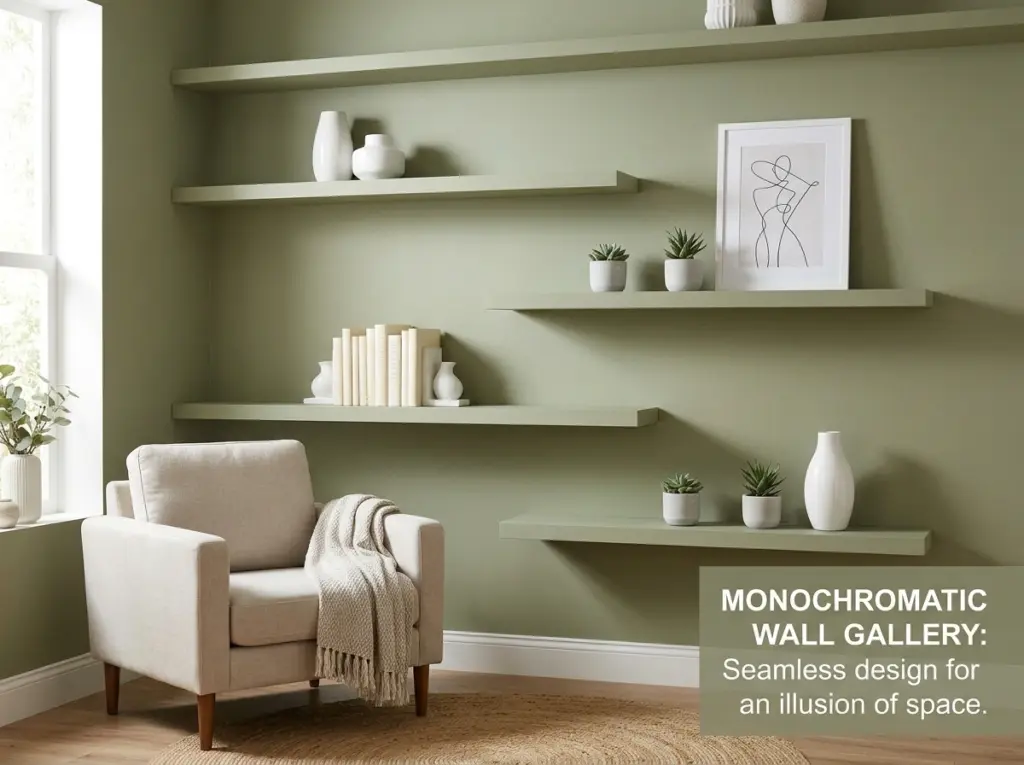
If you want to make a small room feel larger, visual continuity is your best friend. Install floating shelves in the exact same color as your wall to create a seamless, built-in effect.
This minimizes visual noise, making your decor appear as if it’s floating effortlessly against the backdrop. By keeping the shelves and the walls unified, you trick the eye into seeing more space than is actually there.
2. Niche Transformation
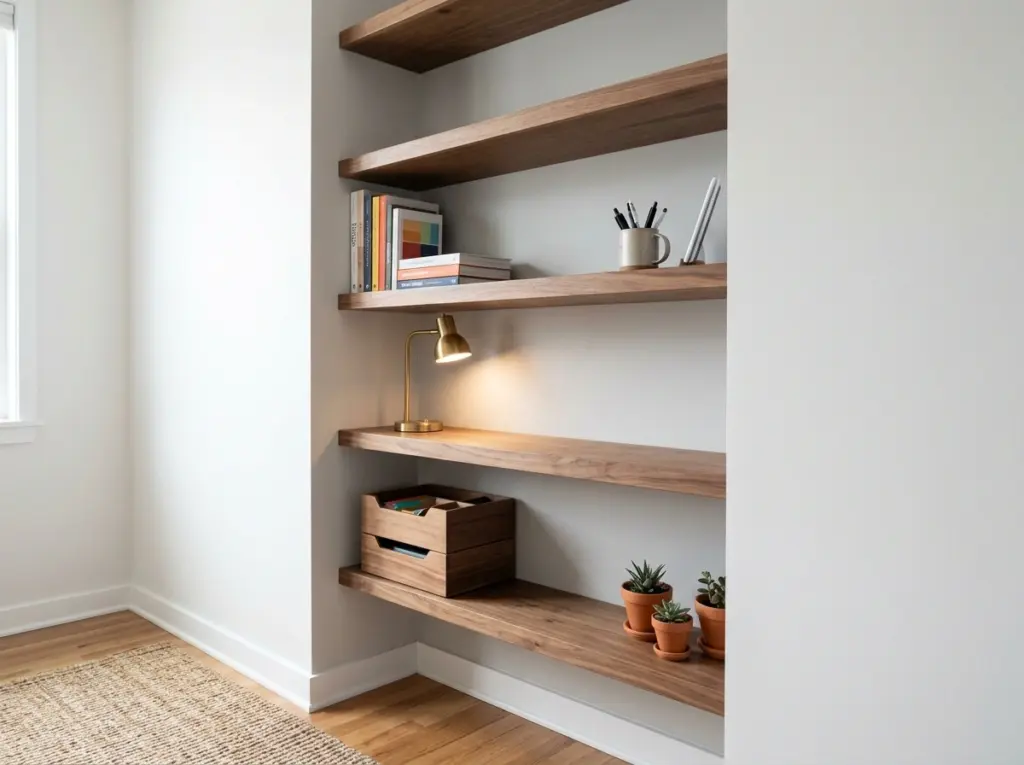
Do you have an awkward recessed area or a small gap between two walls? Don’t let that space go to waste. Custom-fit floating shelves into these tight spots to turn a dead zone into a high-utility storage area.
This approach is perfect for creating a hidden bar, a compact home office supply station, or even a mini library that doesn’t encroach on your floor plan.
3. The “Over-the-Door” Library
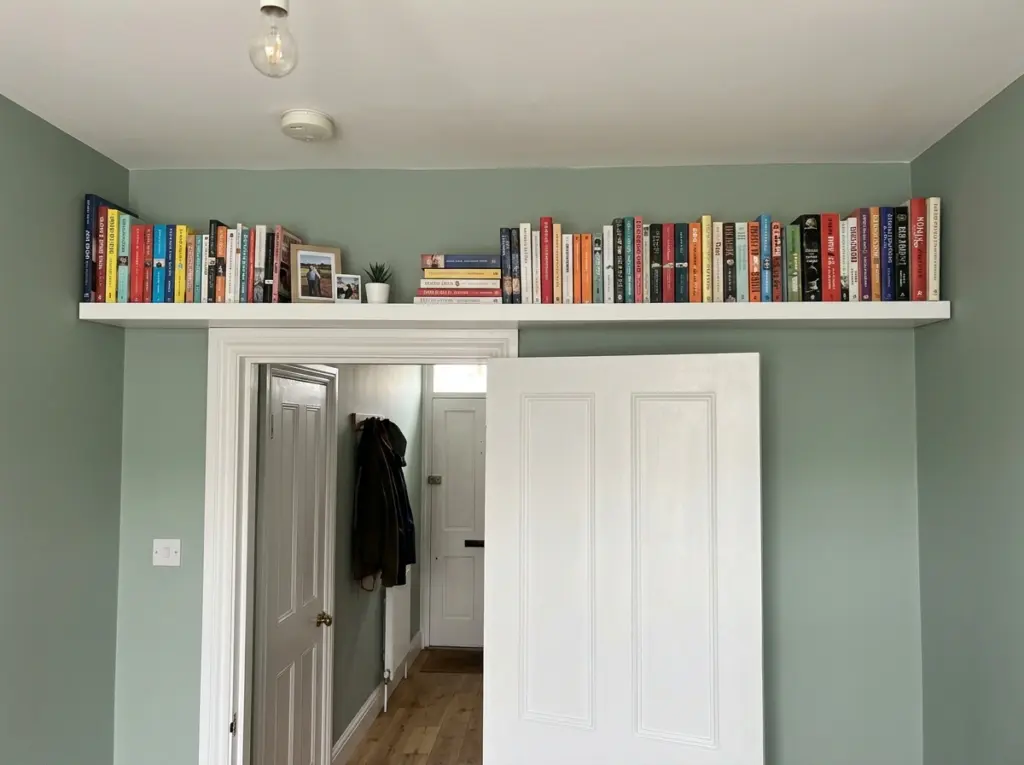
Most people forget about the top 12 inches of their wall space. Installing a single, long floating shelf above a doorway is an ingenious way to stash books or display collections
. Because this area is outside your typical line of sight, it feels incredibly tidy while effectively utilizing storage space that would otherwise be completely ignored.
4. Kitchen Utility Shelving
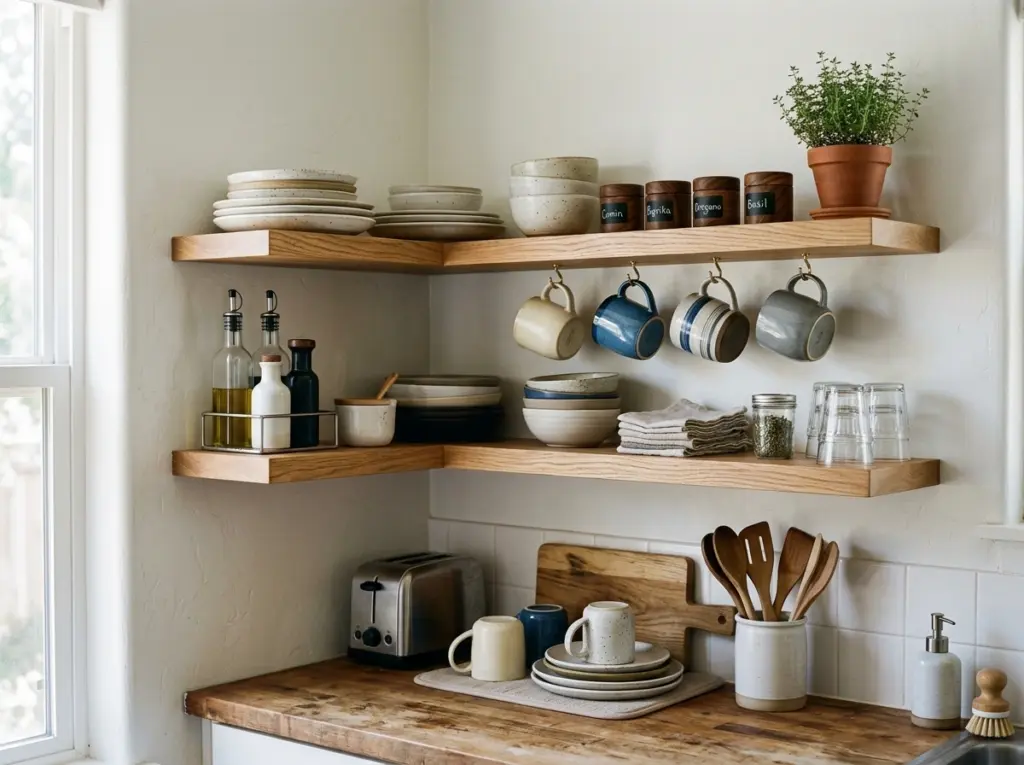
Counter space is often the first casualty of a small kitchen. Swap out heavy upper cabinets for sleek, open floating shelves to hold your daily essentials like mugs, spices, or frequently used plates.
This doesn’t just clear up your counters—it turns your utilitarian kitchen gear into a cohesive design element. Just keep it organized, as openness comes with the responsibility of looking neat.
5. The Minimalist Nightstand
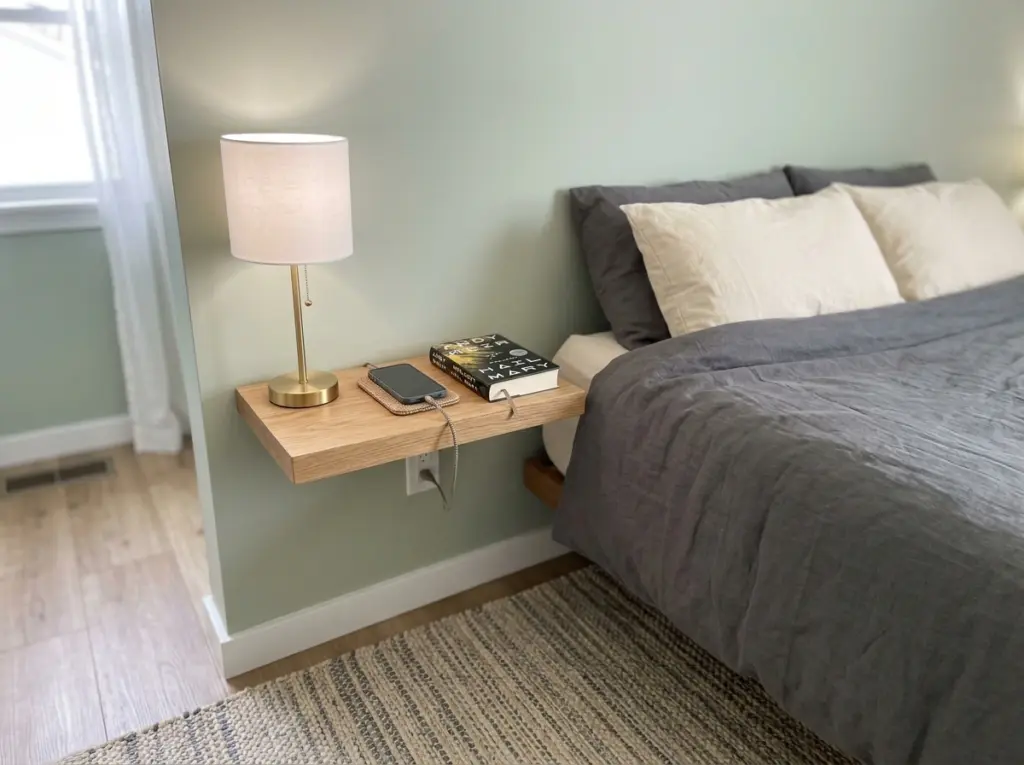
Small bedrooms often struggle to fit a traditional nightstand. A single, sturdy floating shelf mounted beside your bed provides exactly enough surface area for a lamp, a phone charger, and your current read.
By lifting your “nightstand” off the floor, you expose more carpet or rug area, which instantly makes the bedroom feel more airy and spacious.
6. Staggered Geometric Displays
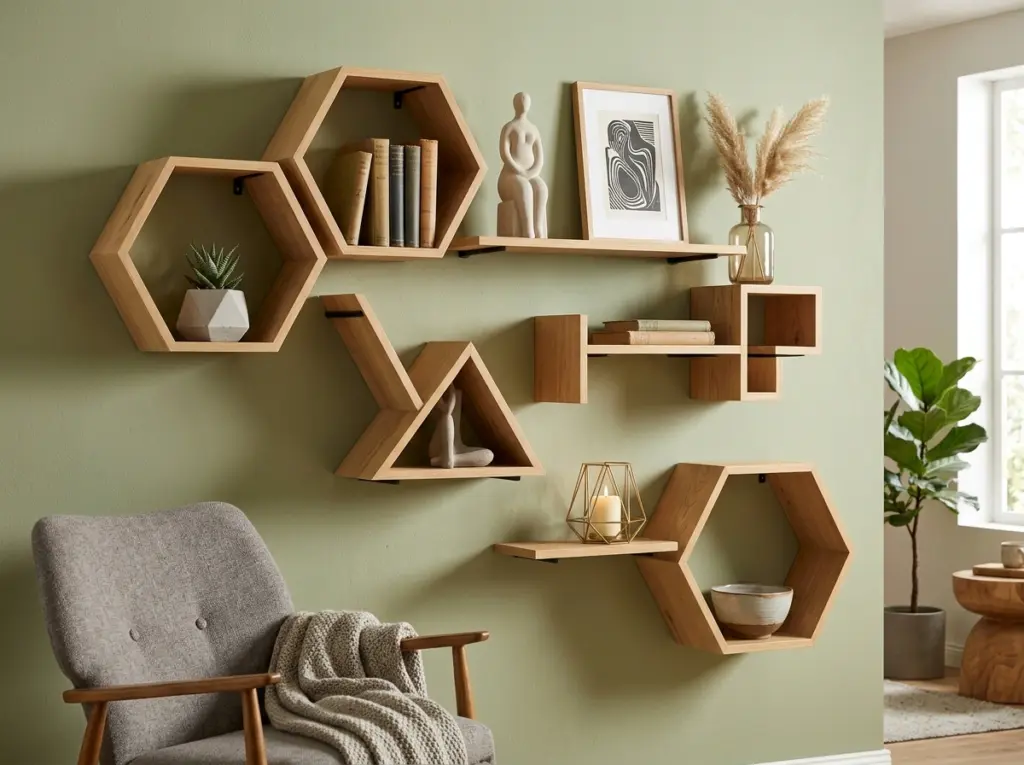
Who says shelves have to be lined up in a perfect row? For a more artistic and dynamic look, try staggering your floating shelves in a geometric pattern.
This breaks up the boxiness of a small room and allows you to curate items of different heights. It transforms a blank wall into a focal point rather than just a storage vessel.
7. Bathroom Vanity Expansion
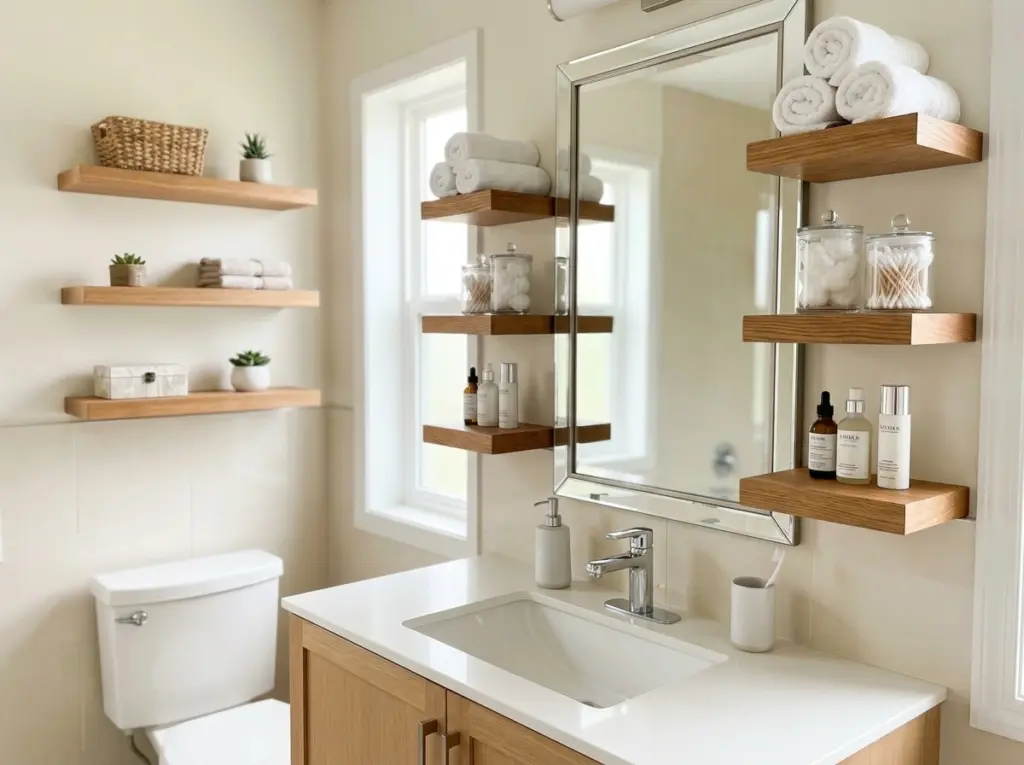
Bathrooms are notorious for being short on storage. Instead of crowding your sink area with countertop organizers, mount floating shelves directly above the toilet or beside the mirror.
These are perfect for holding rolled-up washcloths, apothecary jars, or essential skincare items. Opt for moisture-resistant wood or metal finishes to ensure they stand up to the bathroom’s humidity.
8. Corner-Wrapped Shelving
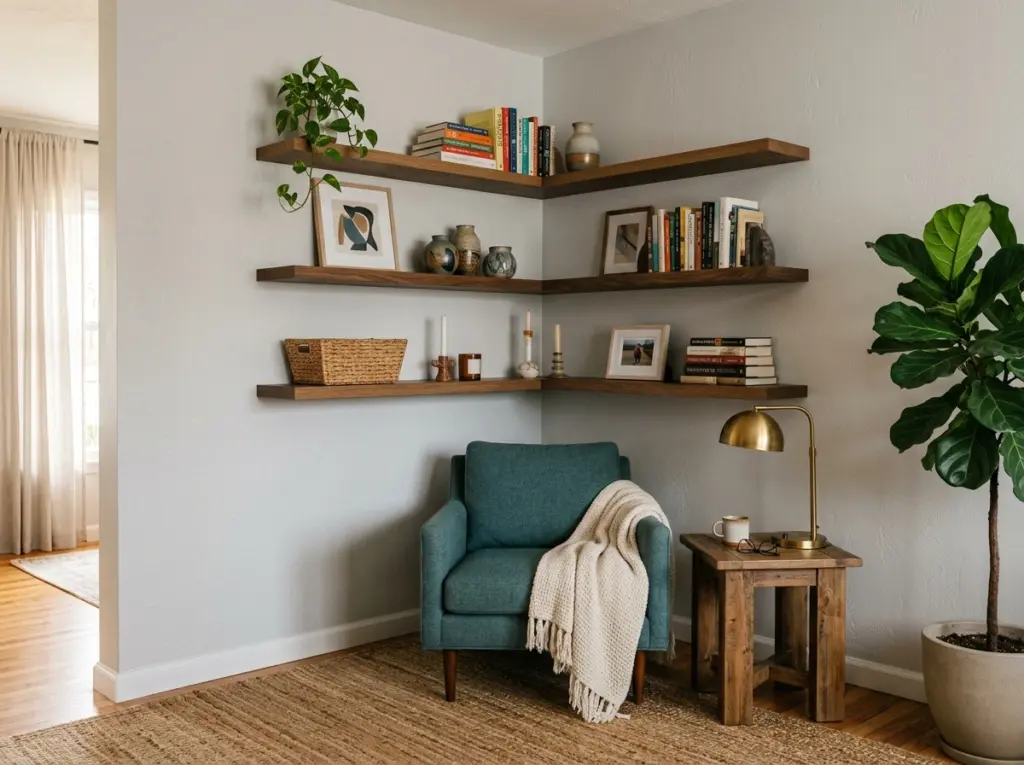
Corners are the most underutilized real estate in any home. By using corner-specific floating shelves, you can extend your display space into the meeting point of two walls.
This effectively wraps your decor around the room, which can actually help soften the sharp angles of a small space and create a more fluid, cohesive interior design aesthetic.
9. The Desk-Above-Desk Setup
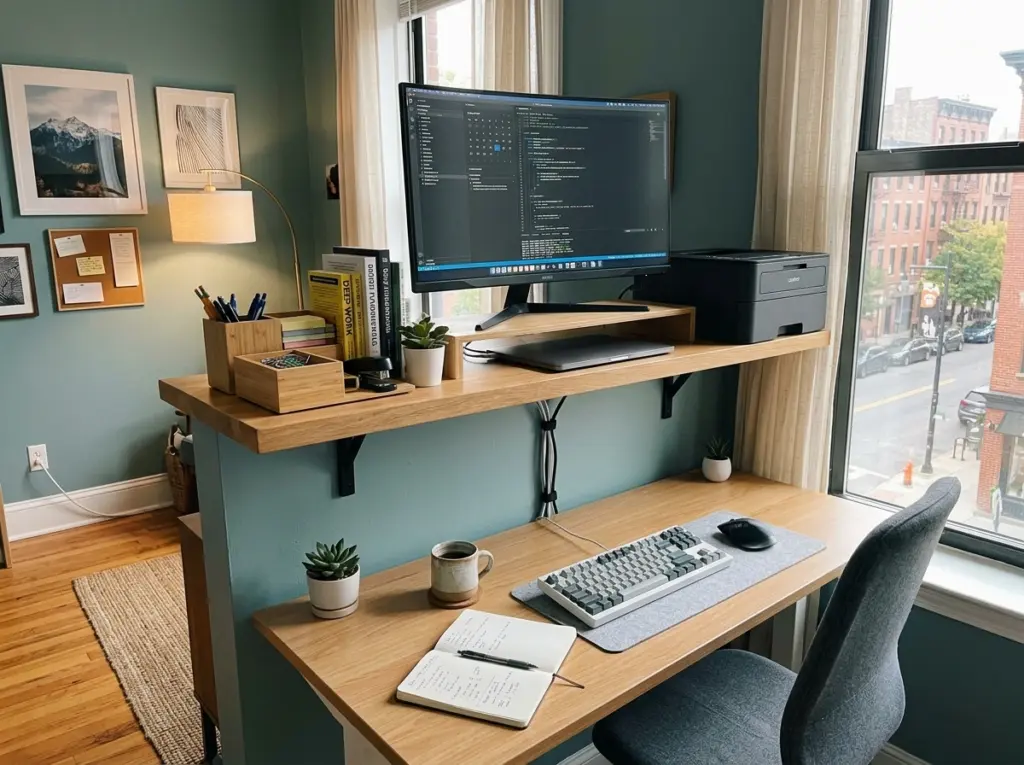
If you’re working from a small apartment, you probably know the pain of not having enough desk space. Install a wide floating shelf directly above your workspace to act as a secondary desk surface.
Use it for your monitor, extra office supplies, or a printer, keeping your primary workspace clear for actual writing and movement.
10. Accent Lighting Integration
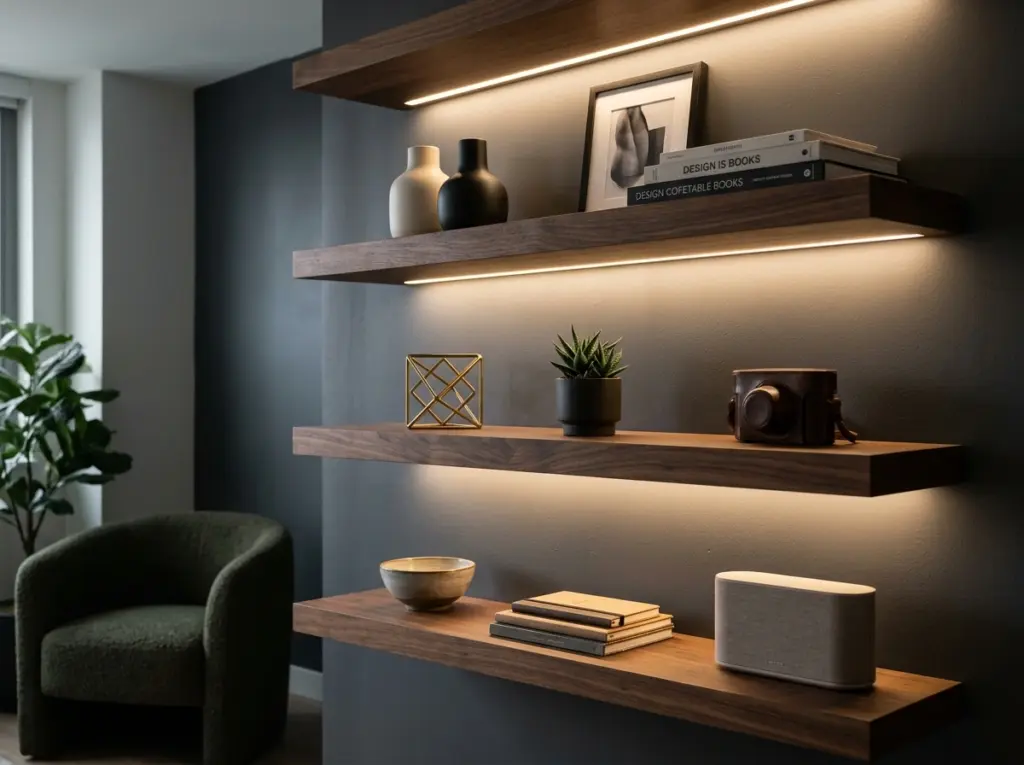
For a truly high-end, custom look, integrate LED strip lighting underneath your floating shelves. This adds a layer of depth and warmth that makes your small space feel incredibly sophisticated. The light casts a gentle glow on the items below, creating a “gallery” vibe that makes your floating shelves feel like they belong in a luxury showroom.
Tips for Installing Your Shelves Properly
Even the most beautiful shelf will look bad if it’s sagging or crooked. Before you start, always use a stud finder to ensure your shelves are anchored into solid wood. If you can’t hit a stud, use high-quality toggle bolts or wall anchors specifically rated for the weight of your shelf and its contents.
Always keep a level on hand throughout the installation process. Even a slight tilt becomes glaringly obvious once you start placing objects on the shelf. Don’t be afraid to take your time—a perfectly level installation is the single biggest factor in making a DIY project look like a professional upgrade.
Choosing the Right Style for Your Space
When browsing for floating shelves, think about the material and the “weight” they bring to the room. If your room is already very busy with furniture, opt for thinner, minimalist metal or glass shelves. If your space feels a bit cold or sterile, reach for warm wood tones like walnut or light oak to add texture and personality.
Remember that open storage requires a bit of editing. If you’re storing things that aren’t inherently “pretty”—like stacks of random papers or mismatched plastic containers—use attractive baskets or boxes on your shelves. This gives you the accessibility of open storage while maintaining a clean, curated look that makes your small home feel intentional rather than cluttered.
Final Thoughts on Vertical Design
Floating shelves are more than just a place to put things; they are a strategic tool for small-space living. By looking up, you can unlock potential that you never knew you had, turning bare walls into valuable assets. Whether you go for a single minimalist nightstand or a full-blown gallery wall, the key is to keep things balanced and purposeful.
Now that you’ve got these ideas, take a walk around your home. Look at those empty walls and ask yourself what could be elevated. Sometimes, the difference between a cramped apartment and a cozy sanctuary is just a few well-placed shelves. Ready to grab the drill?