Every home has one: that stubborn, awkward architectural corner or recessed wall niche that defies standard furniture. Instead of hiding it behind an oversized floor plant, you can transform it into a stunning design statement using sculptural corner shelving.
By blending high-end organic modern aesthetics with clever structural engineering, you can turn dead space into a breathtaking focal point that looks less like added storage and more like fine art.
The Architecture of the Awkward Corner
Standard floating shelves often look like an afterthought when crammed into irregular junctions. They stop abruptly, leaving harsh lines that visually shrink a room. Truly sophisticated design requires bespoke thinking, where shelves wrap around intersecting walls or nestle deeply into recessed alcoves.
When you treat a nook as an architectural canvas, the storage elements become part of the home’s skeletal frame. The goal is to design an installation that celebrates negative space, balances heavy materials with airy cutouts, and respects the natural light of your room.
1. The Organic Flow: Curved Plaster & White Oak Cascades
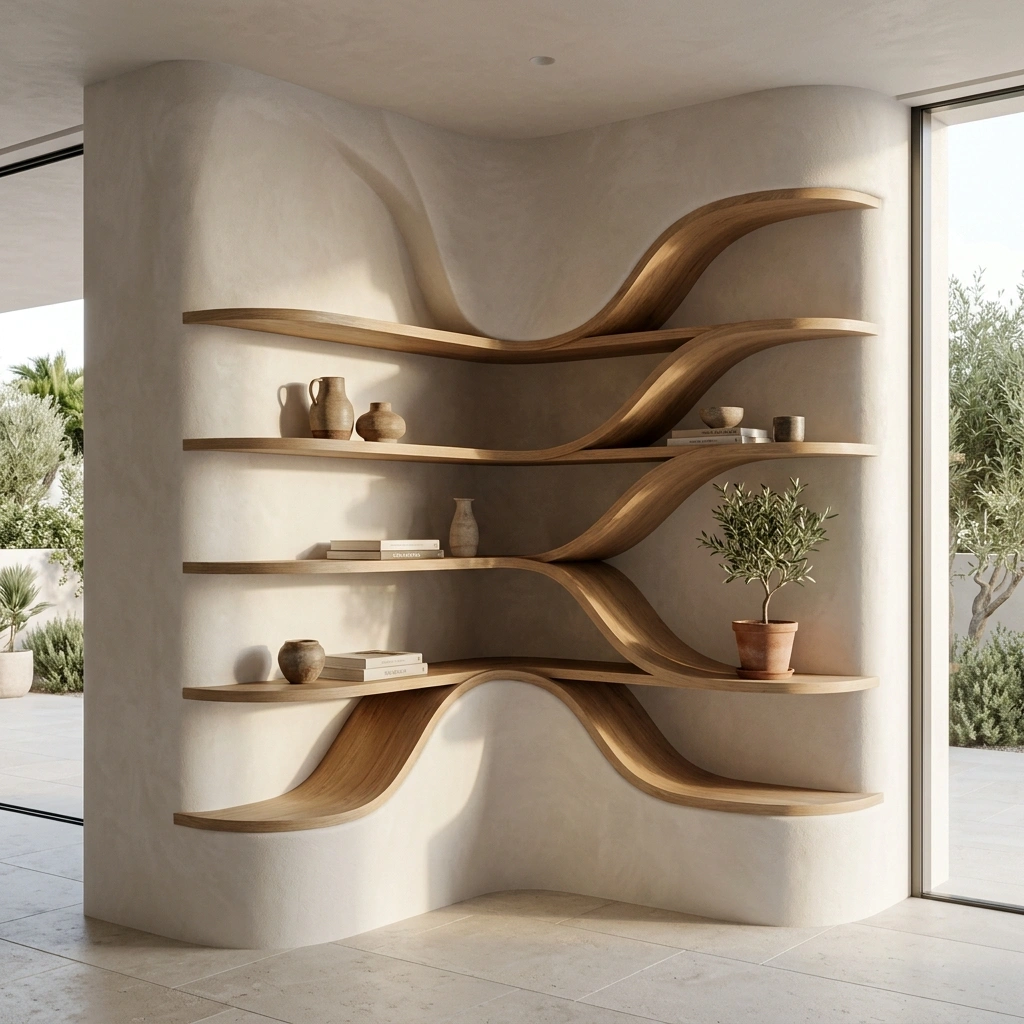
There is something incredibly soothing about watching hard architecture soften up. This concept relies on custom-built, sweeping asymmetrical curves that seamlessly transition from one wall plane to the next.
By using a soft textured plaster finish on the support structures and pairing it with natural white oak, the entire unit feels molded straight out of the wall.
To make this look truly premium, the edges of the timber shelves should follow the organic undulations of the plaster.
It creates a fluid, continuous wave effect that catches the morning light beautifully, mimicking the serene luxury of a contemporary Mediterranean villa.
2. The Gallery Alcove: Recessed Walnut Wall Niches
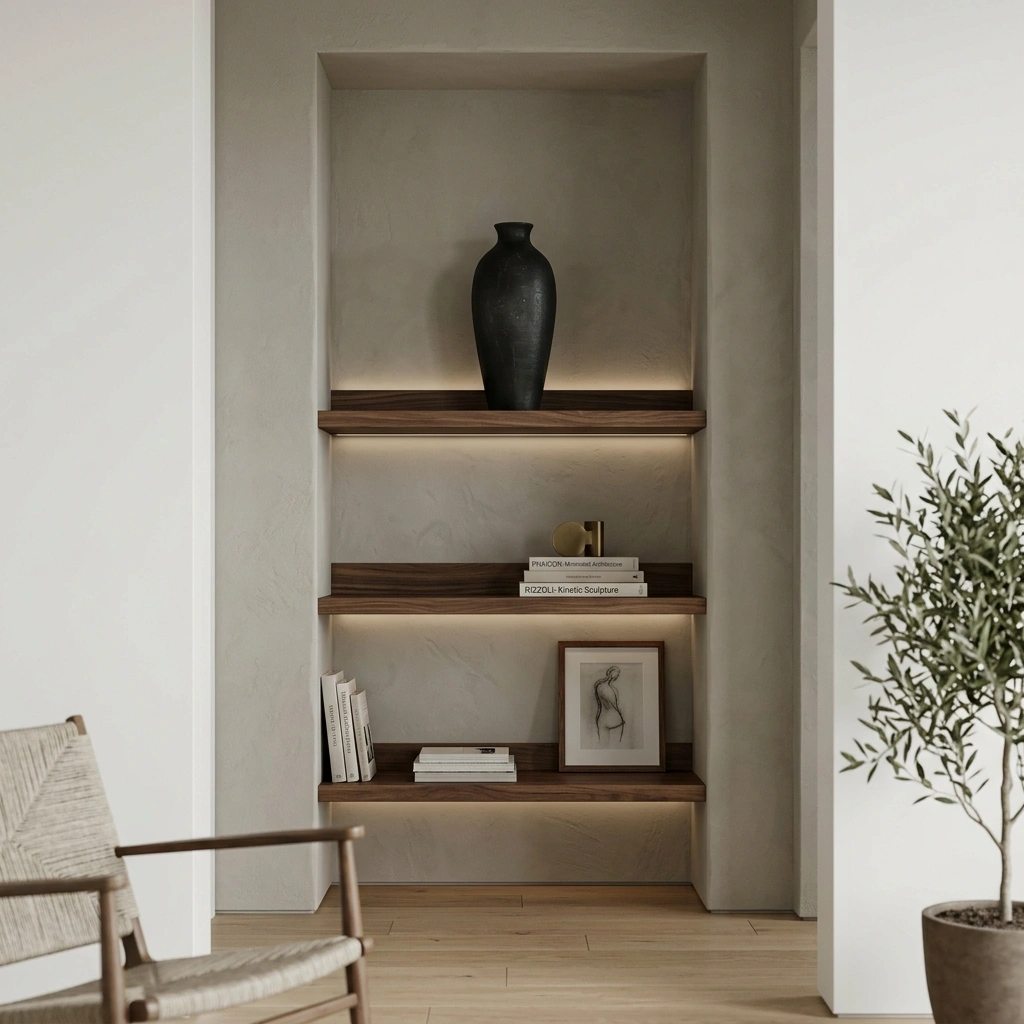
If your home features deep, recessed wall niches, don’t just hang a flat frame inside them. Instead, line the interior walls with a tactile, matte limewash or greige micro-cement, and introduce rich, dark natural walnut shelves.
The deeper tones of walnut add instant historical weight and editorial contrast against pale walls.
Instead of stacking them evenly, vary the vertical spacing dramatically.
Leave a massive clearance gap on one level for a tall, statement artisan ceramic vase, while keeping narrower slots below for stacked designer art books. It immediately gives the corner a curated, museum-like atmosphere.
3. The Geometric Matrix: Interconnected Architectural Shapes
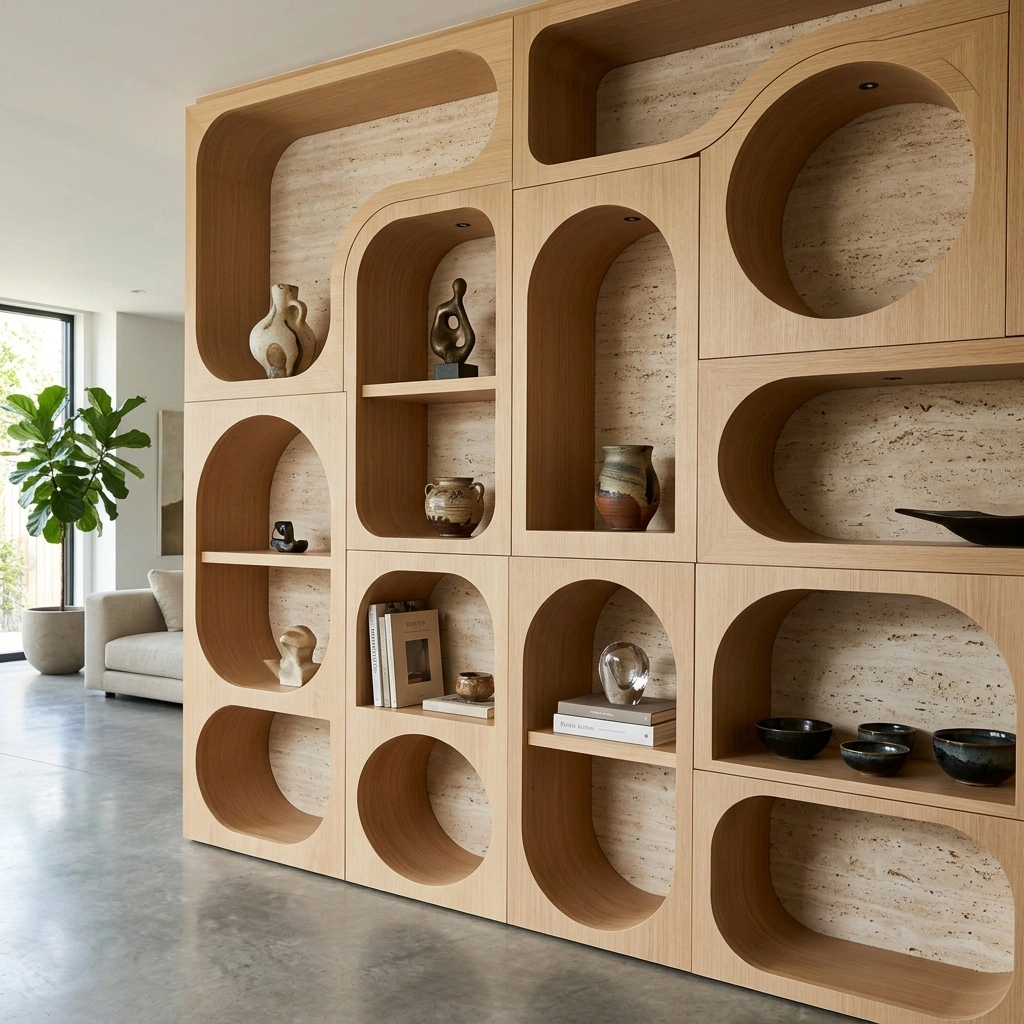
For a bolder, contemporary statement, look to a custom geometric shelving system that plays with distinct silhouettes.
This style layers rounded rectangles, arches, and precise circular cutouts into a singular, interlocking feature wall. It acts as a masterclass in modern European craftsmanship.
Using a combination of blonde timbers and natural stone inserts like travertine, this setup functions as a functional sculpture. The varied geometric openings mean that every object you place inside is framed like a miniature gallery exhibit, turning everyday items into high art.
4. The Industrial Edge: Angular Matte Black Metal Frameworks
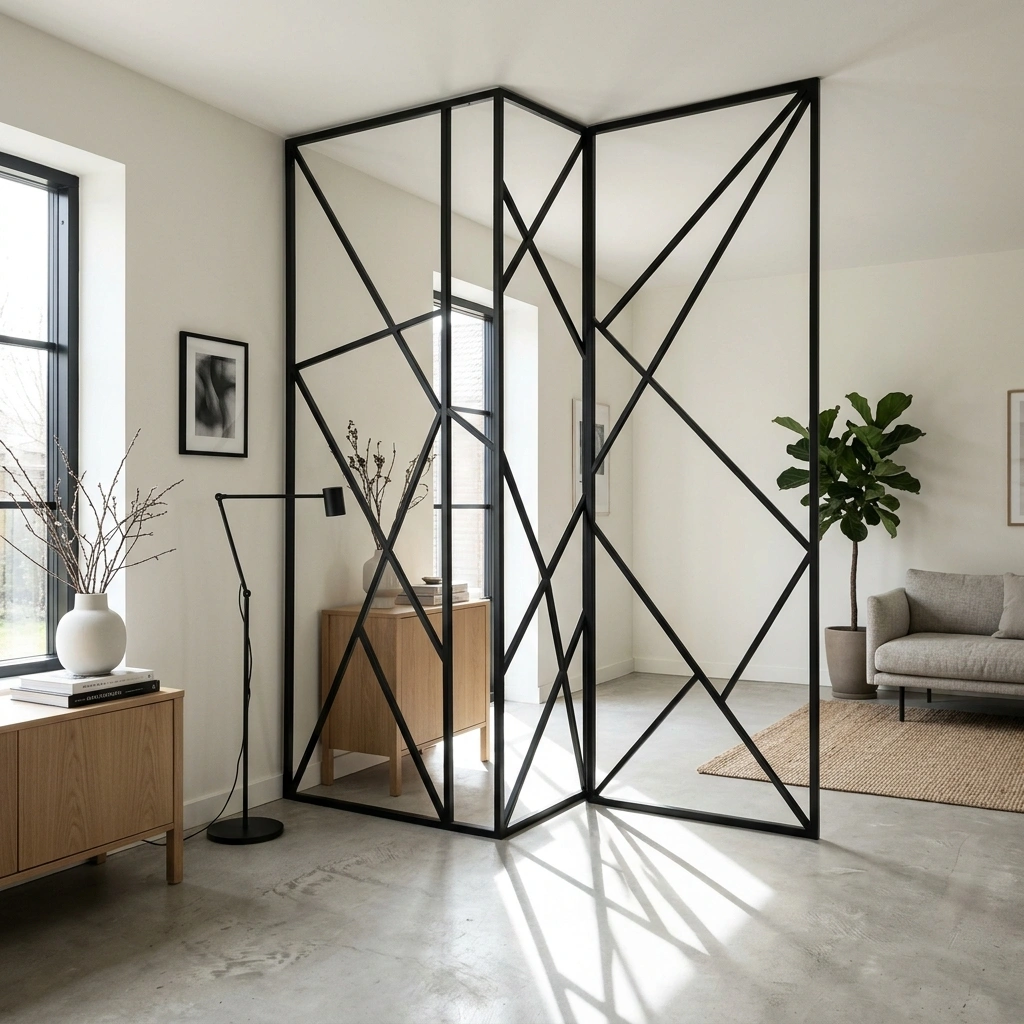
Minimalist design doesn’t always have to be soft and organic; sometimes it needs the structural grounding of a sharp, graphic element.
An angular geometric design built from a slim, matte black powder-coated steel frame can effortlessly punctuate a Scandinavian-style space.
The key here is the thinness of the metal profile paired with unexpected diagonals. The intersecting black lines map out an asymmetrical web across the corner, creating dynamic shadows on the polished concrete or light hardwood floors below. It is crisp, confident, and incredibly architectural.
5. The Floating Triangle: Minimalist Scandinavian Wood Junctions
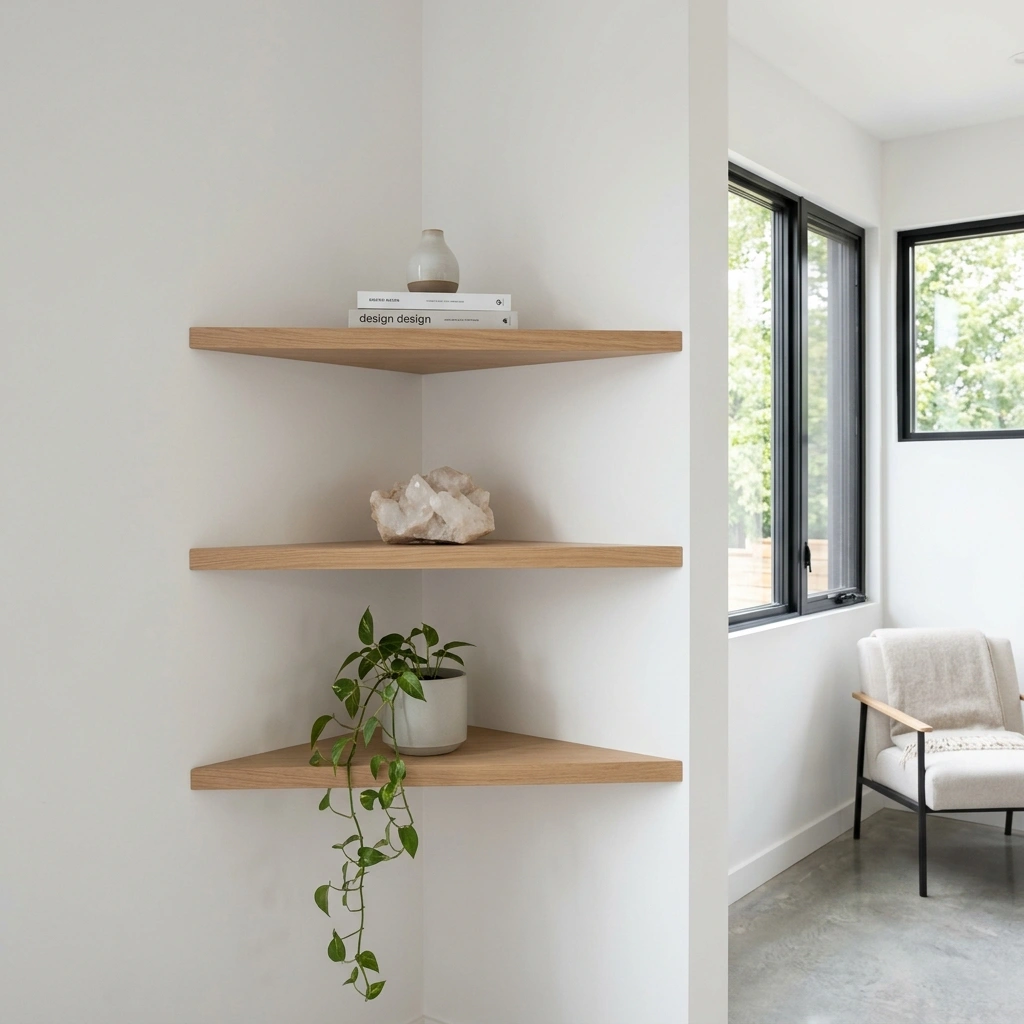
If you are working with a tight space or prefer strict minimalism, a series of floating triangular shelves designed precisely for your room’s junction is unmatched. Constructed from flawless light oak, these platforms strip away all visual clutter by utilizing completely hidden wall supports.
The trick to maximizing this look is wrapping the shelf tightly around the corner or letting it sit directly beneath a corner window arrangement. It honors the clean lines of minimalist architecture while providing just enough surface area to showcase a singular trailing plant or a solitary natural stone accessory.
6. The Cantilevered Travertine: Raw Stone Inserts & Hidden Supports
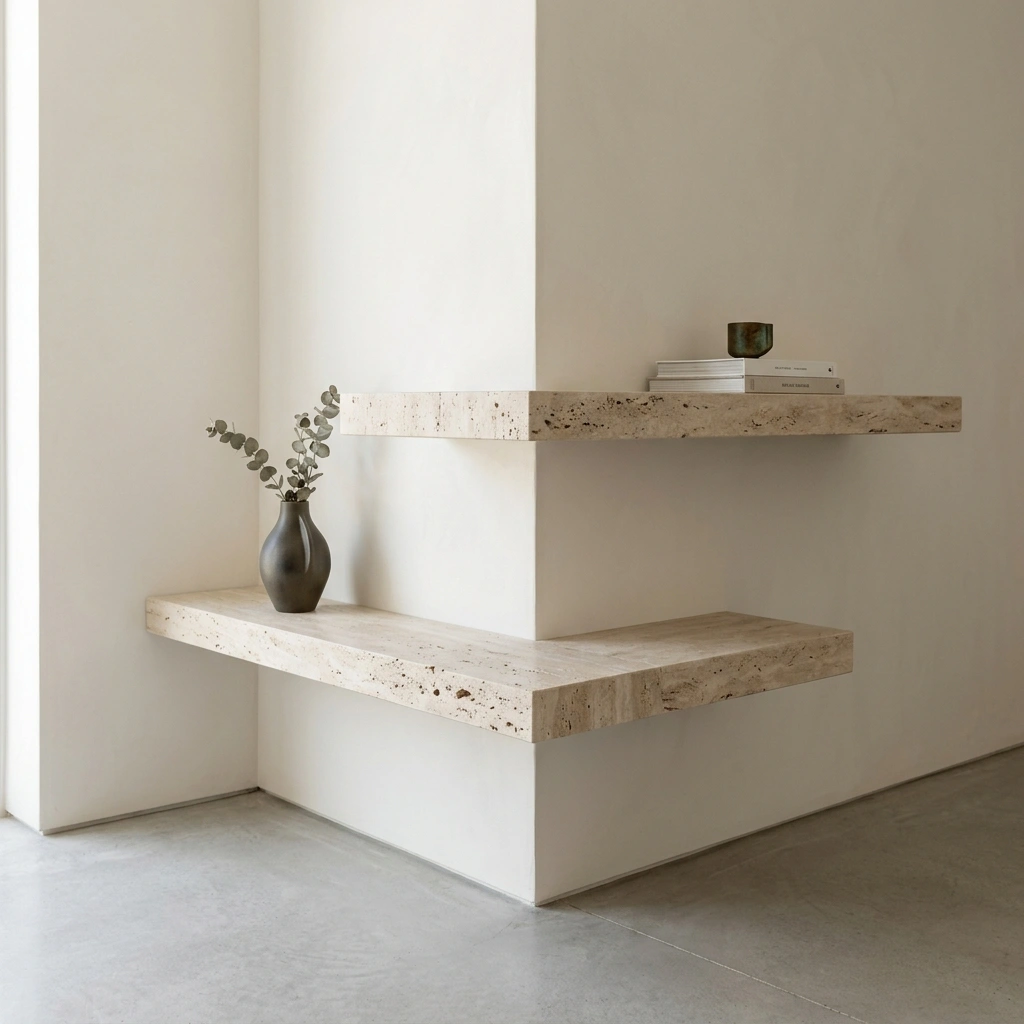
For the ultimate expression of luxury residential design, look no further than cantilevered stone shelving. Thick slabs of unfilled honed travertine appear to defy gravity, jutting straight out of a seamless plaster wall without any visible brackets or columns.
The raw, pitted texture of the stone provides a stunning contrast against smooth, pristine walls. Because stone is visually heavy, keeping the layout sparse and asymmetrical ensures the corner remains airy, light, and effortlessly sophisticated.
Lighting and Material Curation: The Custom Built-In Secret
The line between ordinary shelving and an award-winning interior design installation comes down to two critical factors: hidden illumination and tactile material choices.
Concealed LED Lighting Hacks
You should never see the source of your light—only its glowing effect. Integrating warm LED strip lighting into recessed channels directly underneath the front or back lips of floating shelves changes everything.
- The Glow Effect: It washes the underlying wall in ambient illumination, eliminating dark corners.
- Dimensional Shadows: It casts dramatic, soft architectural shadows beneath your décor, emphasizing the sculptural curves of the structure.
- Warmth Over Brightness: Opt for a warm color temperature (between 2400K and 2700K) to keep the vibe calm, sophisticated, and deeply relaxing.
Balancing Material Textures
A successful built-in nook relies on a rich, multi-layered material palette. Avoid using just one flat finish. Instead, mix your primary timber (like white oak or walnut) with contrasting tactile surfaces. Consider backing your shelving unit with a subtle, textured limewash or a matte plaster finish. Introduce small powder-coated steel accents or stone inserts to break up the wood grain and add premium depth.
Expert Styling Rules for Sculptural Shelves
Once your dream sculptural corner shelving is installed, the final step is styling it with the restraint of an editorial prop stylist. The biggest mistake you can make is over-decorating. To achieve an aesthetic worthy of publication in Architectural Digest or Dezeen, follow these foundational styling principles:
- Celebrate Negative Space: Leave at least one-third of your shelving entirely empty. This gives the architecture room to breathe and signals to the eye that the shelving itself is an art piece, not a storage dumping ground.
- Mix Organic and Structured Shapes: Pair a rigid, linear stack of contemporary art books with a highly textured, hand-knotted ceramic bowl or a piece of preserved driftwood. The tension between organic forms and straight lines creates visual interest.
- Vary Your Scale and Heights: Do not line up objects of similar sizes. Place a singular, tall indoor olive tree or a cascading trailing pothos plant on a lower, spacious platform, and offset it with tiny, clustered natural stone accessories on a higher shelf.
- Keep the Palette Cohesive: Stick to a calm, sophisticated neutral color wheel. Focus on tones of ivory, warm beige, sand, taupe, charcoal, and natural timber to ensure the entire corner feels unified and timeless.
By treating your home’s awkward corners as an opportunity for architectural expression rather than a spatial problem, you can craft an unforgettable interior. Whether you opt for sweeping plaster curves or sharp, minimalist steel matrices, a thoughtful sculptural shelf will instantly anchor your room with quiet, elevated luxury.