Open shelves in the kitchen: a glorious opportunity to display beautiful pottery, or a terrifying commitment to keeping every mug matching? If you’re like me, you probably alternate between those two thoughts daily. My shelves used to be a chaos zone until I figured out a few simple decoration “rules”—and by rules, I mean guidelines I mostly follow when I’m not just shoving a random cereal box up there. Let’s make yours look great, too.
1. Master the Neutral Base Layer
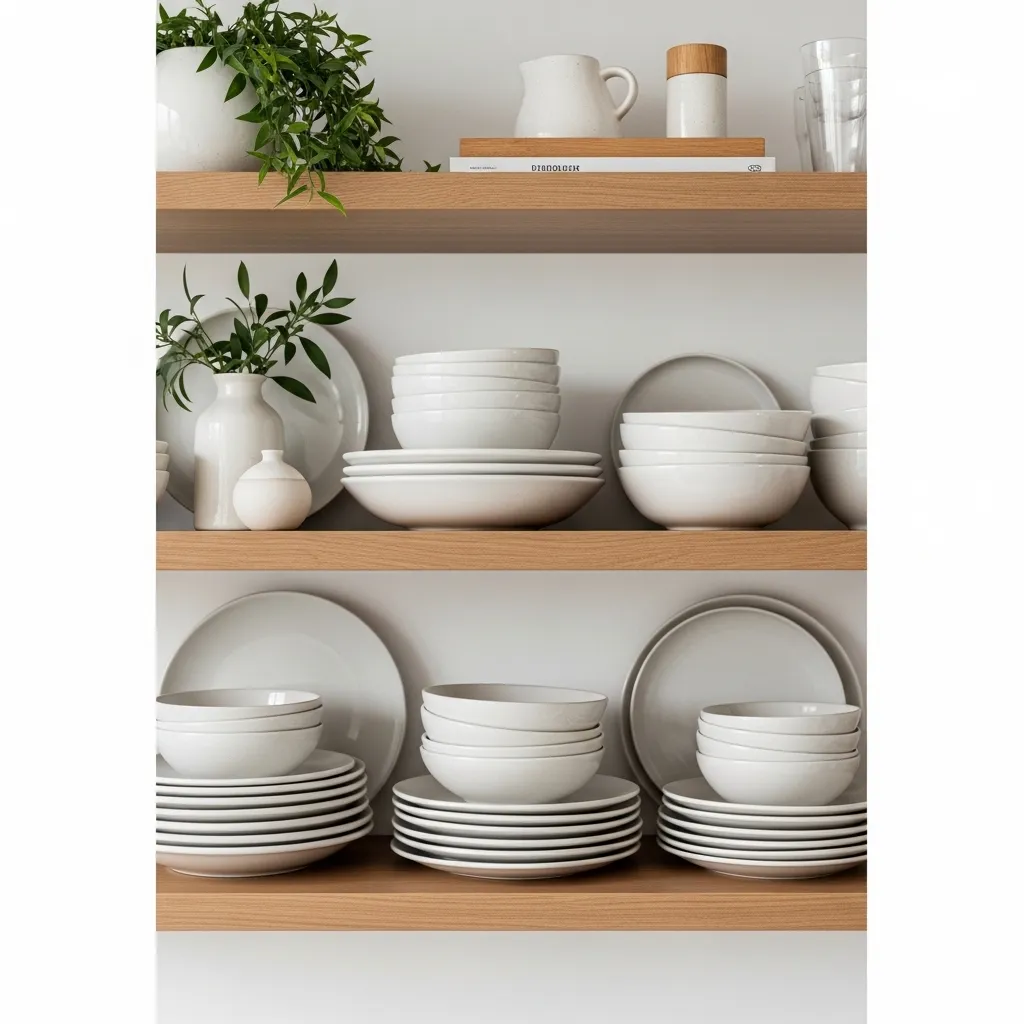
First things first, you need a solid foundation.
If every single item on your shelf is a “look at me” piece, nothing stands out, and it just looks messy. Trust me, I learned that the hard way trying to show off all my colorful teacups at once.
- Start with a base of neutral-colored items, like plain white or cream ceramic plates.
- Stack these larger, basic items to fill space and provide a calming visual break.
- This neutral background makes your actual decor pieces pop way more effectively.
Are neutrals boring? Sometimes, maybe, but a few well-placed white plates create a sophisticated backdrop that anchors the entire display.
2. Introduce Natural Greenery
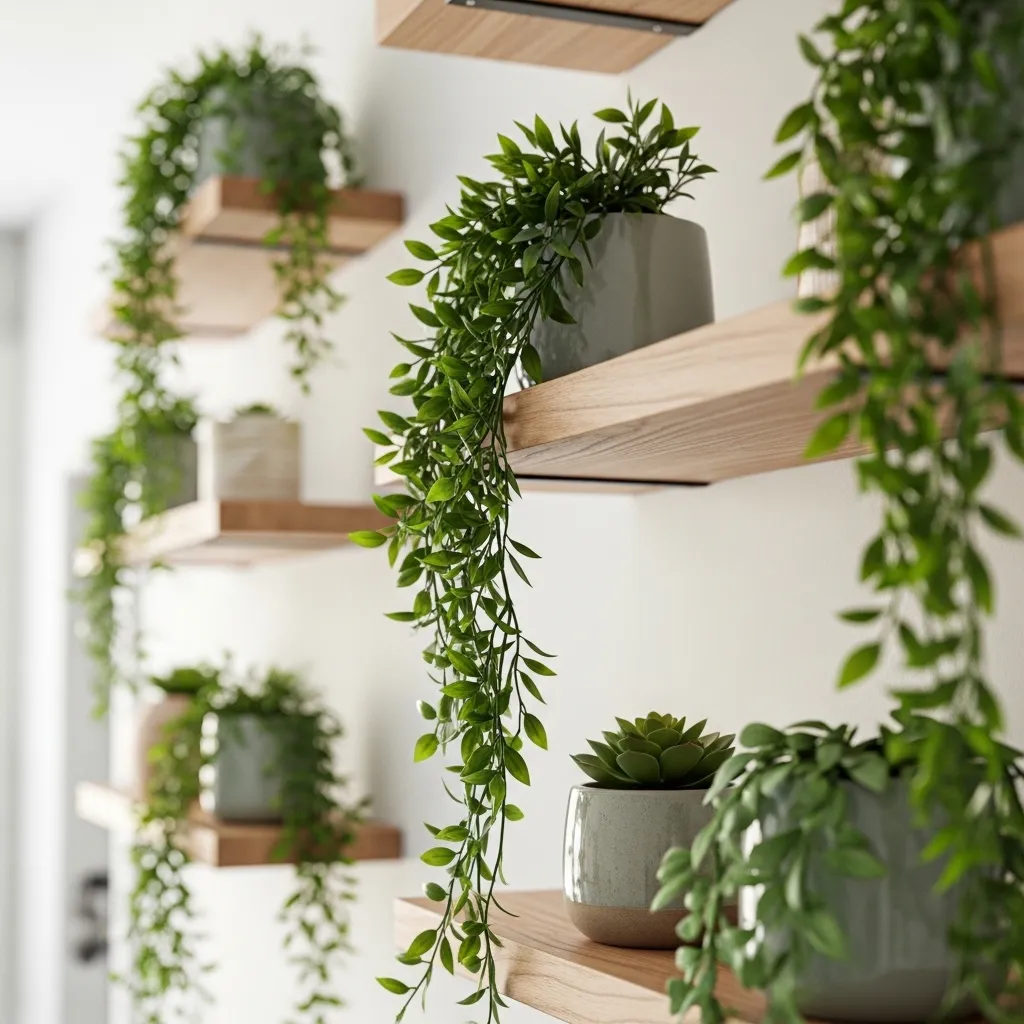
Look, unless you want your shelves to look like a dusty antique shop—which, okay, some people dig, but usually isn’t the goal—you need something alive up there.
It adds movement, color, and just feels… I don’t know, cleaner? FYI, this works just as well with fake plants if you, like me, occasionally forget to water things. 🙂
- Incorporate different styles of greenery, from a cascading trailing plant (like a pothos) to a small, structured succulent.
- Natural colors—vibrant greens, muted sages—add an essential, fresh dimension to any color palette.
- Even realistic artificial plants provide the same visual softness and organic feel without the high maintenance.
3. Play with Height and Layering
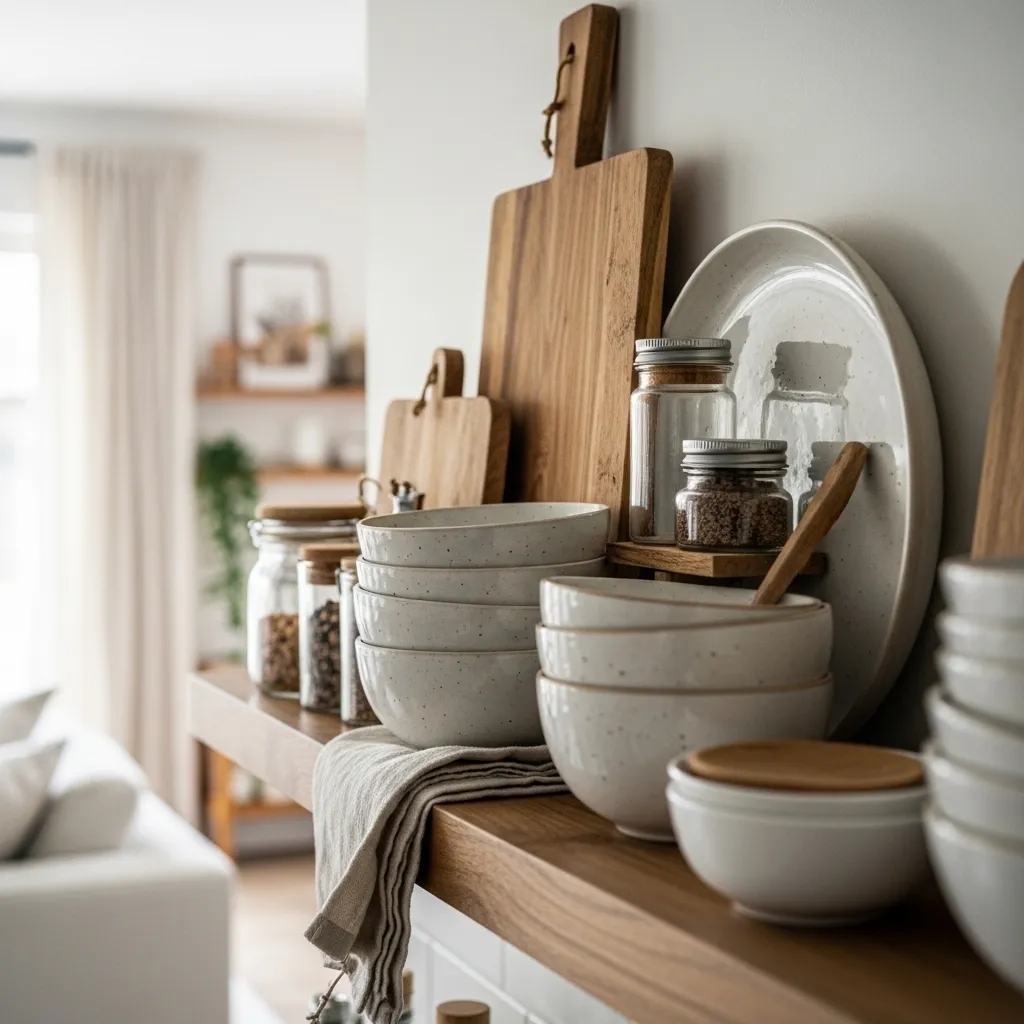
This is the golden rule of styling anything, ever. Do not, I repeat, do not just line everything up like little glass soldiers. It’s flat and uninteresting. You have to layer items in front of each other and create different “high” and “low” zones across the shelf.
- Prop a larger cutting board or platter against the back wall to create an instant background layer.
- Set smaller spice jars or decorative objects on top of a stacked set of bowls to add immediate height variations.
- Stagger objects horizontally, avoiding straight lines; place some items closer to the front edge and others further back.
Layering transforms a boring row of dishes into a curated collection that invites the eye to wander.
4. Curate Your Color Palette
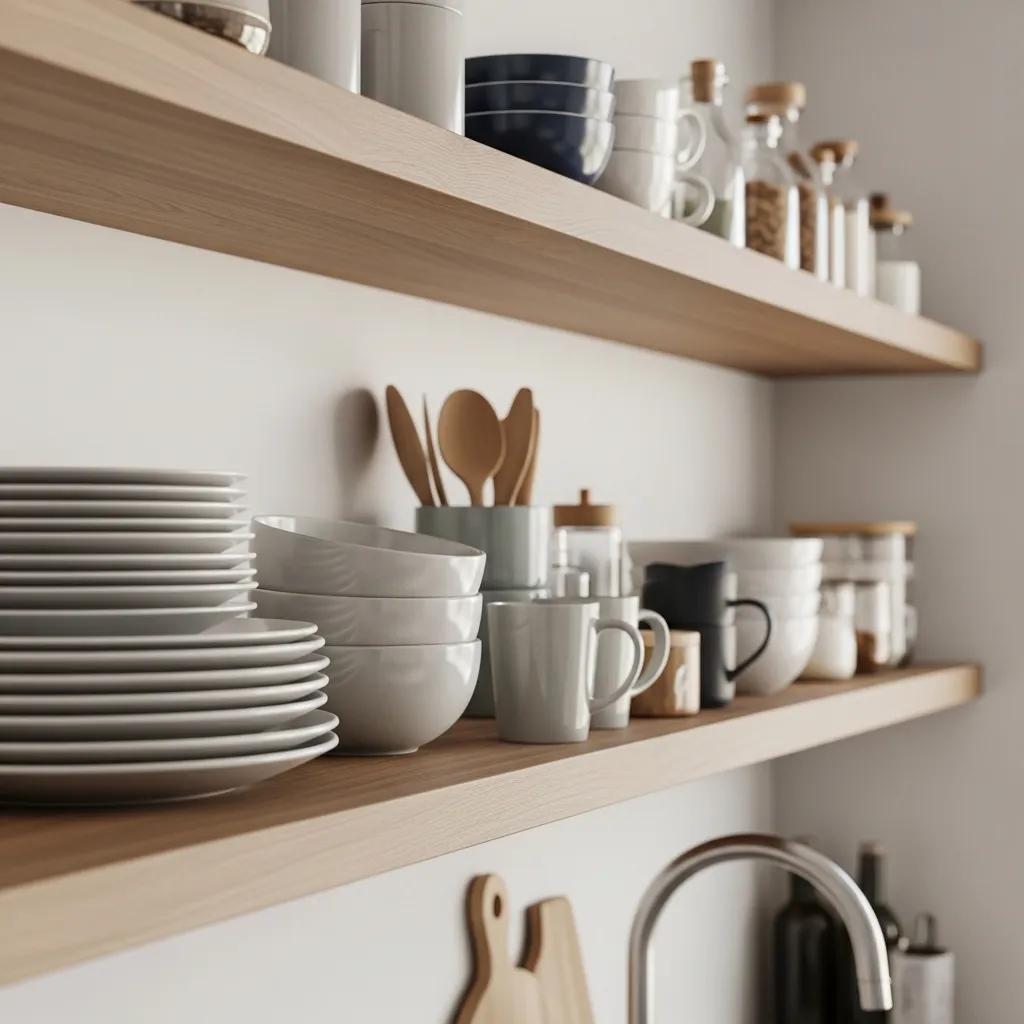
I’m all for self-expression, but a rainbow explosion on your kitchen shelves rarely looks good outside of a skittles factory. A successful shelf display usually picks 2 or 3 coordinating colors and sticks to them. This keeps things cohesive and, frankly, much less stressful to look at.
- Choose your colors based on your kitchen’s existing elements, like your cabinet color, countertop material, or wall paint.
- Select one dominant color (perhaps your plates), one accent color (a complementary glaze), and maybe a metallic or wood tone.
- Distribute these colors evenly across your shelves to create a balanced, intentional look, rather than a single, clumpy spot of color.
5. Mix Practical and Decorative Items
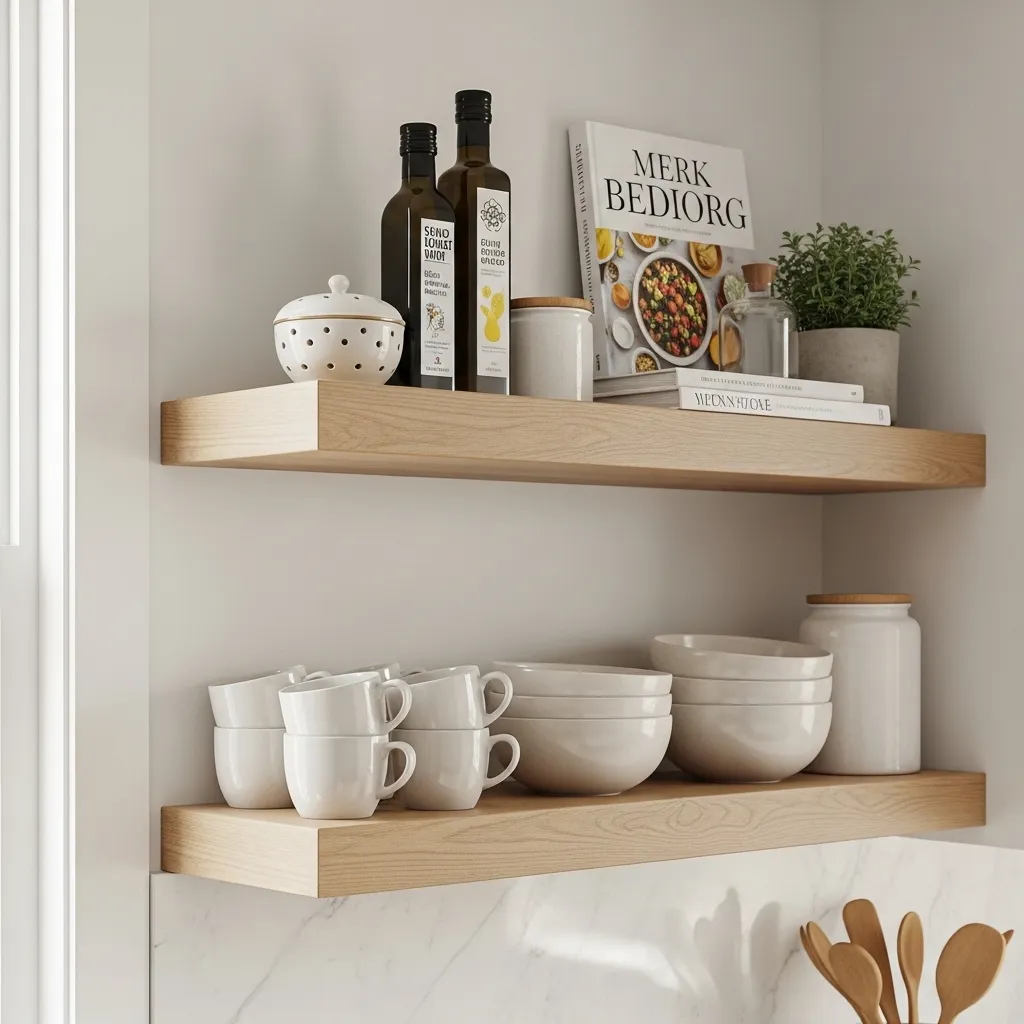
If your shelves are only decorative, you’re missing the point of kitchen storage, right? But if they’re only functional, they can look sparse or cluttered.
The secret is finding that sweet spot where a beautiful, display-worthy item is also something you use frequently.
- Display items you reach for every day, like your favorite coffee mugs or cereal bowls, on the lowest, most accessible shelf.
- Nestle a beautiful salt cellar, a designer olive oil bottle, or your fanciest cookbook (the one with the pretty cover you haven’t actually cooked from) in with the dishes.
- Integrate items that are both visually appealing and highly useful, ensuring your kitchen remains functional as well as fashionable.
6. Embrace Textured Materials
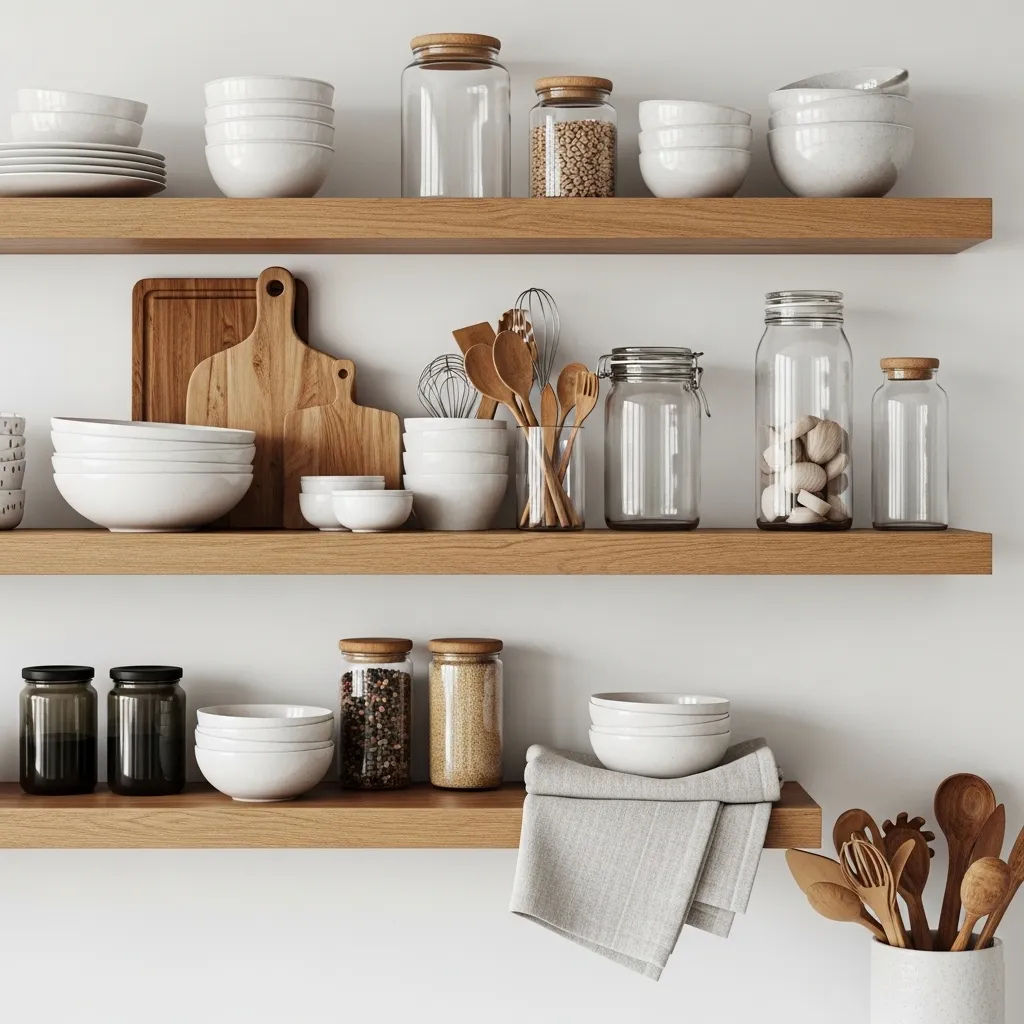
Texture, my friends, is what makes a space feel high-quality and lived-in. Glossy ceramic next to rough pottery, warm wood grain next to sleek glass, matte metal alongside soft textiles—this juxtaposition is what creates visual richness. Smooth-on-smooth is boring.
- Contrast textures: place textured linen towels on a smooth, modern ceramic stack.
- Introduce natural wood, which adds warmth and a natural texture that instantly softens the hard surfaces of the kitchen.
- Layer different finishes to create visual depth and tactile appeal, preventing the shelves from appearing flat.
7. Use Baskets and Containers for Smalls
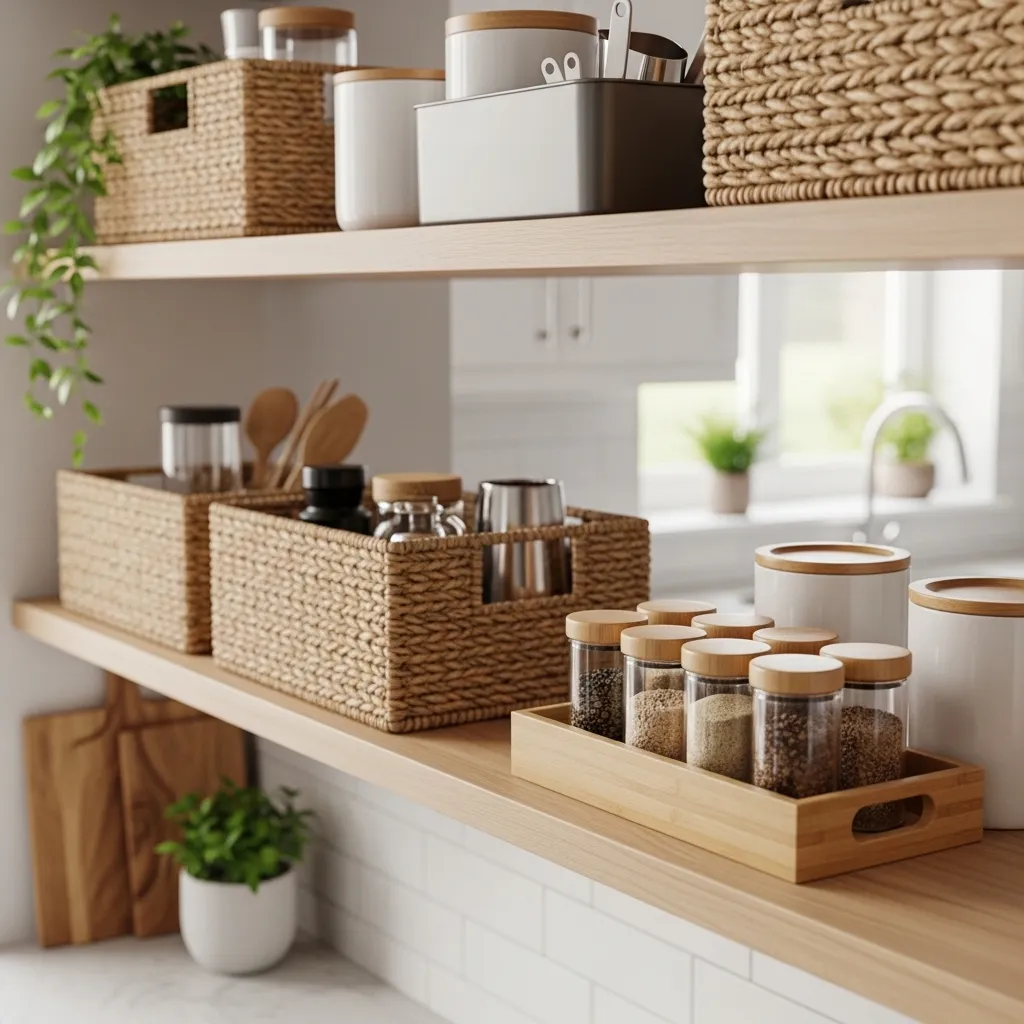
Okay, let’s be real. Some kitchen items are just plain ugly. I’m looking at you, plastic measuring cups and twisty ties. You can’t just leave those loose on an open shelf.
This is where stylish containers and baskets become your best friends, hiding the chaos in plain sight.
- Use beautiful woven or sturdy metal baskets on higher shelves to hold rarely used items or unsightly gadgets.
- Corral all your small, matching spice jars onto a small wooden tray to create a tidy, intentional grouping rather than a scattered mess.
- Hide unattractive necessities inside attractive containers, maintaining the aesthetic integrity of your display while keeping essentials nearby.
8. Consider Art as Kitchen Decor
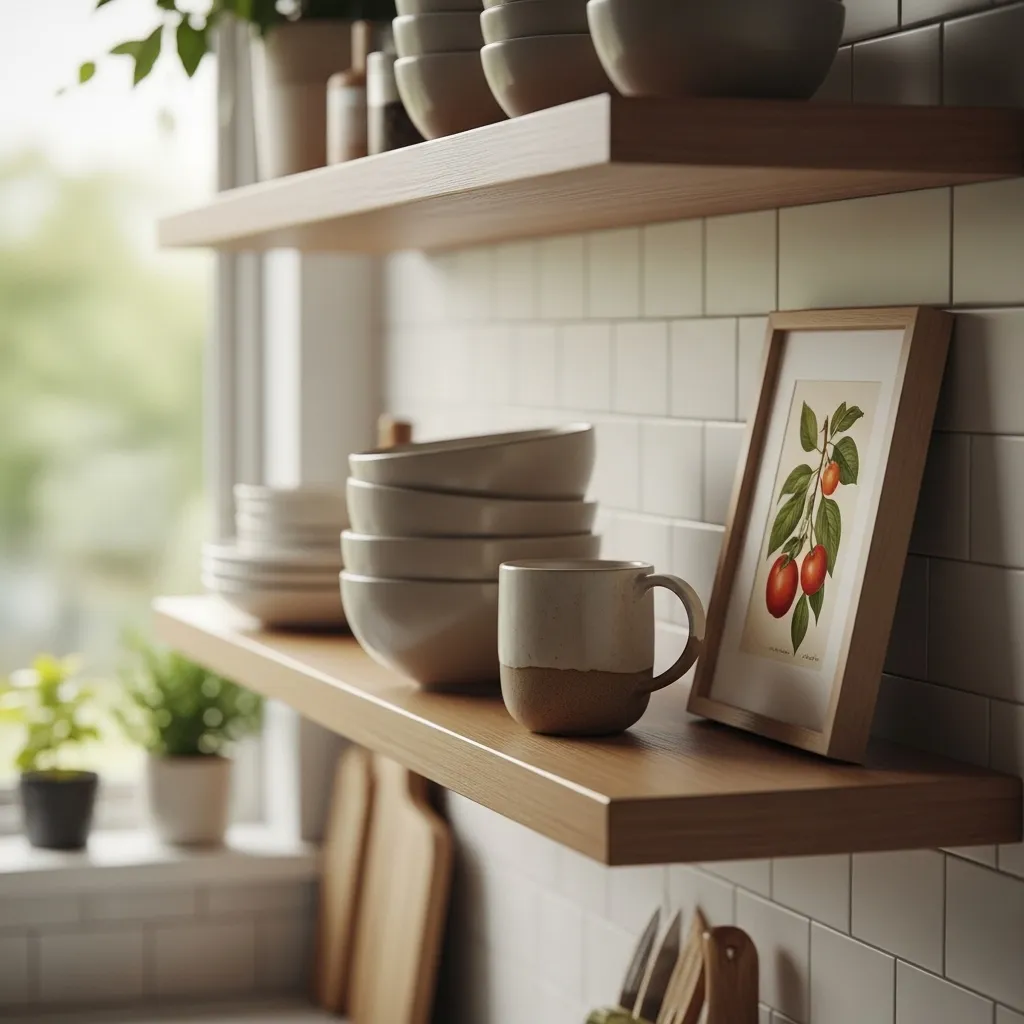
Who said art only belongs in the living room? A small, leaning framed print can completely change the vibe of your kitchen shelves. I’m talking about art that makes you smile while you’re making coffee, whether it’s a quirky illustration or a vintage landscape.
- Choose art that relates indirectly to the kitchen—vintage botanical prints, stylized fruit illustrations, or even a cheeky quote about food.
- Make sure the frame is simple and doesn’t overwhelm the art itself, allowing the piece to integrate smoothly with the surrounding ceramics.
- Opt for smaller pieces that can lean against the back wall, adding a personal and unexpected touch.
9. Layer Your Cookbooks Stylistically
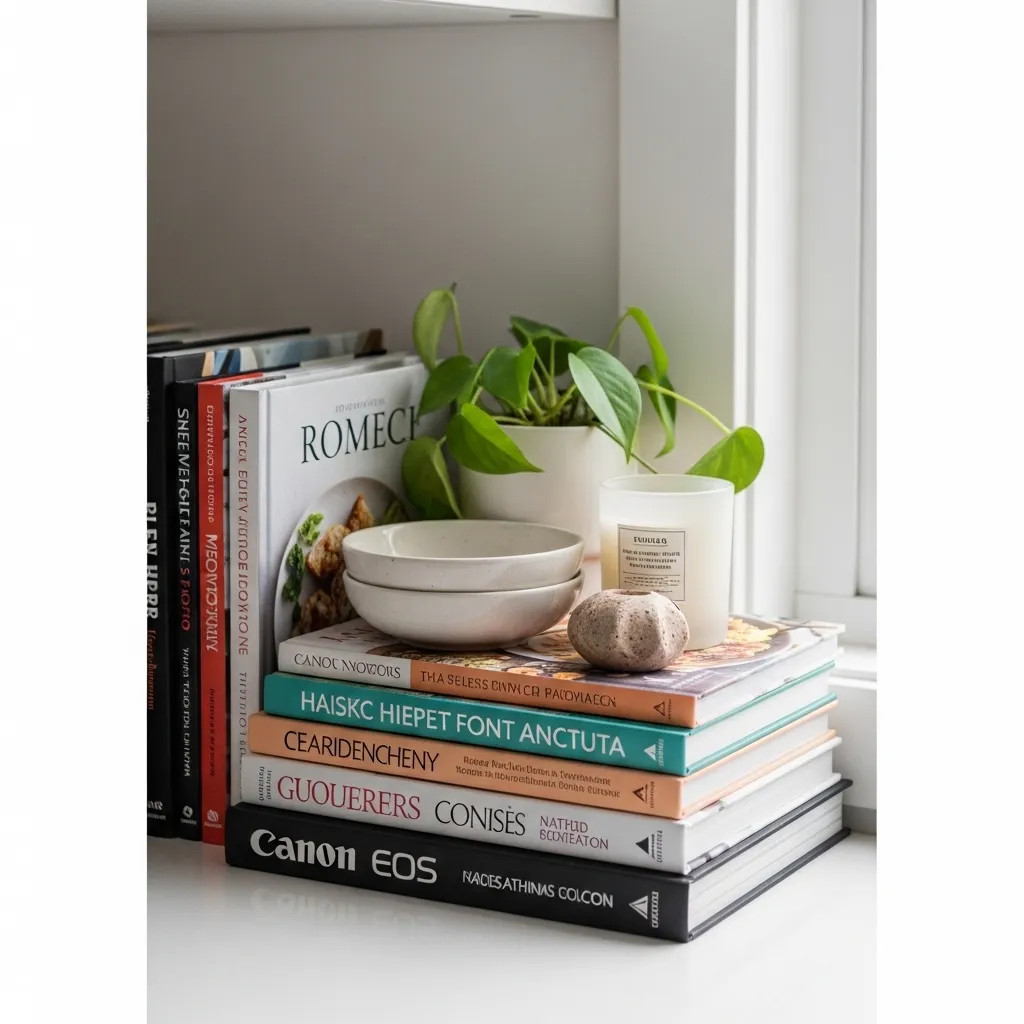
Don’t just jam all your cookbooks into a dense row like a library. They have beautiful covers, so treat them as part of the decor! Plus, displaying them this way makes you more likely to actually use them, or at least look like someone who might.
- Turn some books to display their spines outward (color-coordinated or not) while others lay flat, creating a stacked pedestal for other decor items.
- Limit the number of cookbooks you show; select only your favorites or the ones with covers that complement your chosen color palette.
- Incorporate cookbooks into your layered compositions, treating them as structural elements as well as objects of interest.
10. Display a Statement Kitchen Tool
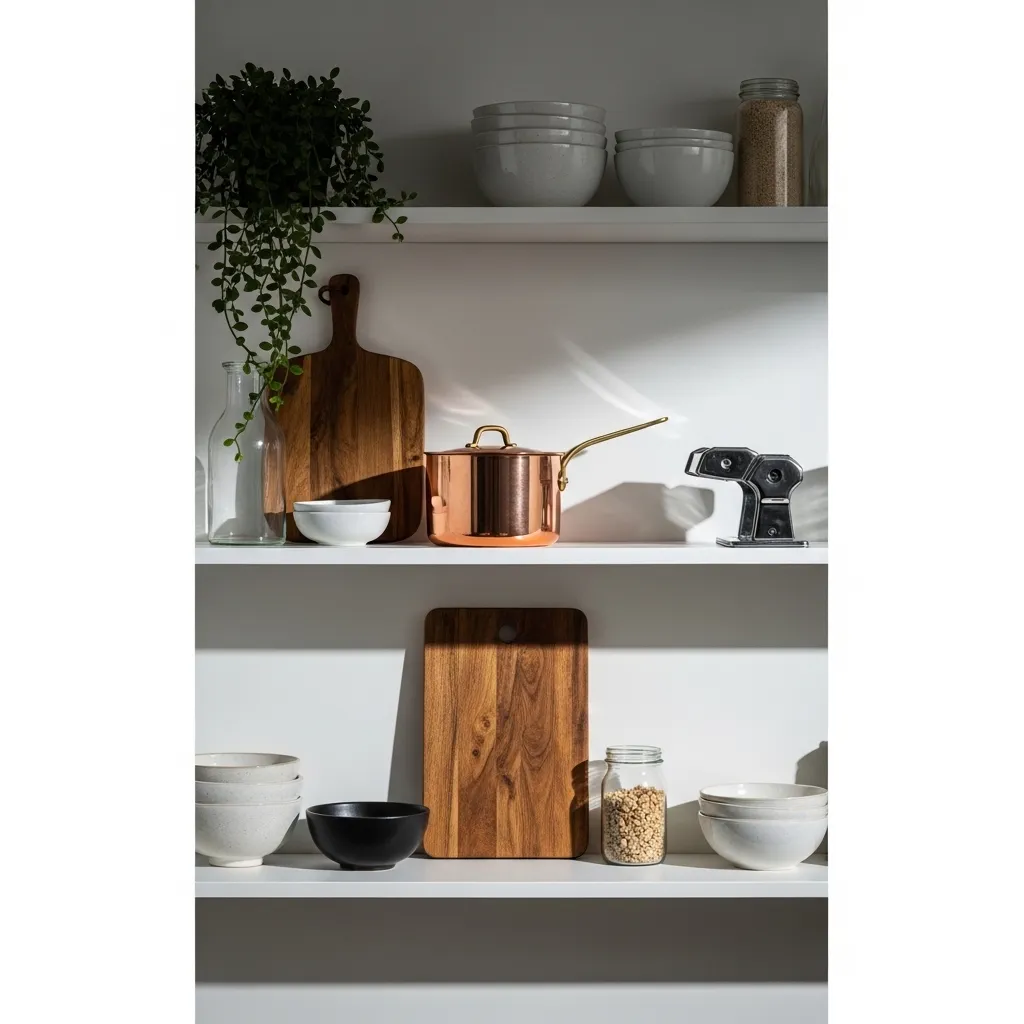
Sometimes, you just need that one dramatic piece to tie it all together.
A beautiful, high-quality copper stockpot, a large, artisanal cutting board, or even a stunning vintage pasta maker can serve as a focal point and conversational piece.
- Choose an item you genuinely love or one that represents your personal cooking style, whether it’s a shiny copper pot or a well-worn, antique mortar and pestle.
- Place this larger, statement object slightly offset from the center of your shelving arrangement to draw the eye without disrupting the balance.
- Ensure the statement piece reflects your personality, adding a meaningful and unique element to the display.
11. Pay Attention to Lighting
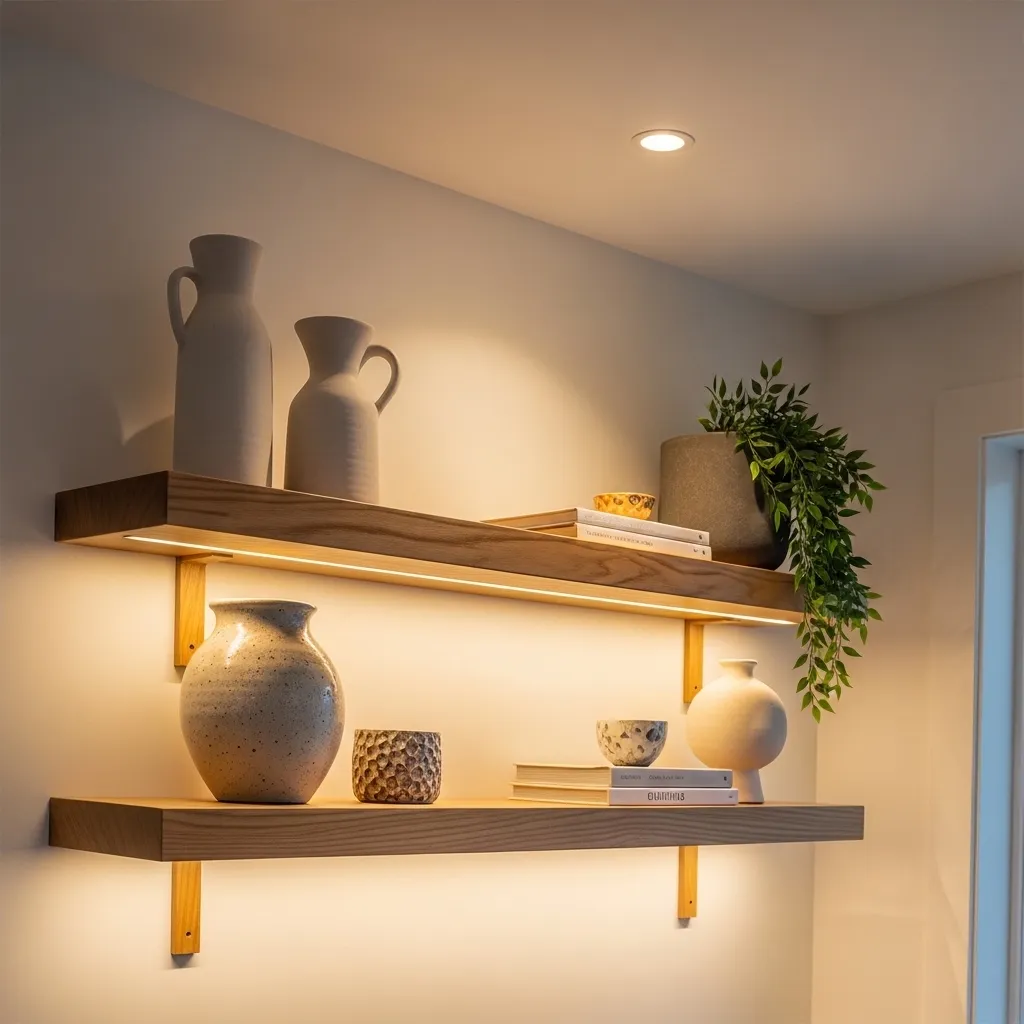
You can have the most beautifully curated shelves in the world, but if they’re hidden in the dark shadows under a cabinet, nobody (including you!) is going to appreciate them. Lighting can take a decent display and make it look downright magical.
- Incorporate small, discreet LED strip lights under-counter (or under-shelf) to wash the items below with soft, even illumination.
- Use a small accent spotlight on an opposite wall or ceiling to highlight a particularly special item, like your statement pot or art.
- Remember, proper lighting is non-negotiable for showcasing your decor effectively, making colors and textures truly come alive.
12. Don’t Overstuff the Shelves
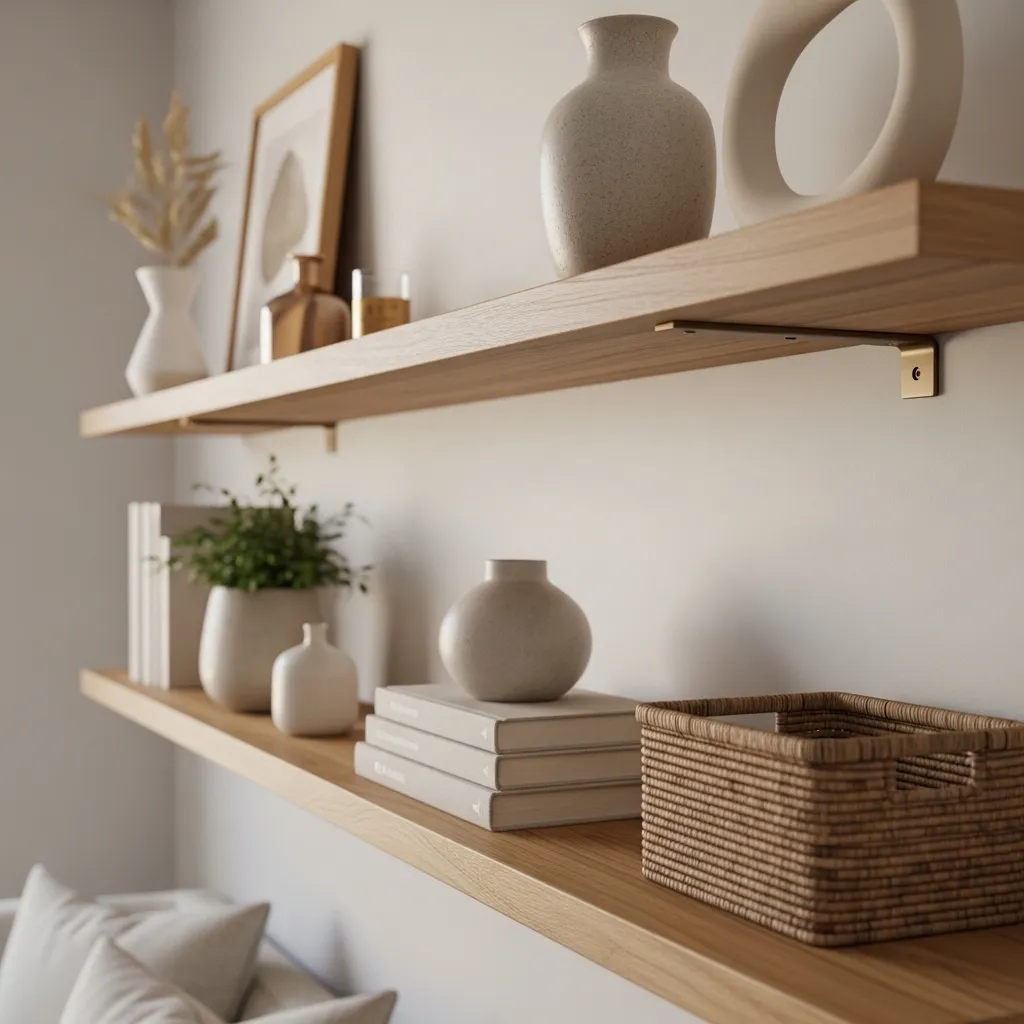
The biggest mistake? Overfilling. An open shelf that looks like a storage locker just screams “I ran out of cabinet space.” You need negative space—empty room between items—to let each piece breathe and stand out. Empty space is a design element.
- Intentionally leave generous gaps between groupings of objects to avoid a cluttered or chaotic appearance.
- Group items in odd numbers (like three or five), which visually organizes the space and looks more balanced than even pairings.
- Prioritize visual clarity over maximum storage capacity, ensuring your shelves feel curated and intentional rather than just full.
Open shelves don’t have to be a source of anxiety. With a few smart, practical strategies and a little bit of curation, they can be the true highlight of your kitchen, reflecting both your personal style and your practical cooking needs. It’s a balance, sure, but a totally achievable one. Happy decorating!