Let’s be real: your “home inspo” board is probably looking a little… 2019. We’ve all been stuck in that cycle of velvet sofas and rose gold accents for way too long. But lately? The vibe is shifting. We are moving toward spaces that actually breathe. If you’re ready to ditch the clutter and embrace a look that’s crisp yet cozy, you’re in the right place. Here are 10 home design inspiration ideas to make your space feel brand new.
1. The “Soft Minimalist” Kitchen
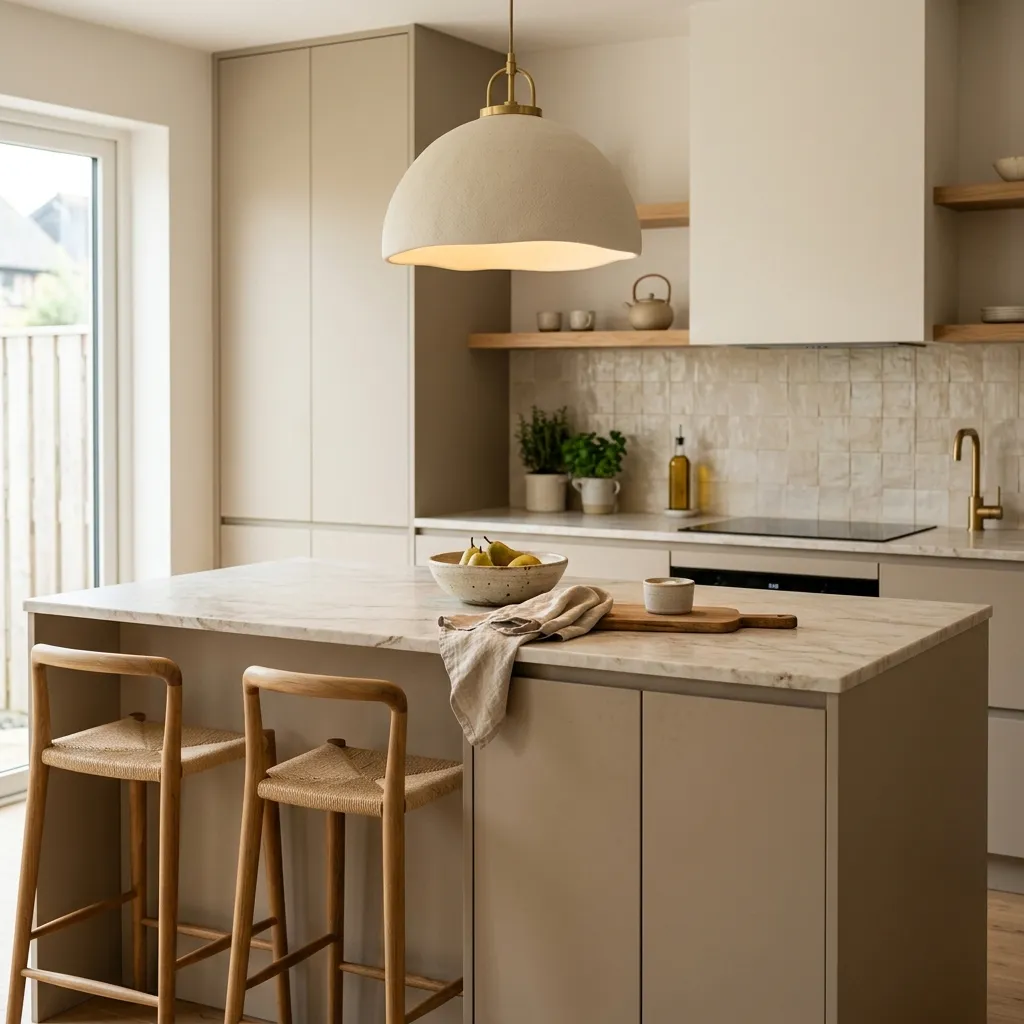
Minimalism used to feel like living in a high-end refrigerator—cold, white, and a bit scary.
The modern take is much kinder. It’s about clean lines but with warm woods and tactile stone.
Think less “surgical suite” and more “boutique spa.” It’s the ultimate way to de-stress while you’re just trying to boil pasta.
- Swap stark white cabinets for a warm “greige” or sand tone.
- Use integrated handles or “push-to-open” doors for a seamless look.
- Install a single, oversized pendant light over the island.
- Choose a backsplash with a subtle, handmade texture.
Pro Tip: Hide your small appliances in an “appliance garage” to keep those countertops looking infinite.
2. Monochrome Layering
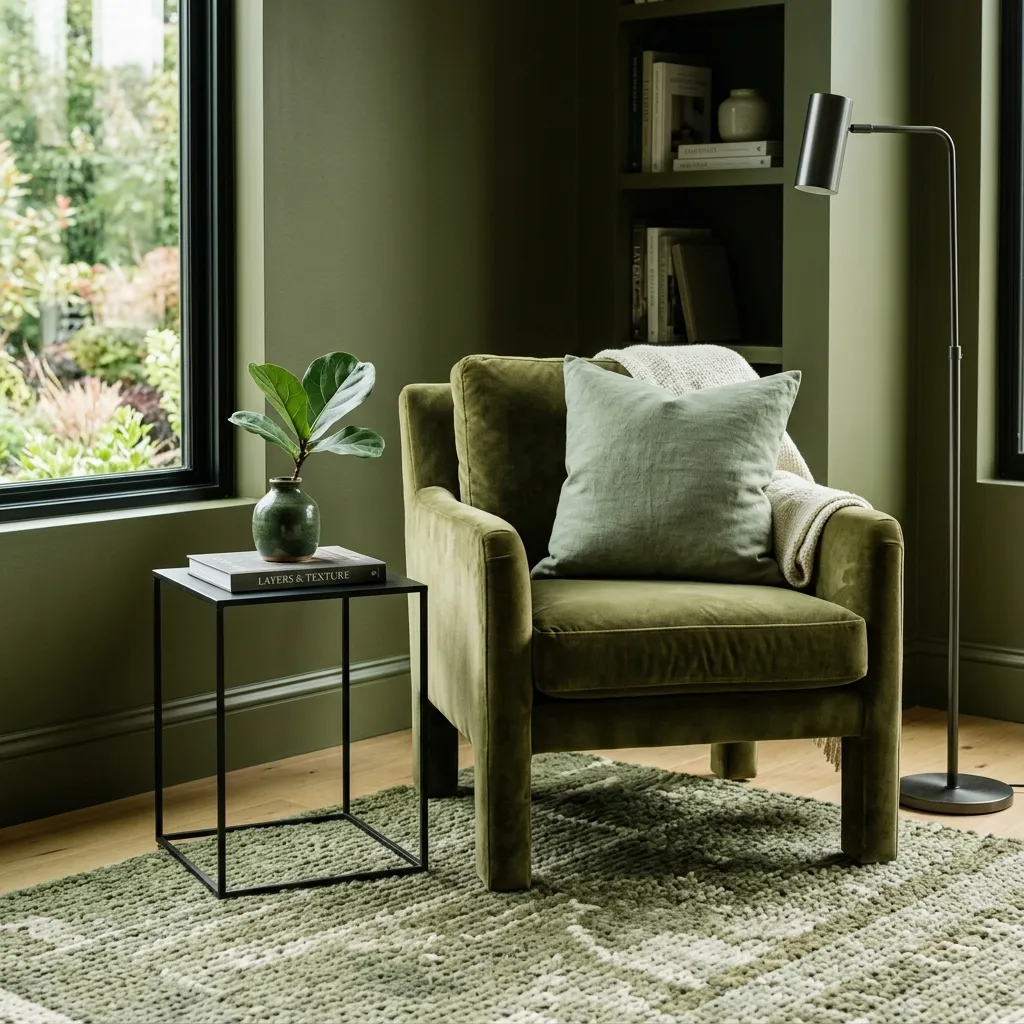
Going all one color sounds boring until you actually see it done right.
The trick isn’t using the exact same shade everywhere; it’s about staying within the same family.
It creates this incredibly sophisticated, intentional look that makes even a small room feel like a massive architectural statement.
- Pick a base color (like olive, terracotta, or slate).
- Vary the textures: a velvet chair, a wool rug, and matte painted walls.
- Use different tones of that same color to create depth.
- Keep hardware (like lamps) in a contrasting metal like brushed black.
Pro Tip: Use a “flat” paint finish on the walls and a “satin” finish on the trim in the same color for a subtle, high-end contrast.
3. The “Biophilic” Living Room
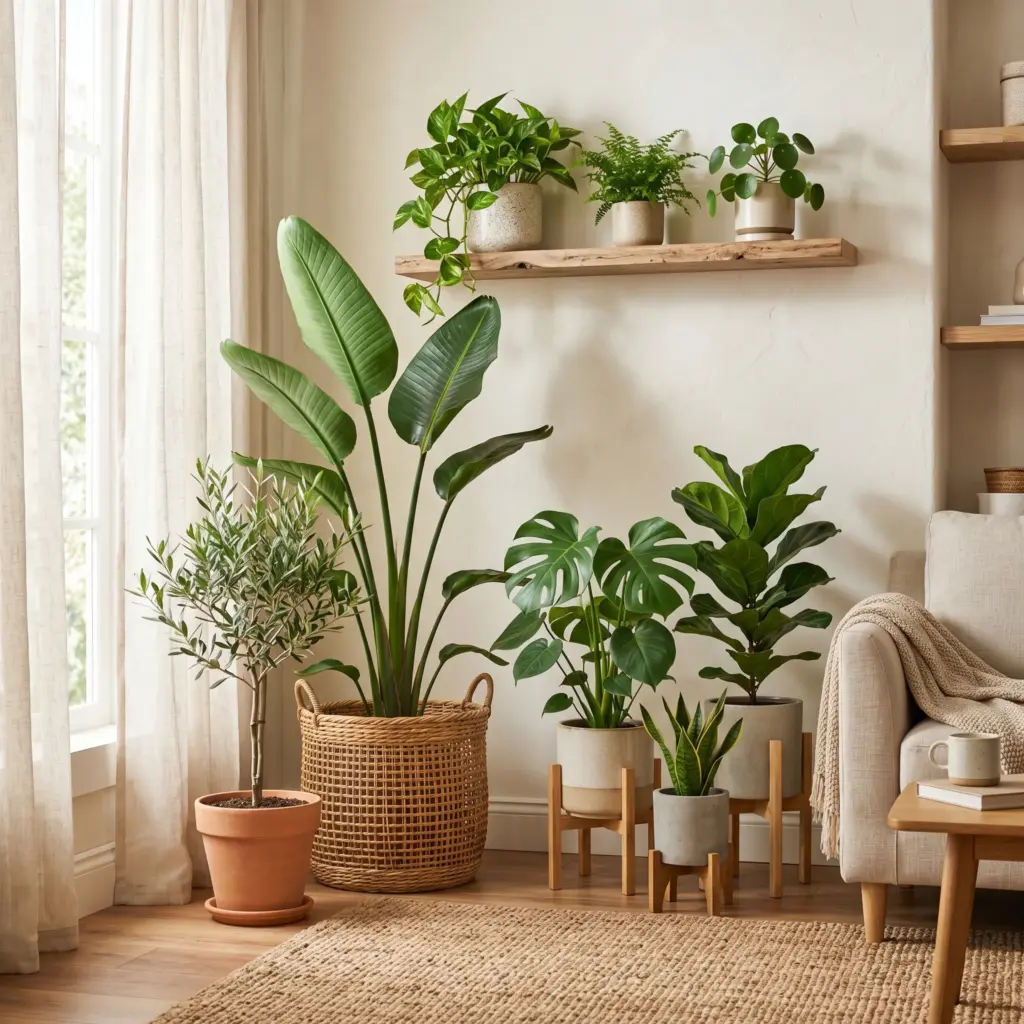
Plants aren’t just for “plant parents” anymore. Modern design is literally building the outdoors into the indoors.
It’s not just about a stray succulent on a shelf; it’s about making greenery a core structural element.
It’s fresh, it’s literally oxygenating, and it looks incredible on camera.
- Group plants in odd numbers (3s or 5s) at varying heights.
- Use large-scale floor plants like a Bird of Paradise or Olive Tree.
- Incorporate natural materials like jute, rattan, and unfinished wood.
- Maximize natural light with sheer, breezy curtains.
Pro Tip: If you have a black thumb, high-quality “real-touch” faux trees are totally acceptable—just dust them regularly!
4. Curves Over Corners
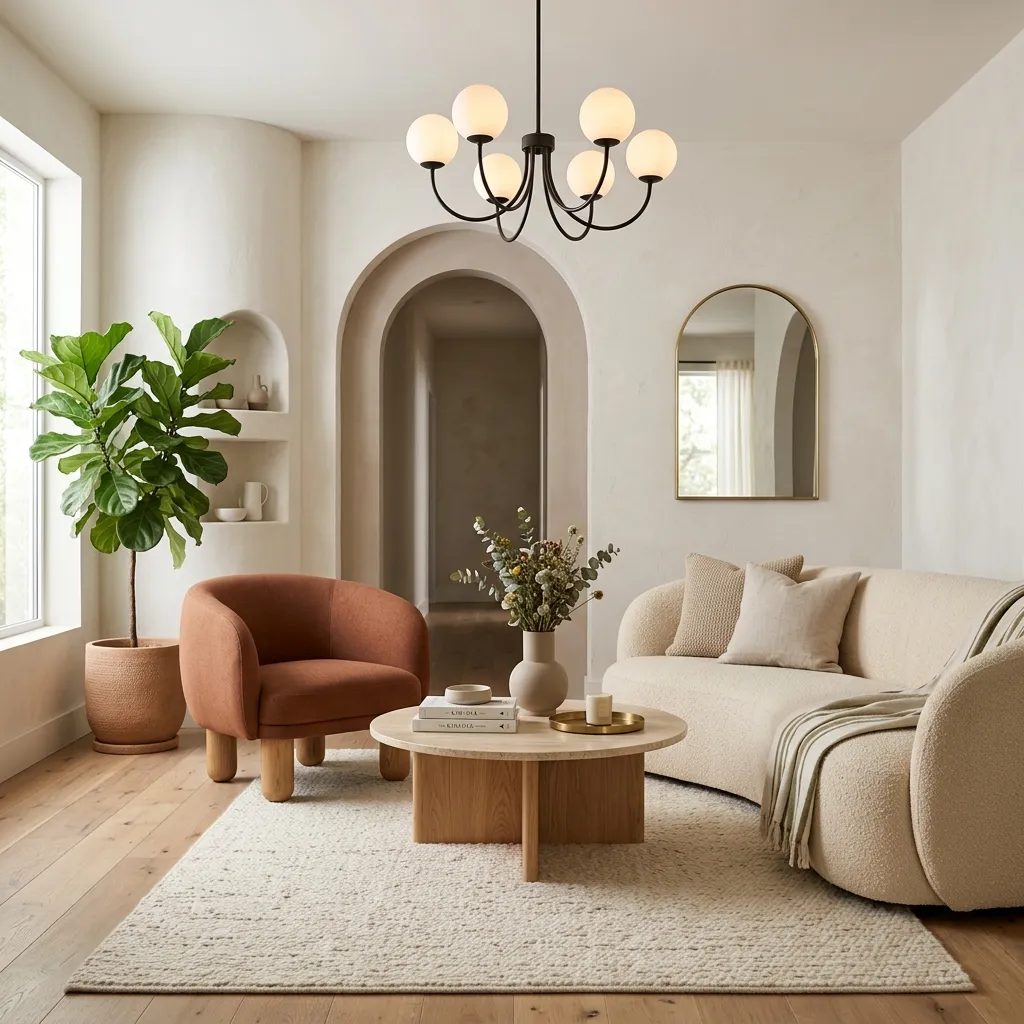
Sharp edges are out; soft, organic shapes are in. From arched doorways to kidney-shaped sofas, the modern home is rounding out its personality.
This trend breaks up the “boxy” feeling of standard rooms and makes the flow of your house feel way more intuitive and relaxed.
- Look for a curved-back accent chair.
- Add a round coffee table to balance a rectangular rug.
- Use arched mirrors to create the illusion of architectural detail.
- Choose lighting fixtures with globes or soft, looping silhouettes.
Pro Tip: You can “cheat” an arched doorway using a simple paint DIY or peel-and-stick decals.
5. Mixed Metal Logic
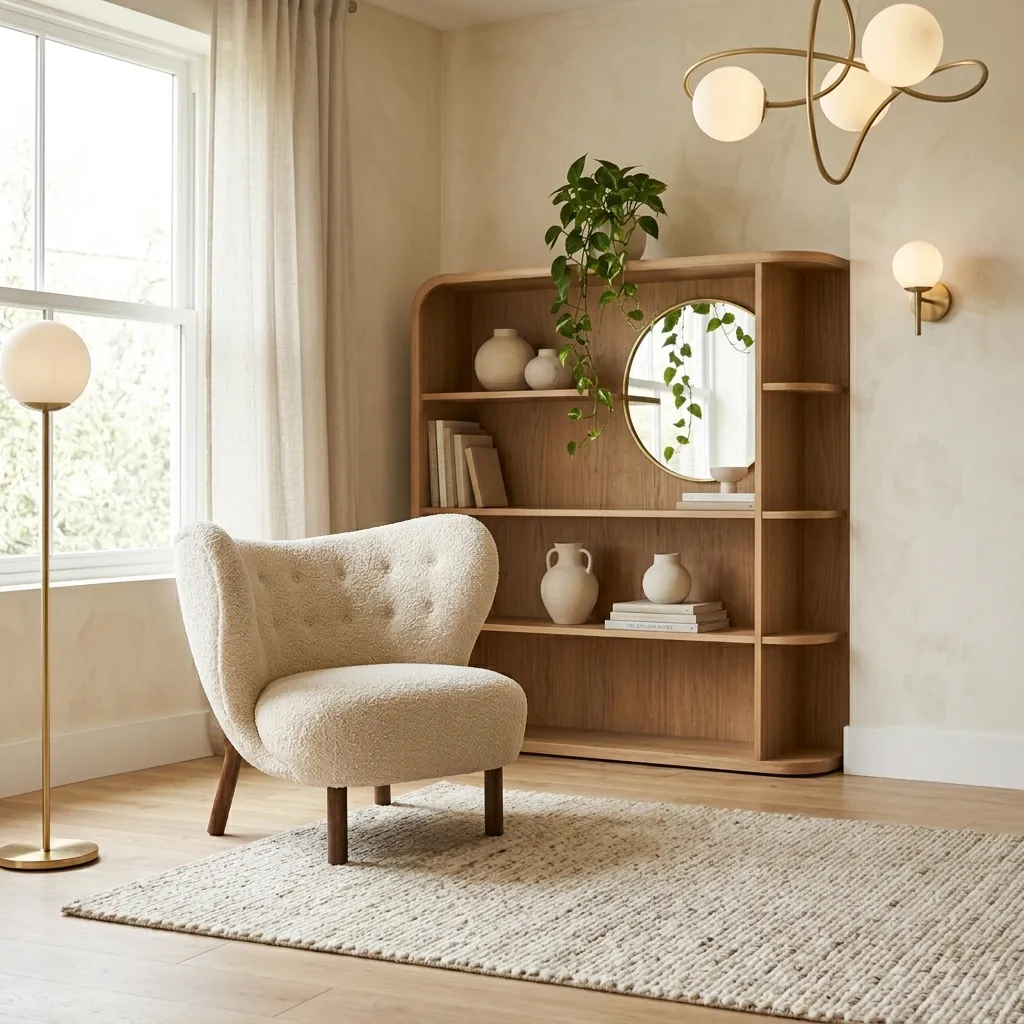
Gone are the days where every faucet, handle, and light had to be matching chrome.
That looks a bit… builder-grade now. The modern approach is to mix your metals. It makes a room look like it evolved over time rather than being bought out of a single catalog. It’s edgy but grounded.
- Choose one “dominant” metal (e.g., 70% matte black).
- Add an “accent” metal (e.g., 30% unlacquered brass).
- Keep the finishes consistent (don’t mix shiny gold with brushed gold).
- Distribute the metals evenly so one side of the room doesn’t feel “heavier.”
Pro Tip: Black and brass is the “gold standard” for a modern, foolproof mix.
6. The “Invisible” Home Office
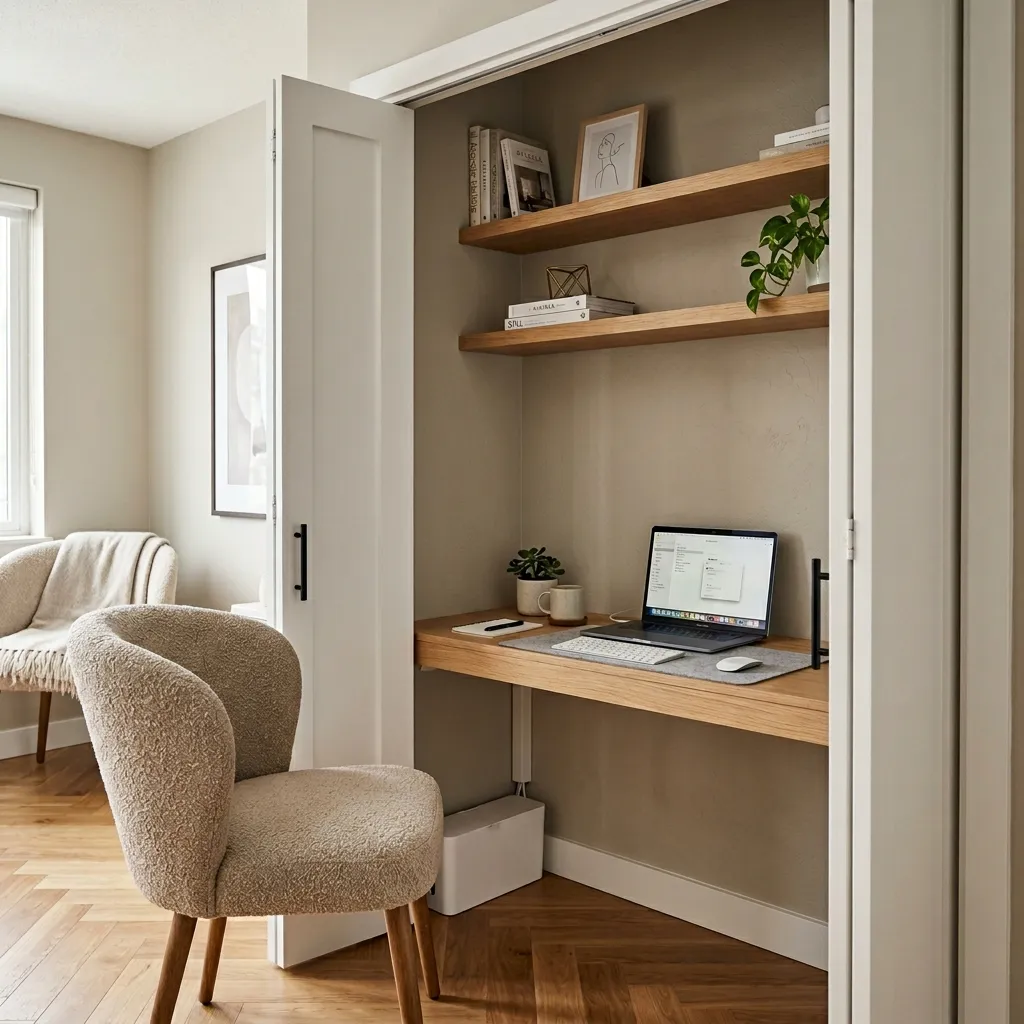
We’re all tired of seeing a messy desk in the corner of the bedroom.
The fresh way to do WFH is the “cloffice” or the hidden desk.
It’s about creating a workspace that disappears when the laptop shuts. This keeps your home feeling like a sanctuary, not a cubicle.
- Convert a small closet into a built-in desk area.
- Use a chair that doubles as dining or accent seating.
- Install floating shelves above the desk for vertical storage.
- Use cord management boxes to hide the “tech spaghetti.”
Pro Tip: Paint the inside of your desk nook a darker color than the rest of the room to create a “zone” feeling.
7. Statement Stone
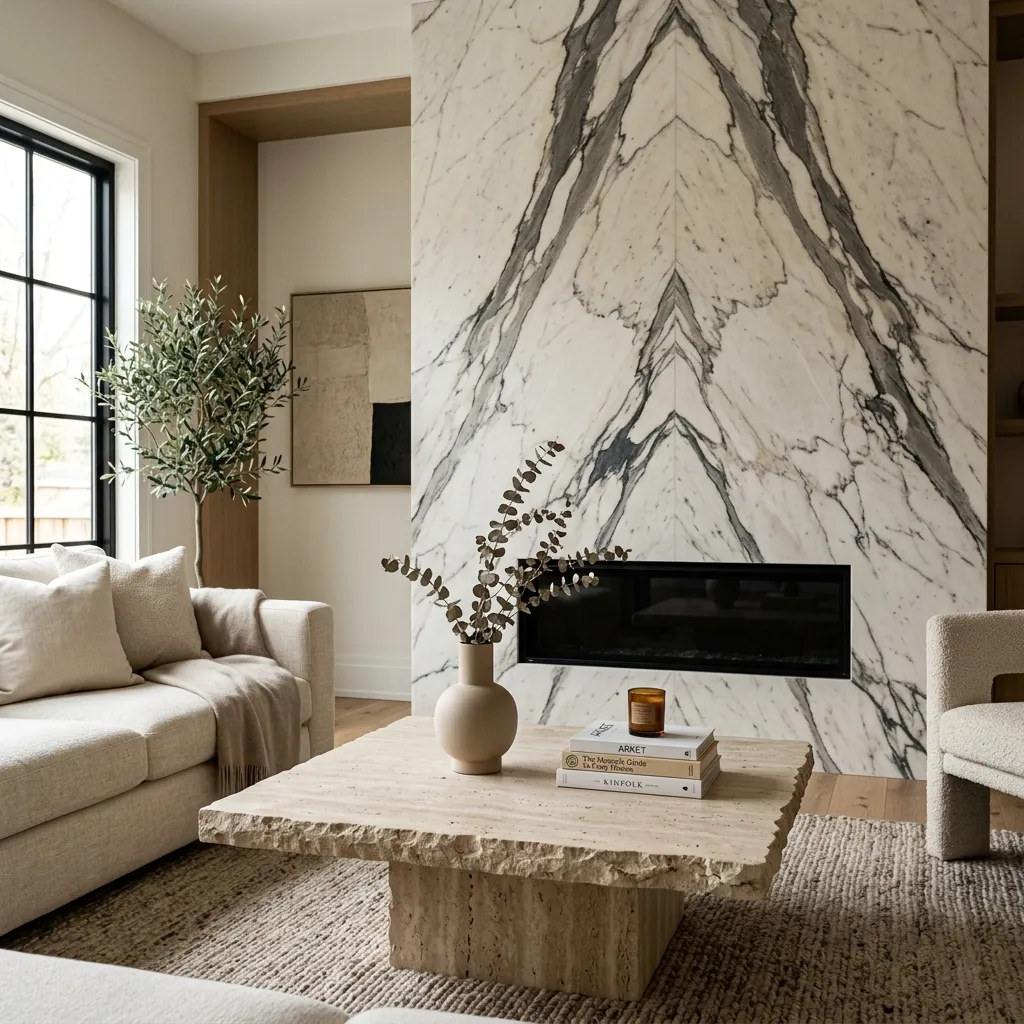
Basic subway tile had a good run, but we’re moving on to high-drama stone.
We’re talking marble with thick veining, colorful travertine, or even concrete. Using stone as a focal point—like a full-height backsplash or a coffee table—adds an instant “expensive” feel to any modern space.
- Look for remnants at stone yards for small projects like vanities.
- Choose stones with “movement” (bold swirls and colors).
- Use stone accessories like trays or bookends to test the look.
- Seal your stone! Modern matte sealers keep it looking natural but protected.
Pro Tip: If real marble is out of budget, large-format porcelain slabs look identical and are way easier to clean.
8. Saturated “Mood” Rooms
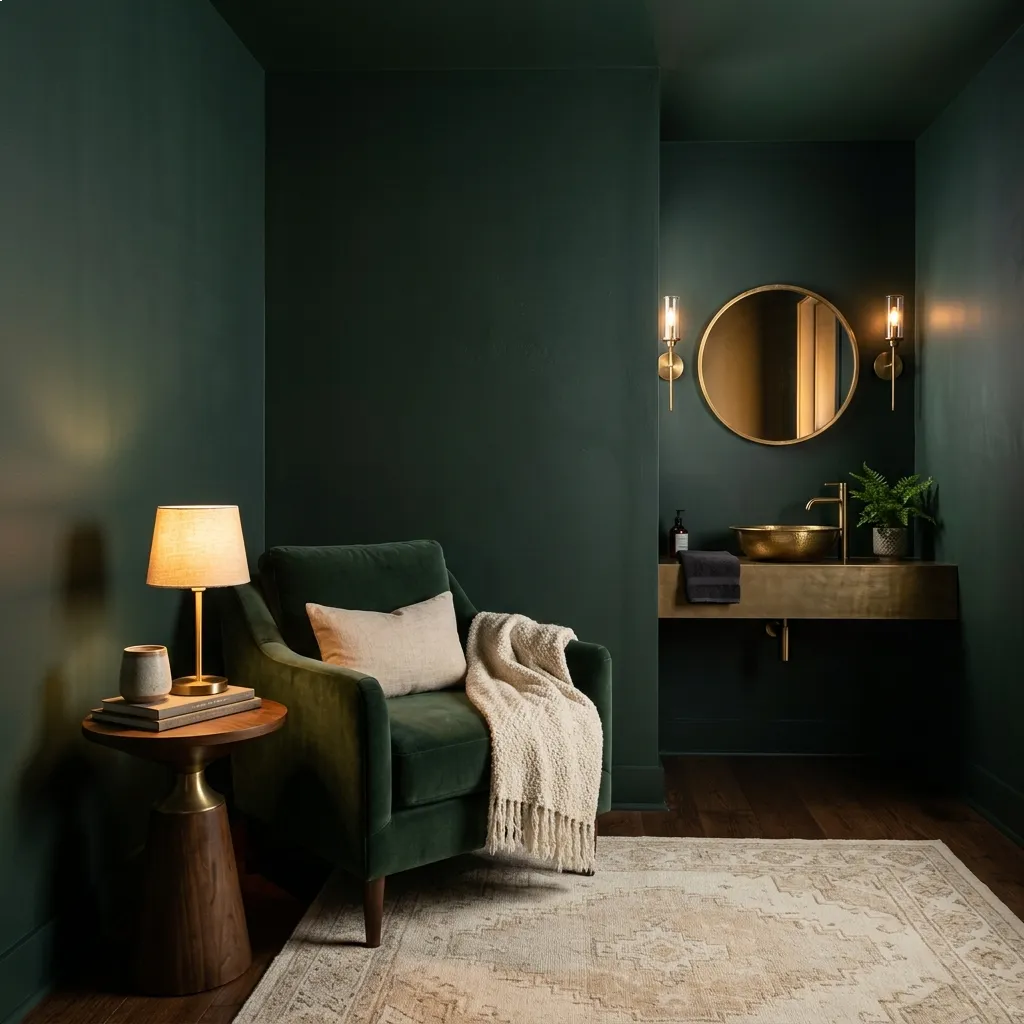
Sometimes, “bright and airy” is overrated. Modern design is leaning back into dark, moody spaces—think deep navy, forest green, or charcoal.
This works exceptionally well in small rooms like powder baths or dens, turning a tiny footprint into a cozy, high-impact jewel box.
- Paint the ceiling the same dark color as the walls (the “color drench” effect).
- Use warm, low-level lighting (lamps, not overheads).
- Add metallic accents to reflect light and prevent the room from feeling like a cave.
- Incorporate a light-colored rug to anchor the space.
Pro Tip: In a dark room, always use “Warm White” bulbs (2700K) to keep the vibe cozy, not spooky.
9. Gallery Walls 2.0
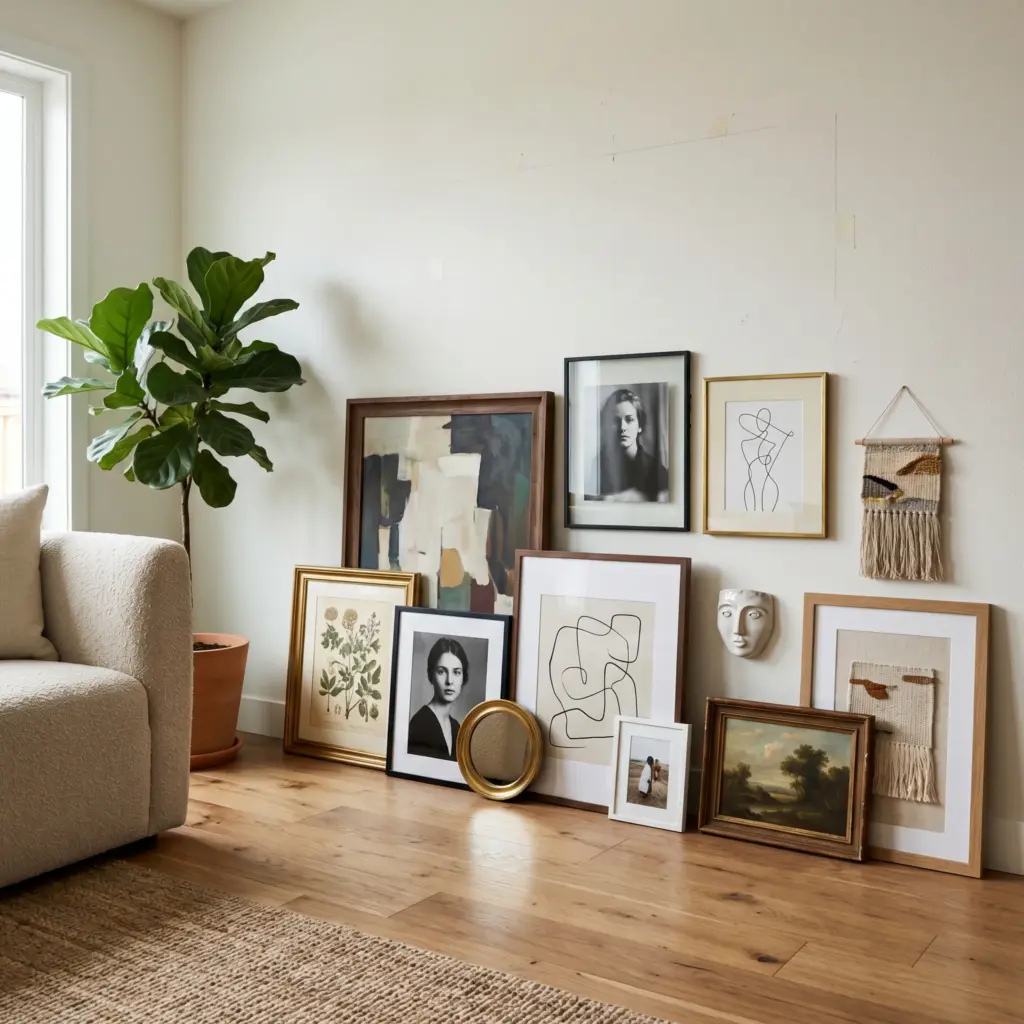
The old way: 20 tiny frames in a perfect grid. The modern way: An eclectic, mismatched collection of art, mirrors, and objects.
It’s less about perfection and more about personality. It feels curated, lived-in, and way more “designer” than a pre-packaged set of prints.
- Mix frame styles (wood, metal, vintage).
- Vary the sizes of the artwork significantly.
- Include something that isn’t a flat print (like a small wall sculpture).
- Lay it all out on the floor before you put a single hole in the wall.
Pro Tip: Use command strips for the smaller pieces so you can swap things out without a hammer.
10. Floating Furniture
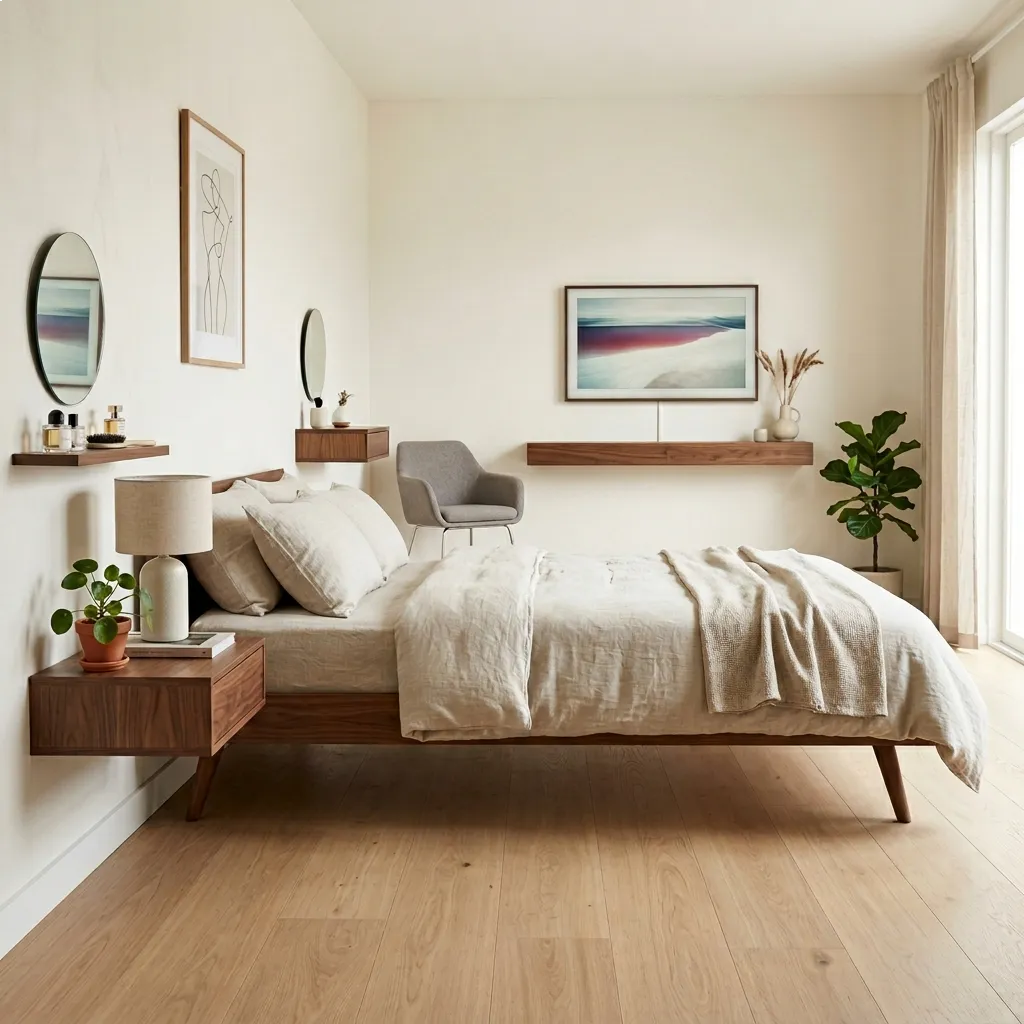
To make a room feel modern and spacious, you have to let the floor “breathe.”
Floating vanities, wall-mounted nightstands, and sofas with slim legs create a sense of weightlessness. It’s a simple trick that makes even a cluttered room feel instantly more organized and high-end.
- Wall-mount your TV and hide the wires.
- Choose a bed frame with “tapered” legs rather than a solid base.
- Install a floating shelf as a bedside table in tight spaces.
- Keep the floor area under furniture clear of storage bins.
Pro Tip: A floating vanity in a small bathroom makes the floor tile look continuous, which tricks the eye into thinking the room is bigger.
Final Thoughts
Refreshing your home doesn’t mean you need a sledgehammer and a six-figure budget. It’s really just about intentionality. Whether you’re just swapping out a faucet or repainting a whole room, the goal of modern design is to make your home work for you—not the other way around. Don’t be afraid to break the “rules” and lean into what makes you feel calm. A home that feels fresh is a home that feels like an escape. Which one of these are you pinning first?
Pro Tip: Hide your small appliances in an “appliance garage” to keep those countertops looking infinite.