Let’s be real: your open-concept entryway is the handshake of your home. It’s the first thing guests see and the first thing you see when you trudge in after a long day. Does yours say “Welcome!” or does it say “A chaotic human lives here”? If it’s the latter, don’t worry—I’ve been there. Let’s walk through 14 super easy, totally doable ways to take that awkward, definition-less space from drab to fab. Trust me, it’s easier than you think.
1. Define the Border with an Area Rug
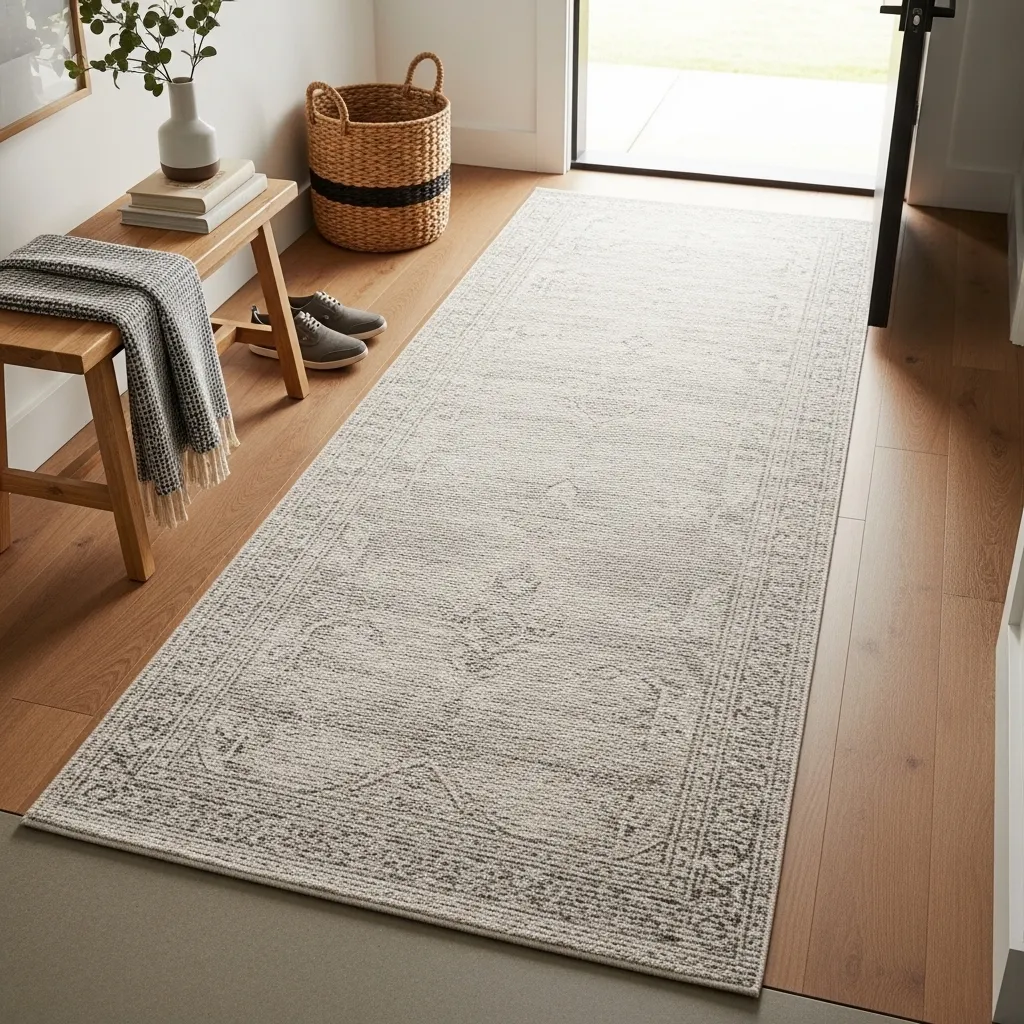
In an open concept, you must visually define the “room” that doesn’t actually exist. An area rug is the easiest way to draw that line. It adds instant texture, color, and warmth while shouting, “This is the entryway!” to anyone walking in.
Plus, let’s be practical: it traps dirt before it hits your nice floors. I personally love a durable runner that welcomes you. Just make sure it’s high-traffic friendly or you’ll replace it in six months. :/
- Rule of Thumb: Ensure the runner extends most of the length of your designated “hallway” space.
- Go Low-Pile: It’s easier to clean and won’t trap as much grime.
- Patterns Hide Dirt: Choose patterns over solid light colors; patterns hide the inevitable mud much better.
2. Command the Chaos with a Console
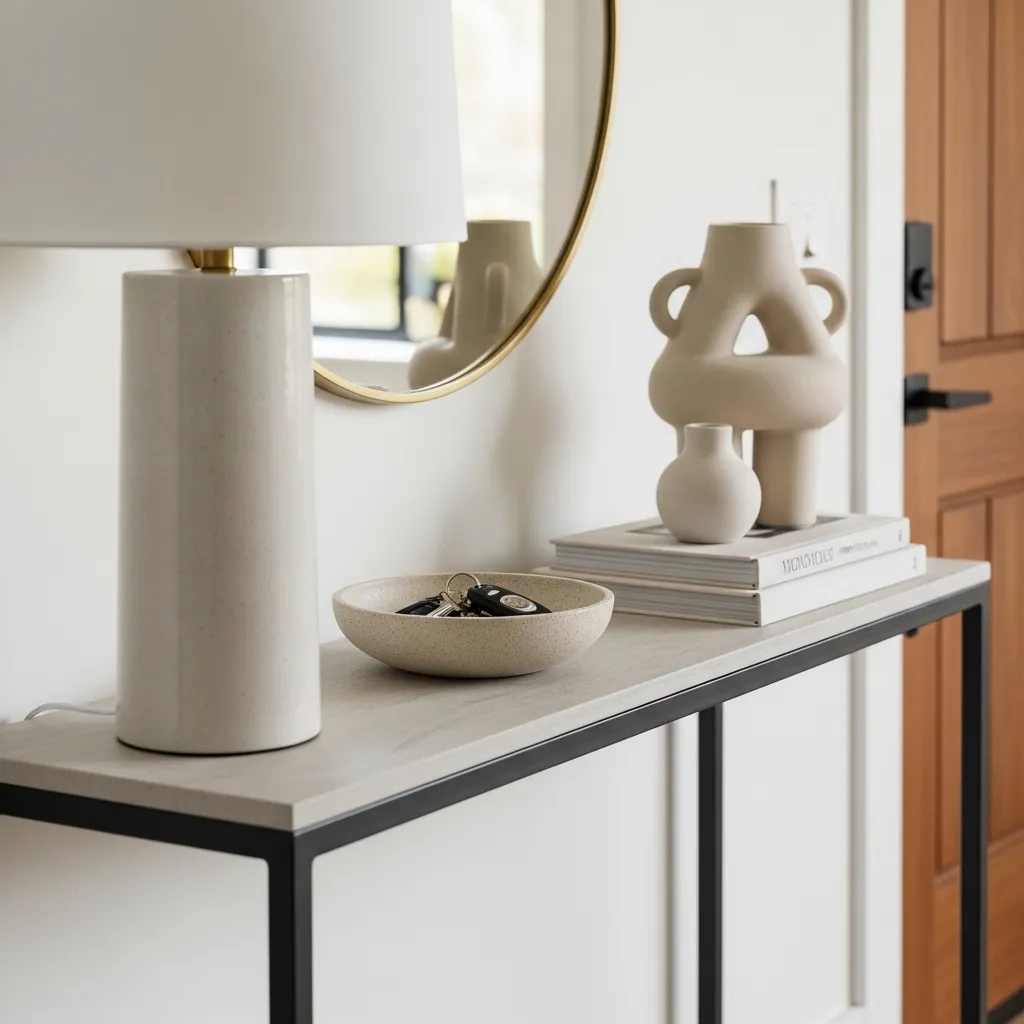
You absolutely need a dedicated drop zone for keys and mail, otherwise they will end up on the floor or kitchen counter, never to be seen again. Enter the sleek console table.
It’s a absolute lifesaver and a styling powerhouse. Place it right against an available wall to anchor the entryway area and define the space. The trick is keeping it uncluttered—no, your three weeks of junk mail does not count as decor. A narrow console is an absolute total game-changer, I promise.
- Anchor with Light: Place one substantial lamp or a striking vase on one end.
- Balance with Books: Use a small stack of beautiful coffee table books on the other side.
- The Chic Bowl: Always include a small, chic bowl for keys and coins.
3. Master the Mirror Magic
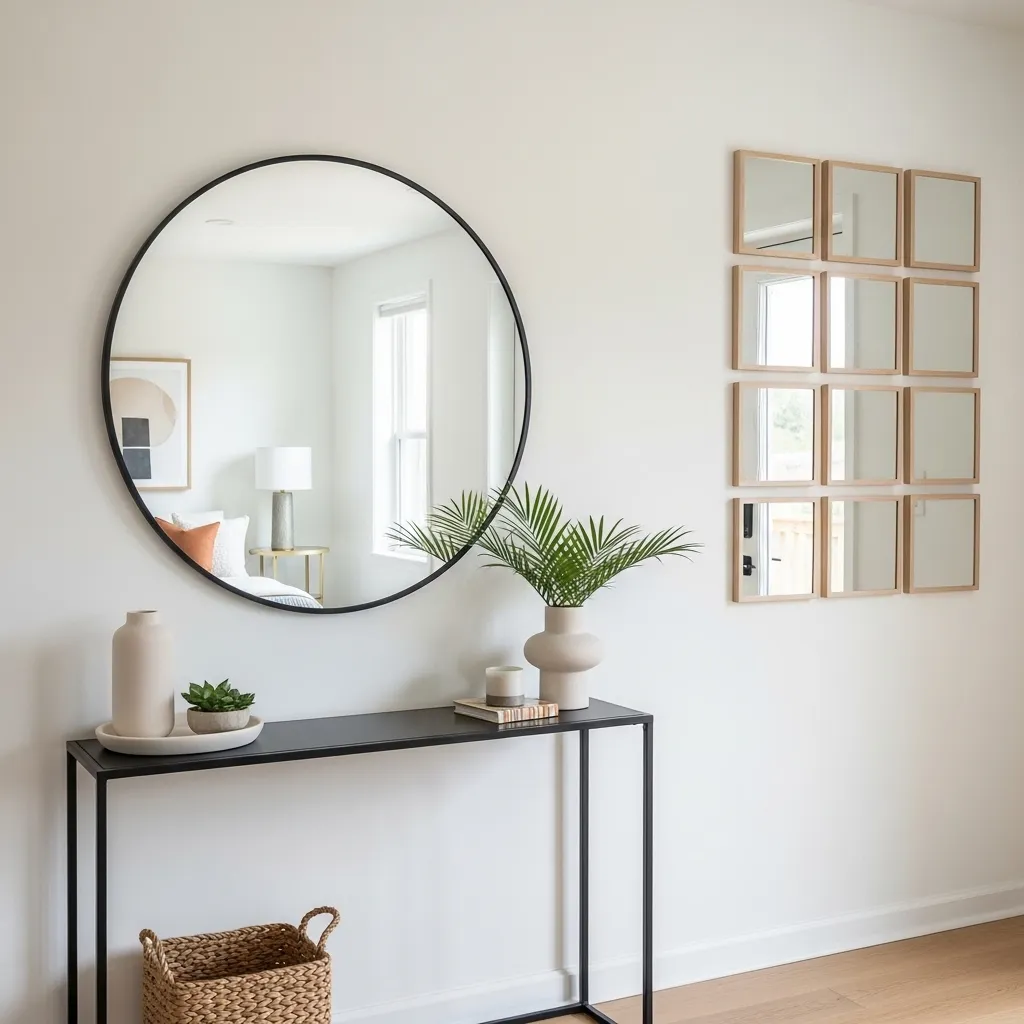
Ever wondered why every interior designer obsesses over mirrors in small, tricky spaces? Because they are magic! Seriously, hanging a great mirror right by the door does two massive things for an open concept.
First, it bounces natural light around like crazy, making the whole entry area feel airy. Second, it lets you do that crucial final teeth-check before you face the world. IMO, a round mirror is the way to go for modern vibes.
- Go Big: Find the largest round mirror that fits your wall space.
- Try Leaning: Lean a mirror on a console table rather than hanging it.
- Grid Effect: Use multiple smaller, matching mirrors for a unique gallery feel.
4. Make a Statement with Lighting
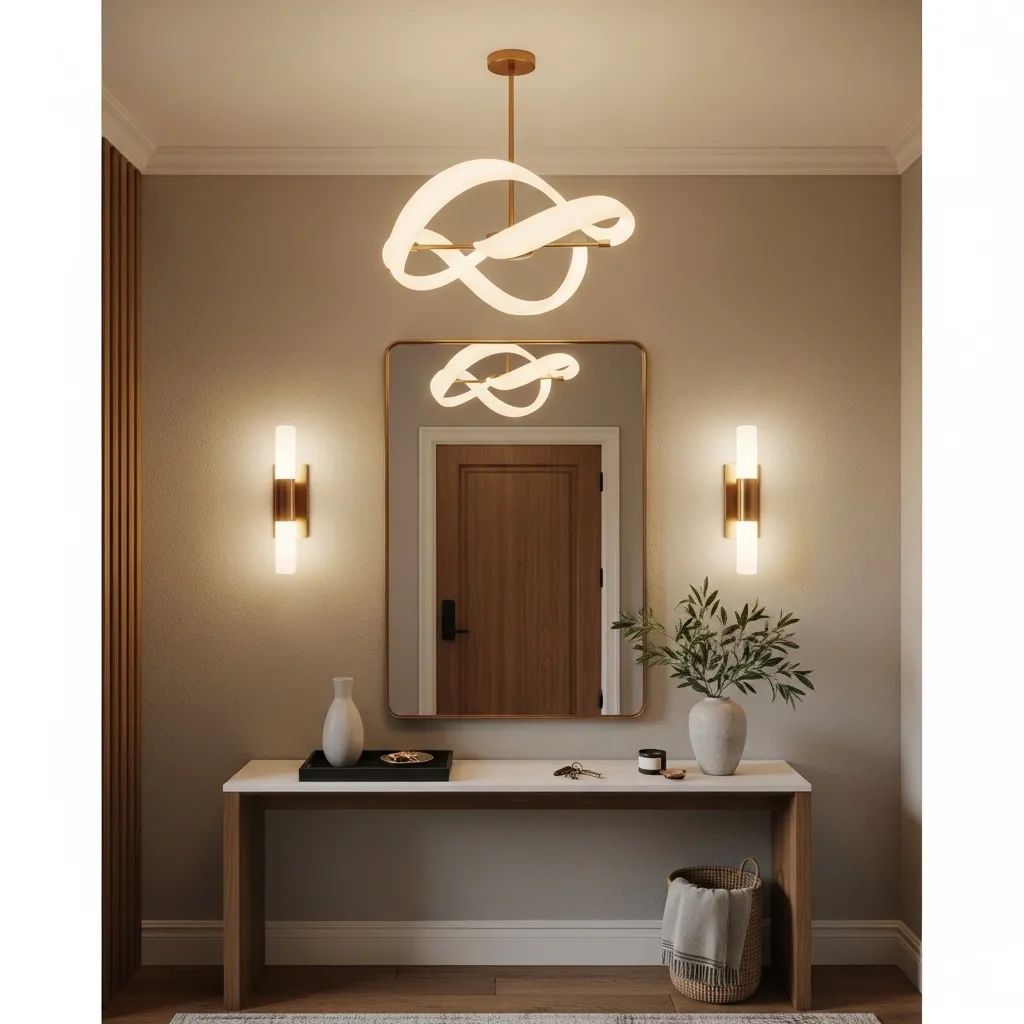
Good lighting is everything, especially in an entryway which often lacks windows. Nobody wants to enter a dark, uninspiring abyss. Replace that builder-grade boob light (you know the one) with something that has real personality.
A stunning, eye-catching pendant light immediately sets a sophisticated tone and draws the eye upward. It signals that you actually care about your home’s aesthetic, even if the rest of your house is a current mess.
- Flush with Flair: Choose a sculptural flush mount if your ceilings are low.
- Hang a Pendant: A well-placed pendant defines the center of the “zone.”
- Try Wall Sconces: Frame your mirror or console with stylish plug-in or hardwired sconces.
5. Bench Press (For Seating, Not Iron)
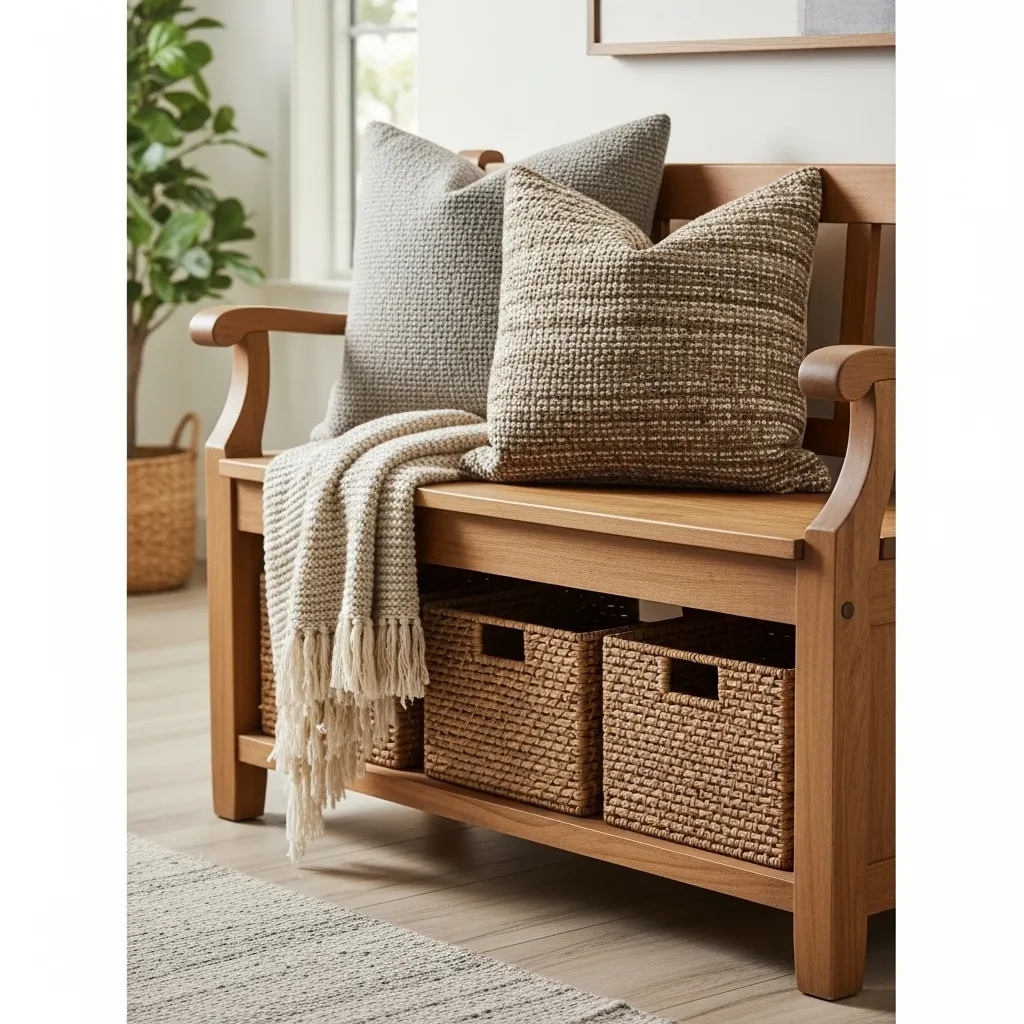
If space allows, a bench is both stylish and incredibly functional. It gives you or your guests a civilized place to sit and wrestle shoes on or off. Without one, you’re just awkwardly balancing on one foot like a sad flamingo.
A vintage-style wooden bench adds instant character and warmth to a modern space. It’s also a great spot to set down grocery bags while you catch your breath.
- Under-Bench Baskets: Look for benches with open space for storage baskets.
- Add Pillows: Toss on two textured throw pillows for comfort and color.
- Blanket Drape: Throw a nice knit blanket over one end for a cozy look.
6. Create Visual Boundaries with Paint
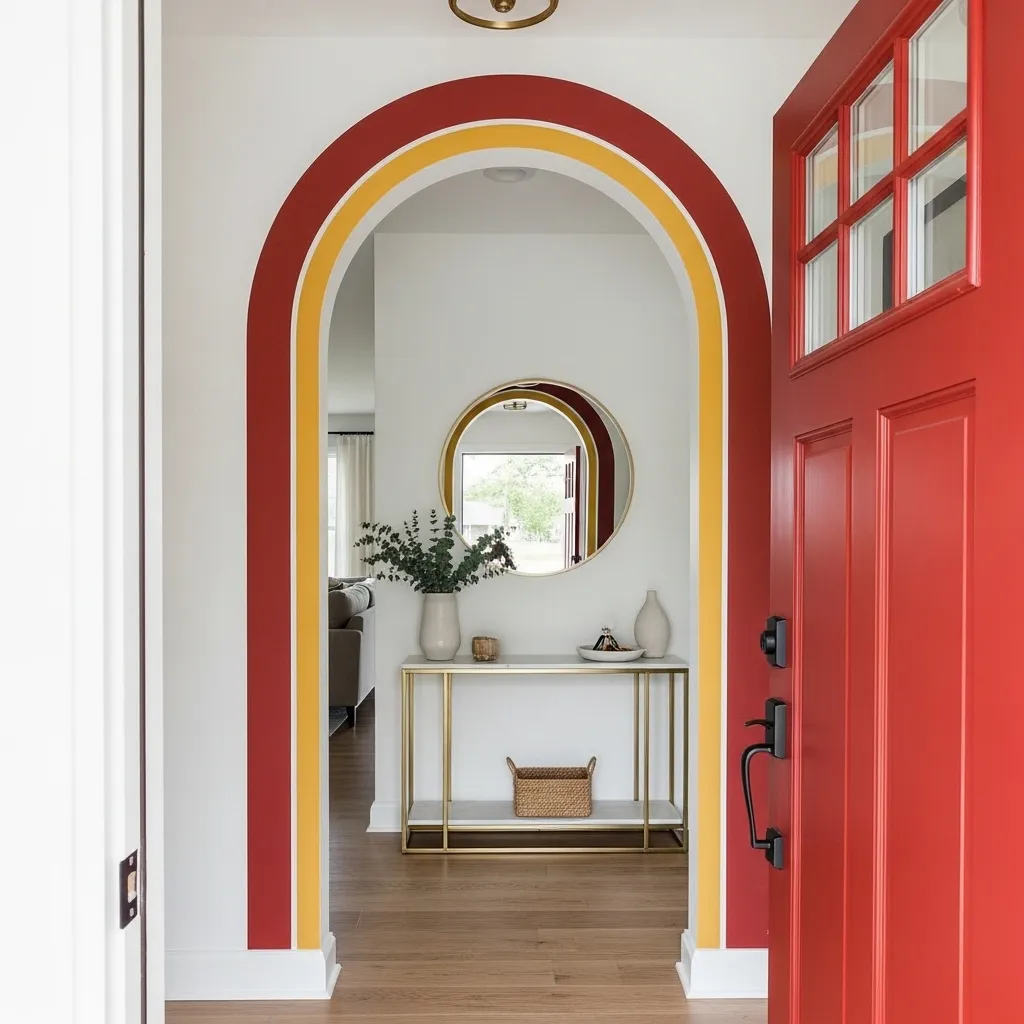
If you want to define the entryway without using furniture, try color. Painting the immediate entryway walls or the interior of the front door creates a clear visual destination.
It separates the “entry room” from the rest of the open living space instantly. Use a contrasting color for maximum definition, or a few shades darker than your main wall color for a subtler effect.
- Bold Accent Wall: Paint only the single wall that serves as the entry backdrop.
- Color-Block: Create a painted arch or rectangle around the console area.
- Paint the Door: Make the back of your front door a stand-out color.
7. Curate Your Own Mini Gallery
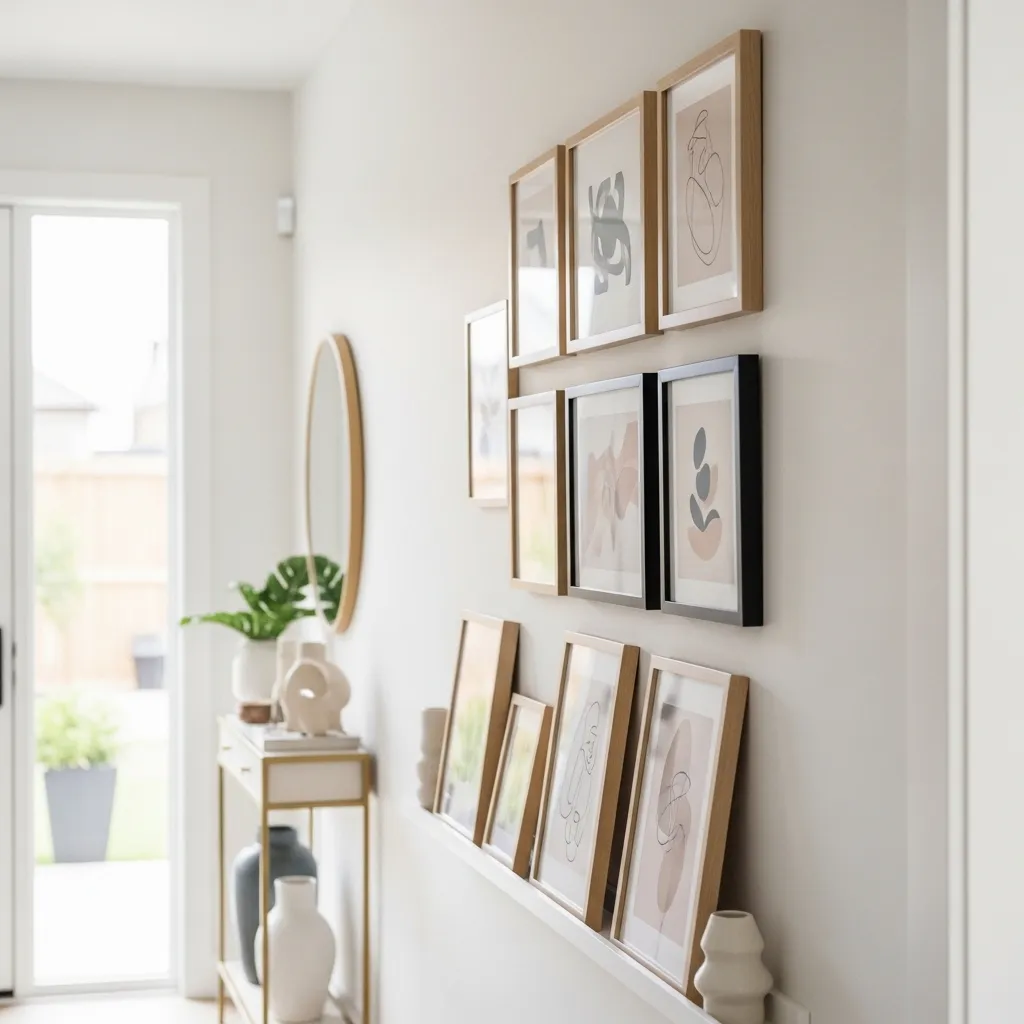
Why leave all your art for the living room? The entryway wall is the perfect spot for a compact, high-impact gallery wall.
It immediately introduces your personality to guests and tells them a bit about what you love. I prefer keeping the frames cohesive (all black or all light wood) so it looks intentional rather than cluttered. FYI, this is the spot for those unique prints you’ve been hoarding.
- Uniform Grid: Hang four or six identical frames in a perfect grid.
- Eclectic Mix: Mix different art styles but keep the frame colors similar.
- Shelf Approach: Use a long picture ledge to lean and overlap art easily.
8. Opt for Slim or Double-Duty Furniture
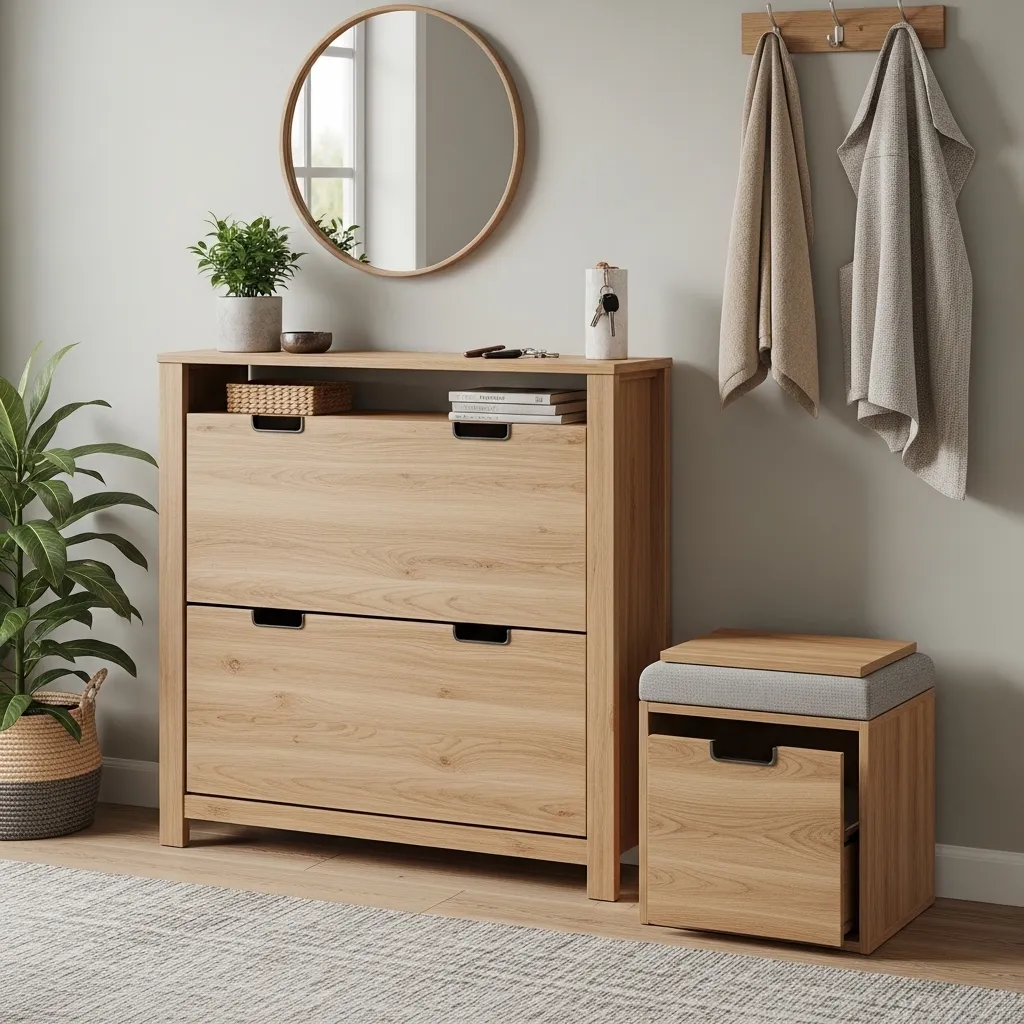
Open spaces hate bulky furniture near doorways. If you use a console, bench, or cabinet, look for designs with small footprints. Slim profile consoles are ideal for narrow designated entries.
If you have slightly more room, a closed-storage cabinet keeps shoes hidden. The goal is function without blocking traffic flow. You don’t want to maneuver around a huge furniture piece every time you come home.
- Narrow Console: Find one with a depth of 12 inches or less.
- Closed Shoe Cabinet: Use a slim cabinet to conceal shoe clutter.
- Storage Ottoman: A small, lidded storage ottoman offers seating and hides clutter.
9. Go Vertical with Wall Storage
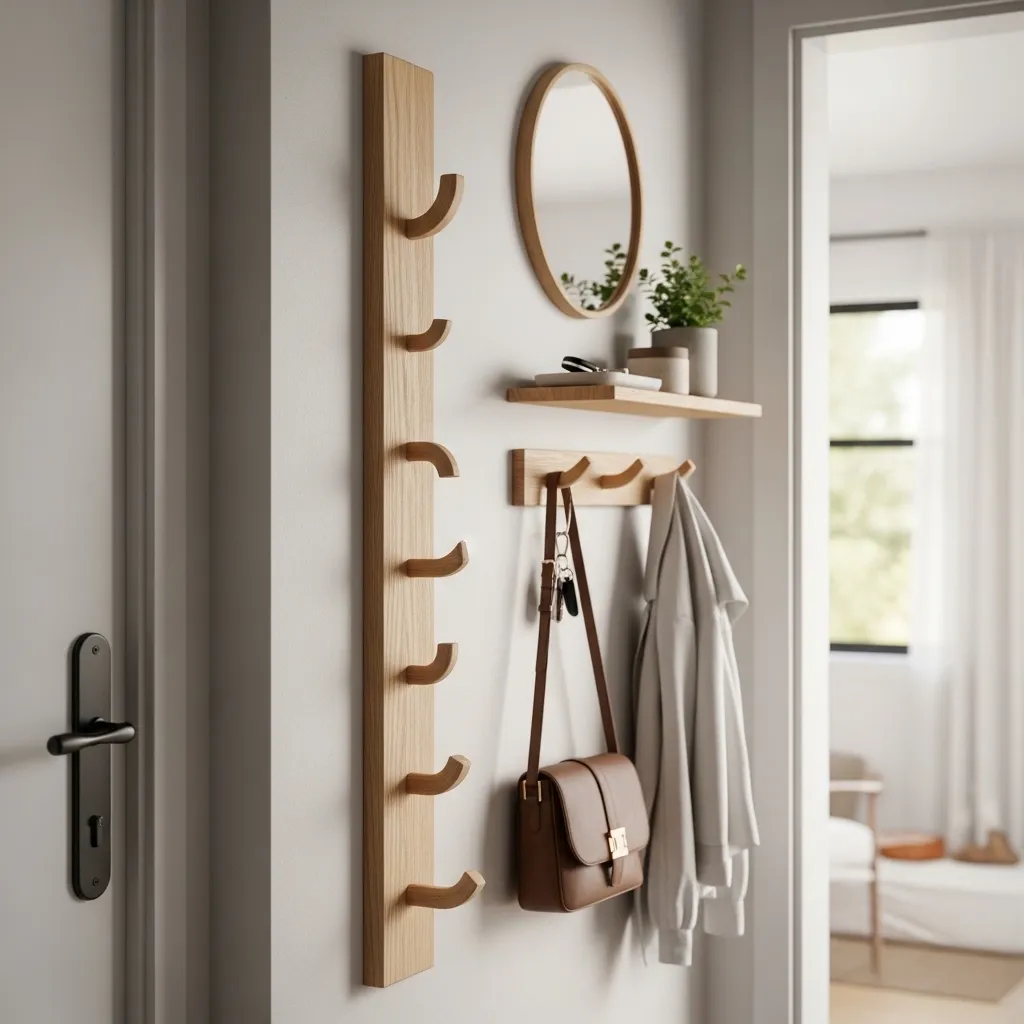
When you don’t have square footage, you have to look up. Vertical storage is your best friend in a defined-yet-small entryway. A beautiful row of hooks or a unique coat rack can look like art while holding your daily essentials like bags and jackets.
Modern, sculptural hooks transform mundane coat storage into a legitimate design feature. It’s about making the functional parts of your home beautiful, too.
- The Peg Rail: Install a long wooden peg rail for a minimalist, Shaker look.
- Individual Hooks: Scatter artful hooks at different heights on the wall.
- Hook & Shelf Combo: Find a unit combining hooks, a small mirror, and a shelf.
10. Install Floating Shelves as a Drop Zone
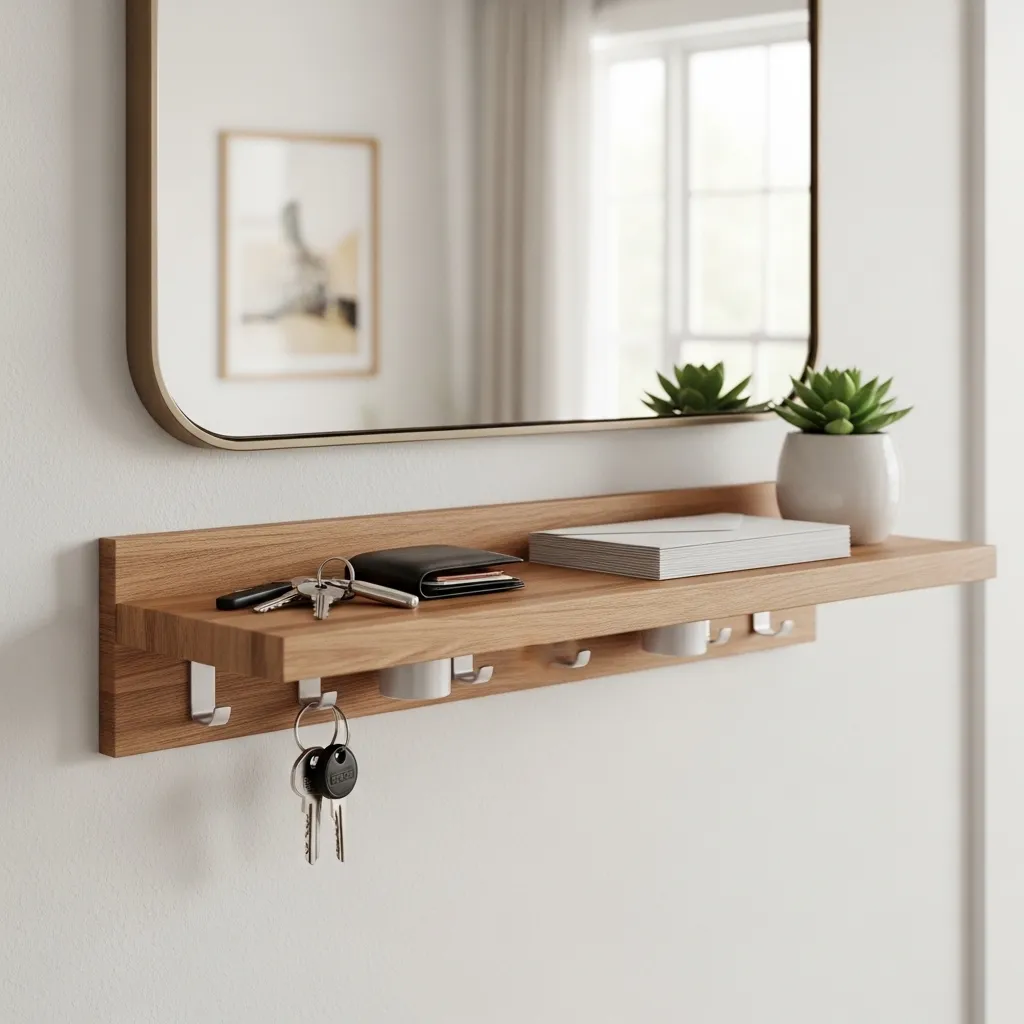
If a console table takes up too much precious floor space, try a floating shelf instead. It offers the same practical function—a place for your keys, wallet, and mail—while keeping the visual field open underneath. It looks minimal, clean, and modern.
A single, solid wood floating shelf positioned perfectly at “drop height” works beautifully without consuming any walkable space.
- Minimalist: Use one clean-lined floating shelf right under your mirror.
- Styling Focus: Keep only functional items and maybe one small plant.
- Key Hooks: Add small cup hooks directly underneath the shelf for keys.
11. Utilize Small Cabinets for Concealment
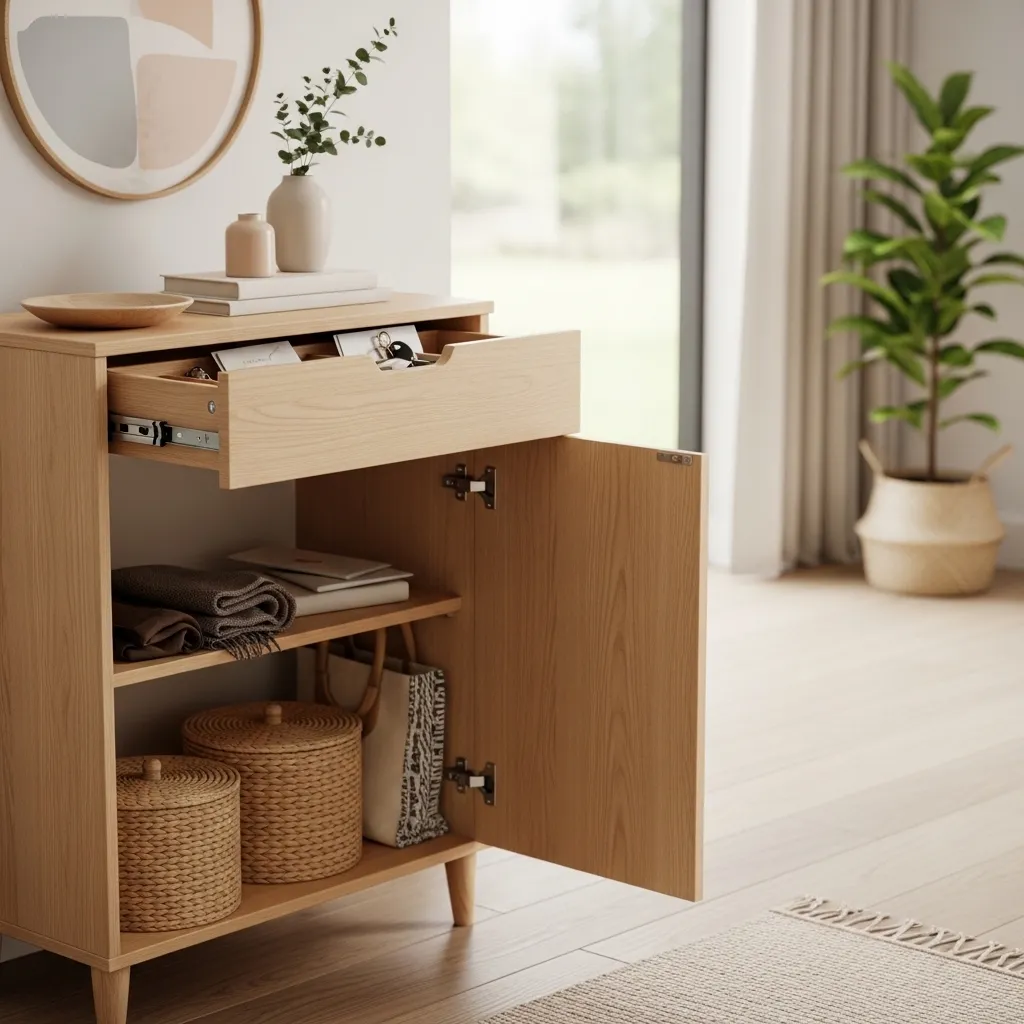
Let’s be honest: not all of us are minimalists. If you need a serious place to hide scarves, gloves, and reusable shopping bags, a small entryway cabinet is necessary
. It provides a sturdy surface for decor, just like a console, but offers valuable drawer or door storage underneath. Closed storage is the only way to genuinely maintain that neat, organized look when you enter your house.
- Small Accent Cabinet: A two-door cabinet keeps large items organized.
- Drawer Focus: Look for a piece with drawers specifically for sorting mail and keys.
- Lidded Baskets: Place baskets inside open-shelf cabinets for a tidy appearance.
12. Bring in Life with Greenery
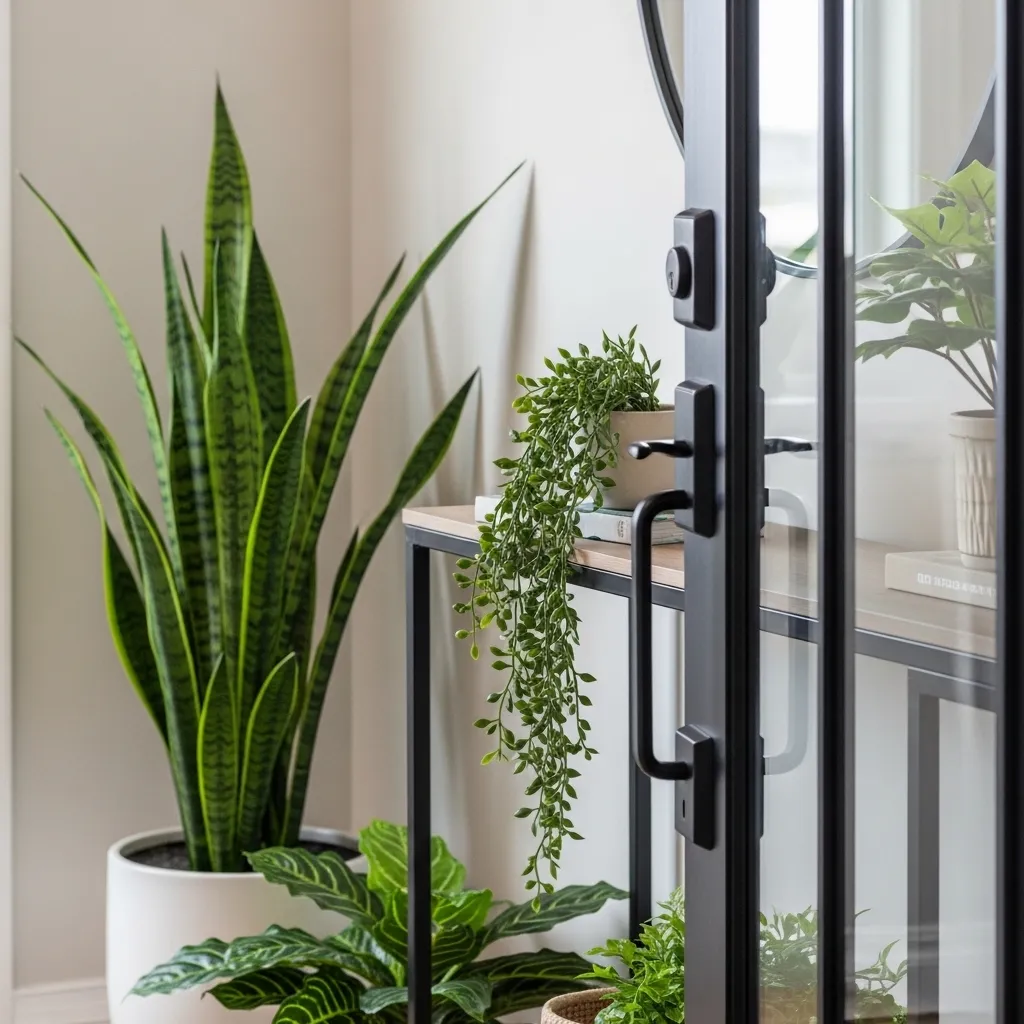
Every room in your home needs plants, and the entryway is no exception. Adding greenery instantly makes the area feel welcoming, vibrant, and intentional.
A tall, slender plant defines a corner, while a small potted plant on the console adds necessary texture and life. Choose a hardy, low-light tolerant plant if your entry lacks natural daylight.
- Tall Potted Plant: Use a tall snake plant to anchor a corner.
- Console Greenery: Place a small succulent or trailing plant on your surface.
- Faux Option: Use a high-quality faux plant if you can’t keep real ones alive.
13. Scent the Entryway (Gently)
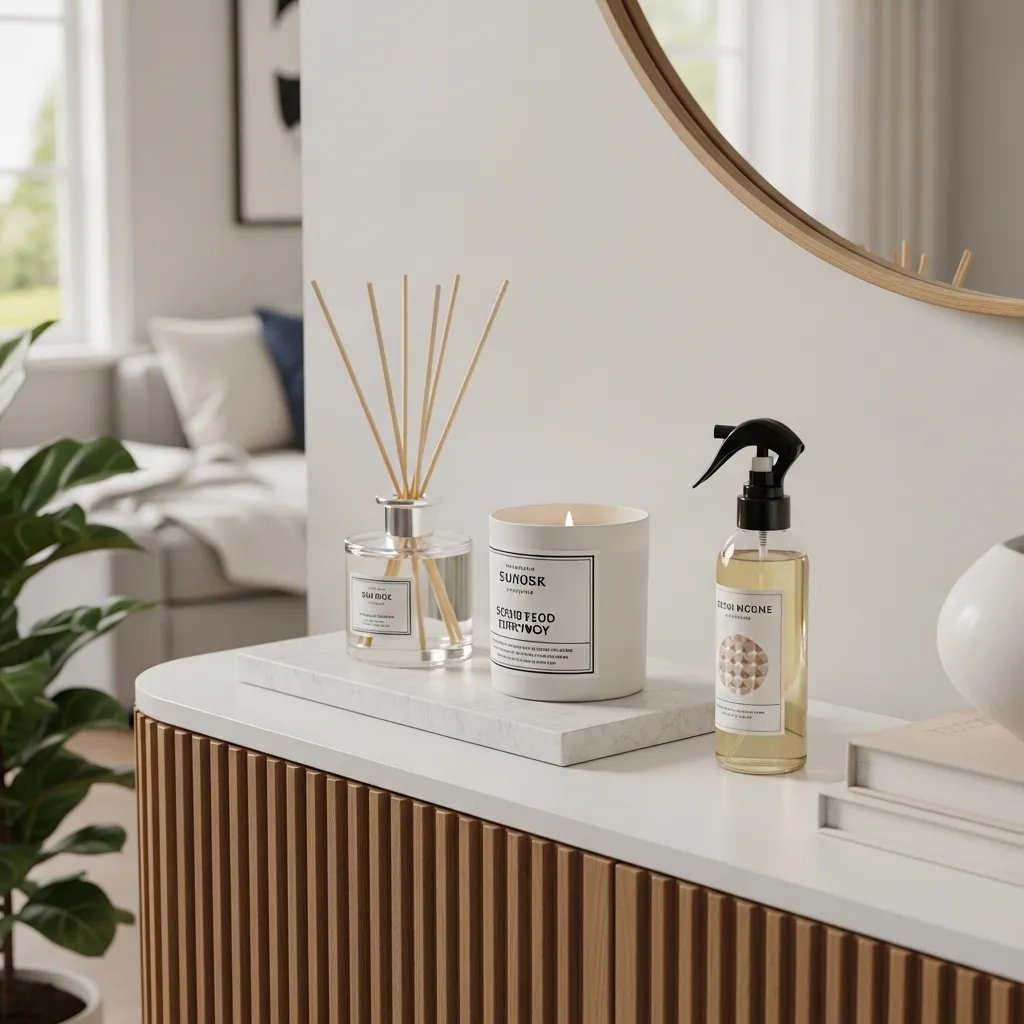
The way your home smells makes the biggest first impression. When you open the door, you want a scent that is subtle, welcoming, and clean, not overwhelming.
A high-quality reed diffuser or a beautifully packaged candle placed on your console table adds both decor value and a pleasant aroma. Don’t go crazy with strong air fresheners, please.
- Reed Diffuser: This provides a constant, gentle scent without any open flame.
- Quality Candle: Light a nice candle when guests are arriving.
- Room Spray: Spritz a natural room spray once before you leave in the morning.
14. Keep Only Essentials and Edit Frequently
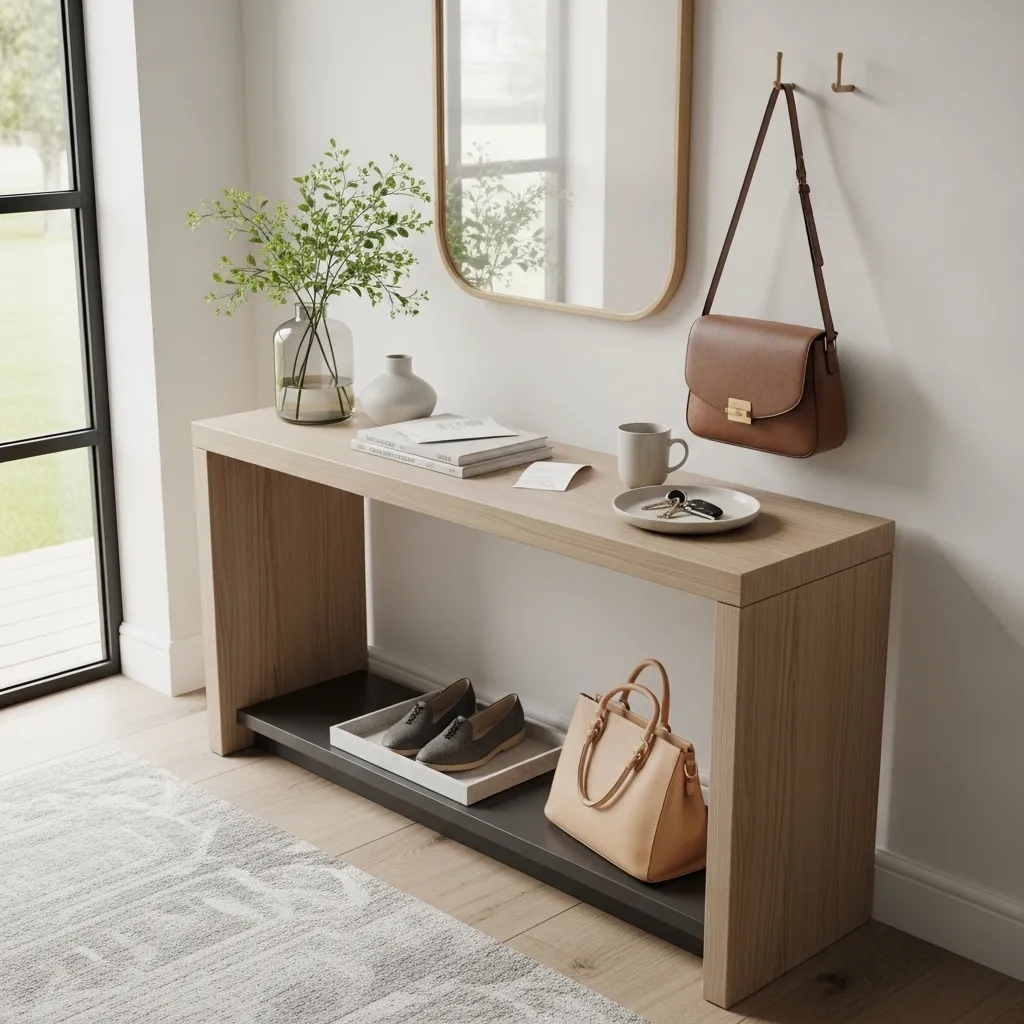
The single most important idea for maintaining a defined entryway in an open concept is strict editing.
This space is not a storage unit or a closet. Only things used daily—like keys, the bag you use every day, and currently worn shoes—should live here. Everything else goes away to its proper home. If you let it accumulate, your defined “zone” will dissolve into general chaos instantly.
- Edit Your Console: Check for mail clutter and old receipts daily.
- One Bag Limit: Allow only one bag or purse per person to hang up.
- Shoe Rotation: Keep only one pair of daily shoes near the door.
So, there you have it—14 super simple ways to make your open-concept entryway a place you (and your guests) actually enjoy walking into. It doesn’t take a massive budget or a degree in interior design, just a little bit of definition and intentionality. Start with one idea, like getting that mirror up, and see how much it changes the whole vibe. Pretty soon, your entryway will be the star of the show. 🙂