Living in a small apartment doesn’t mean you have to sacrifice style or comfort. In fact, compact quarters often force the most creative design decisions, turning limitations into unique focal points. Whether you’re dealing with a studio or a cramped one-bedroom, the secret to successful interior design lies in maximizing your floor plan without sacrificing personality.
Here are 17 expert tips to transform your footprint into a functional, sophisticated, and airy sanctuary.
1. Prioritize Vertical Storage
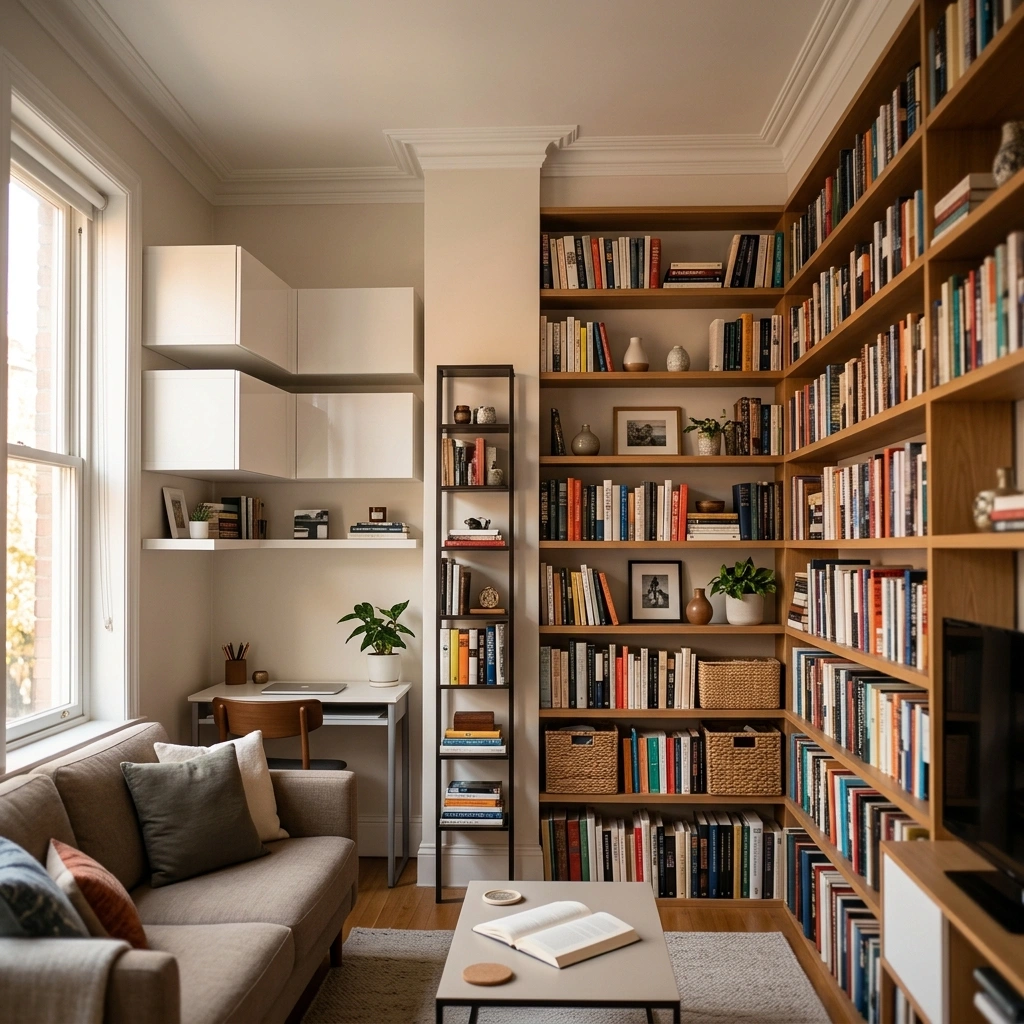
When you run out of floor space, look up. Walls are your most underutilized asset, and installing floor-to-ceiling shelving draws the eye upward, making ceilings feel higher.
Use tall, slim bookcases or floating wall-mounted units to house books, decor, and essentials. By keeping your surfaces clear of clutter, you maintain a sense of openness that prevents the room from feeling suffocated.
2. Embrace Multifunctional Furniture
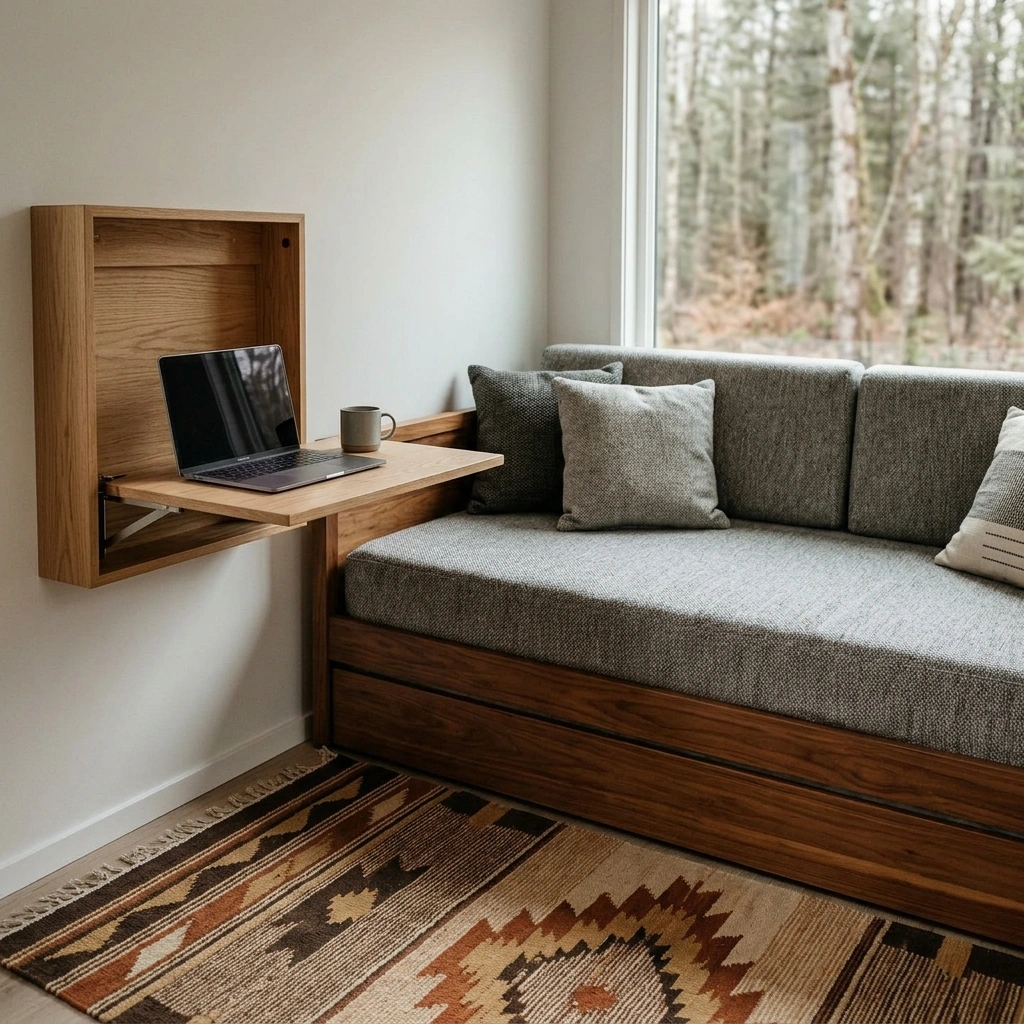
In a tiny home, every piece of furniture must earn its keep. Look for coffee tables with hidden storage, ottomans that double as extra seating, or sleeper sofas for guests.
A dining table that folds down into a wall-mounted desk is a game-changer for those balancing remote work with limited square footage. Always ask yourself, can this piece do more than one job?
3. Master the Art of Lighting
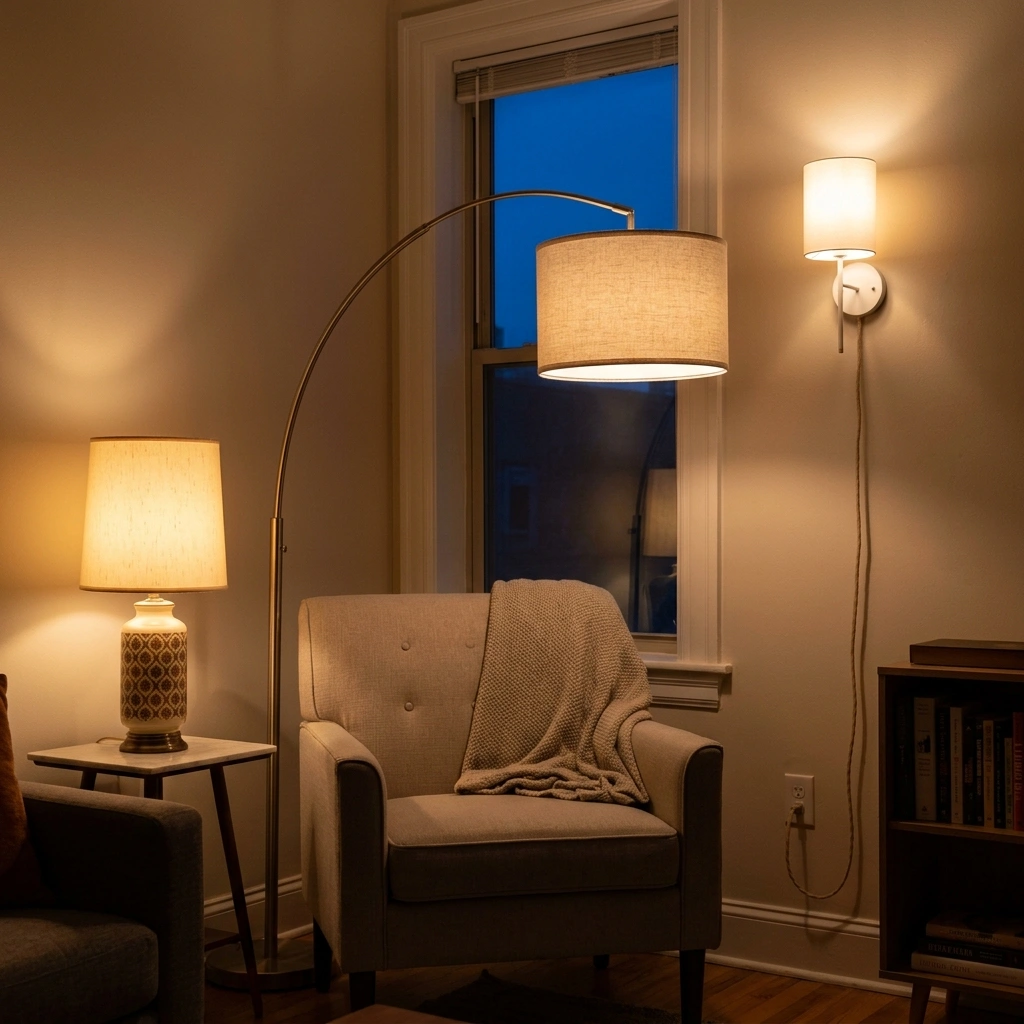
Lighting is arguably the most important element in small apartment decorating.
Harsh overhead lights make rooms feel smaller, while layered lighting creates depth. Combine floor lamps, table lamps, and wall sconces to eliminate dark corners.
If you’re renting, consider plug-in wall sconces; they add a high-end look without requiring electrical work or heavy wall damage.
4. Keep Your Palette Cohesive
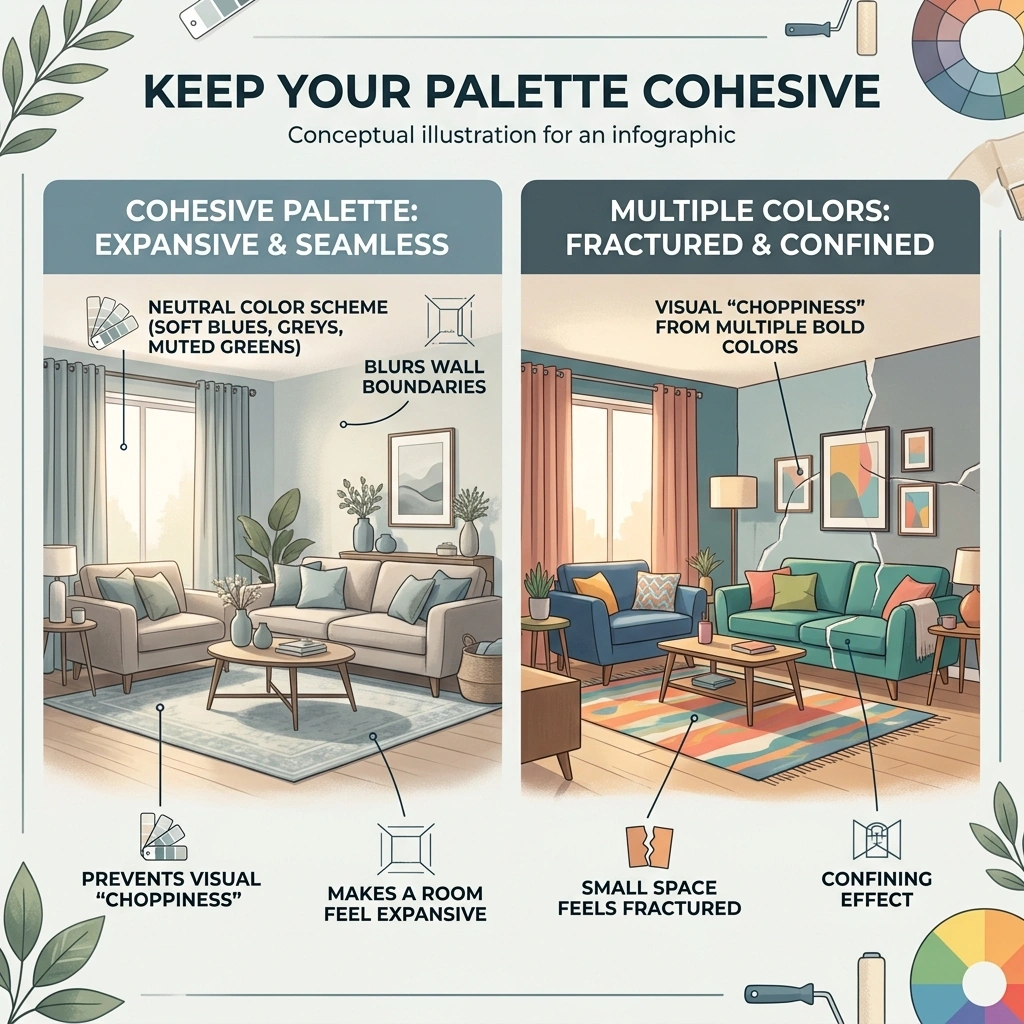
A monochromatic or neutral color scheme is a classic design trick for a reason: it blurs the boundaries of the walls, making a room feel expansive.
You don’t have to stick to beige—soft blues, warm greys, or even muted greens can act as a neutral base.
By keeping colors consistent across your furniture and decor, you prevent visual “choppiness” that makes small spaces feel fractured.
5. Use Mirrors to Multiply Space
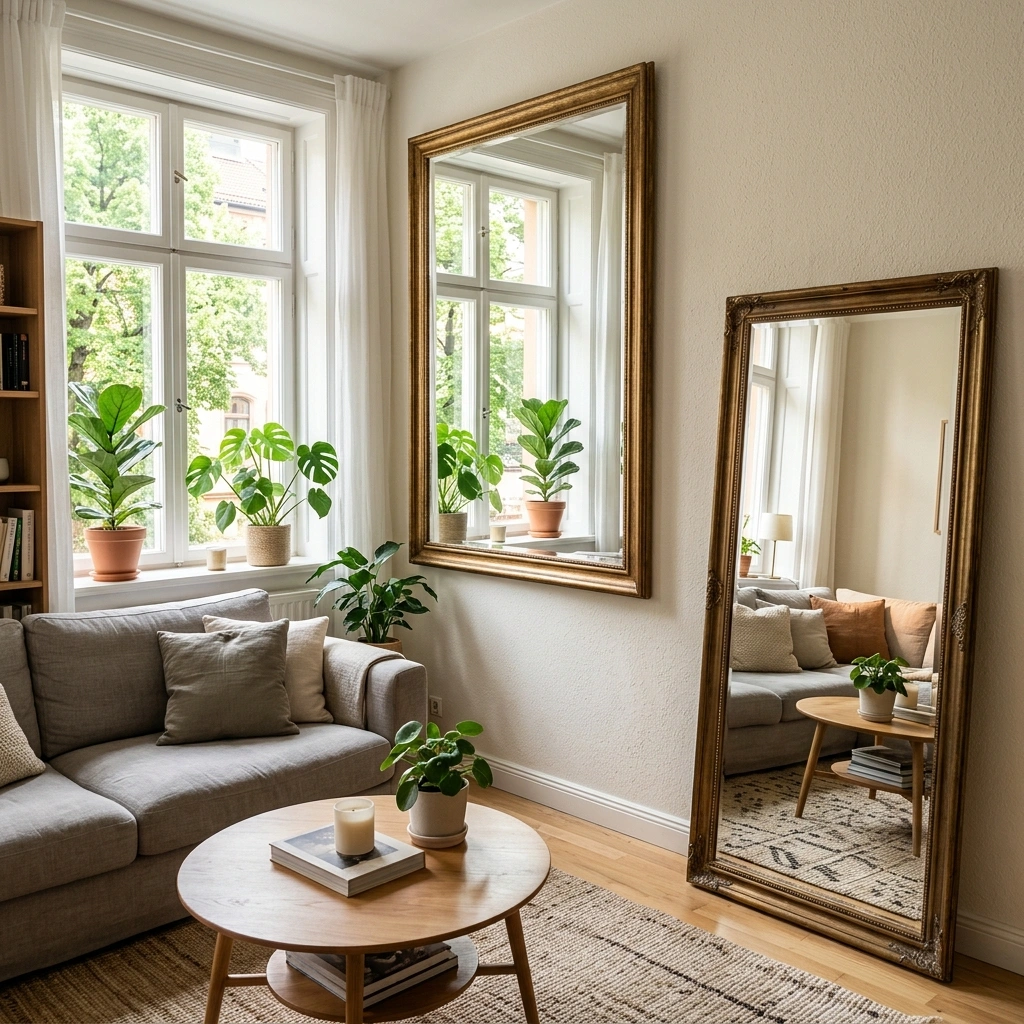
It’s the oldest trick in the designer’s handbook because it works. Mirrors reflect light and create the illusion of depth, effectively doubling your square footage visually.
Place a large mirror opposite a window to bounce natural light around the room, or lean a full-length floor mirror against a wall to add architectural interest while opening up the space.
6. Select Leggy Furniture
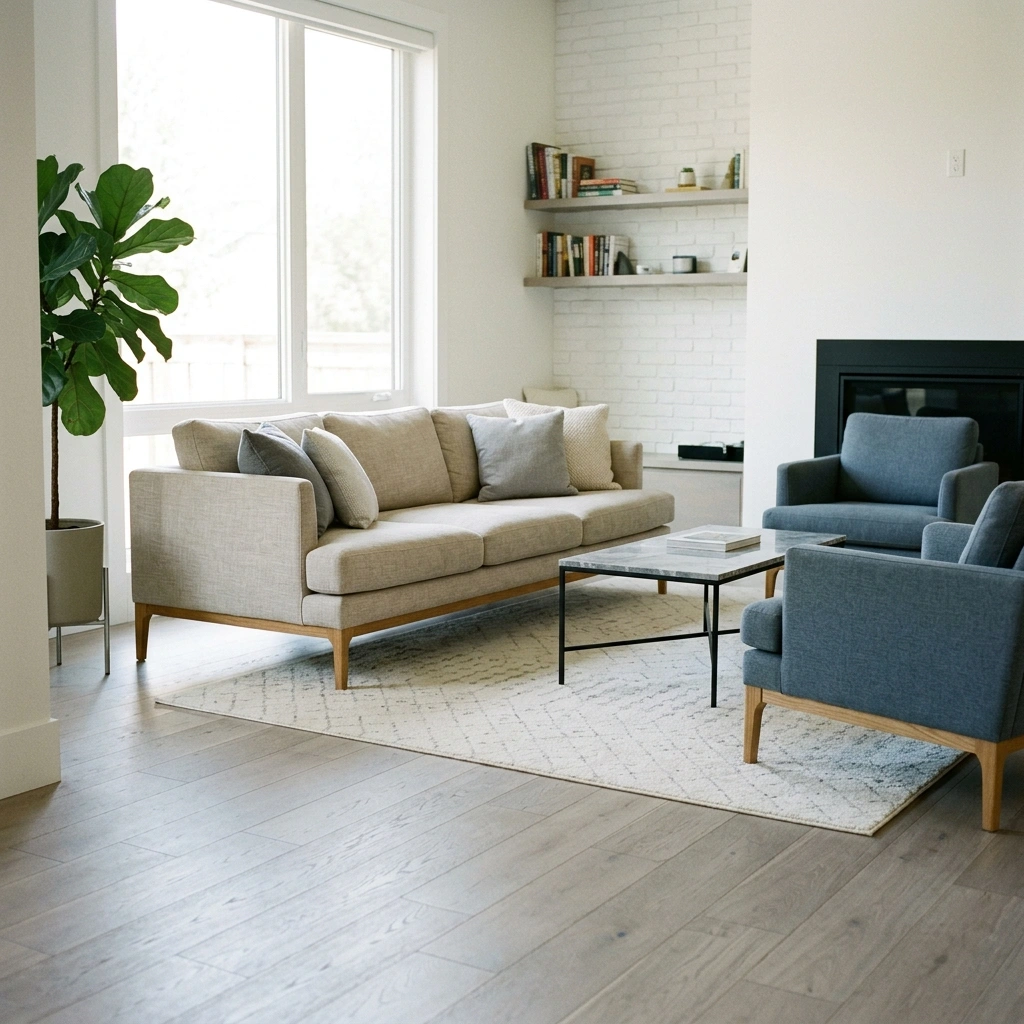
Heavy, boxy furniture that sits directly on the floor can make a room look grounded and cramped. Instead, choose pieces with exposed legs.
When you can see the floor beneath a sofa or armchair, your brain perceives the space as larger and airier. It’s a subtle shift, but it makes a massive difference in how congested a room feels.
7. Invest in Custom Window Treatments
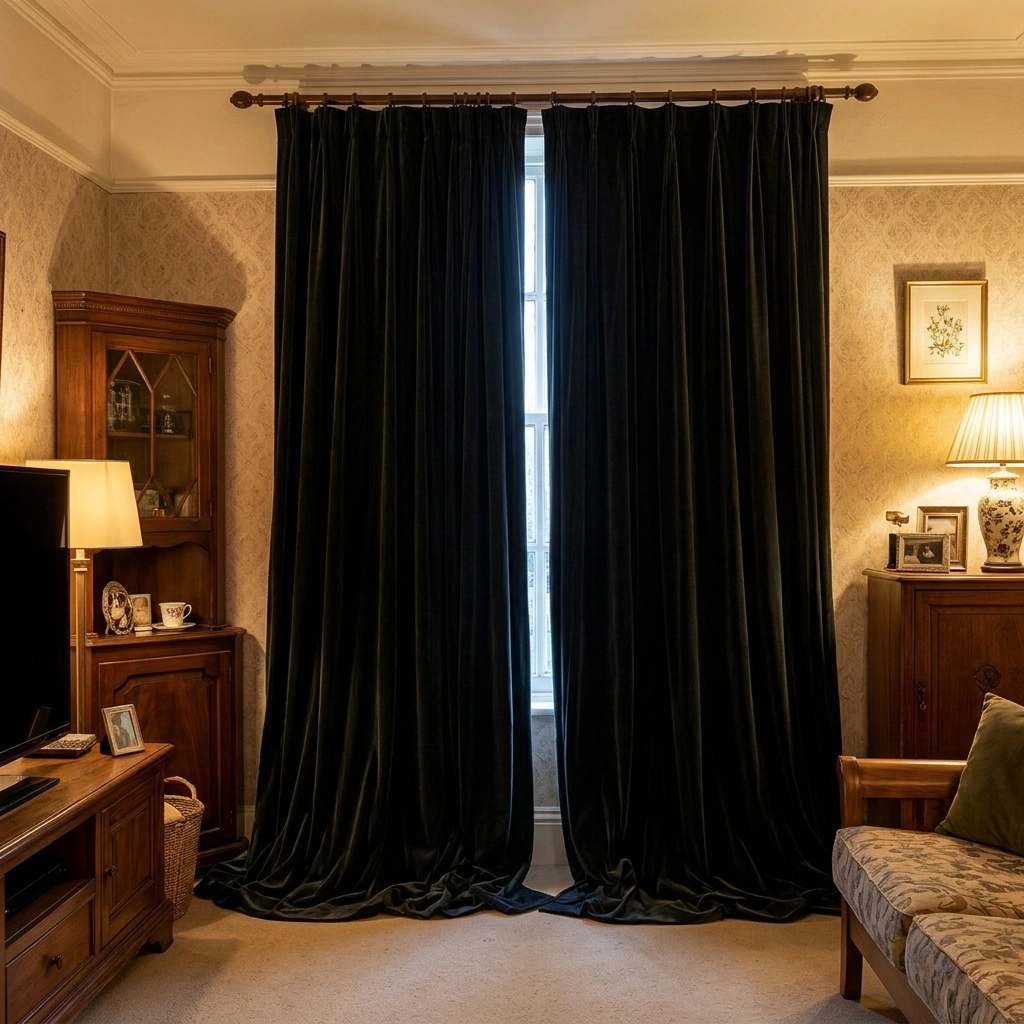
Ditch the heavy, floor-pooling curtains that consume visual space. Opt for Roman shades or simple roller blinds mounted as high as possible above the window frame.
This creates the illusion of taller windows and allows maximum natural light to flood in. If you prefer curtains, hang the rod closer to the ceiling to lengthen the appearance of the walls.
8. Scale Matters: Go Big, Not Small
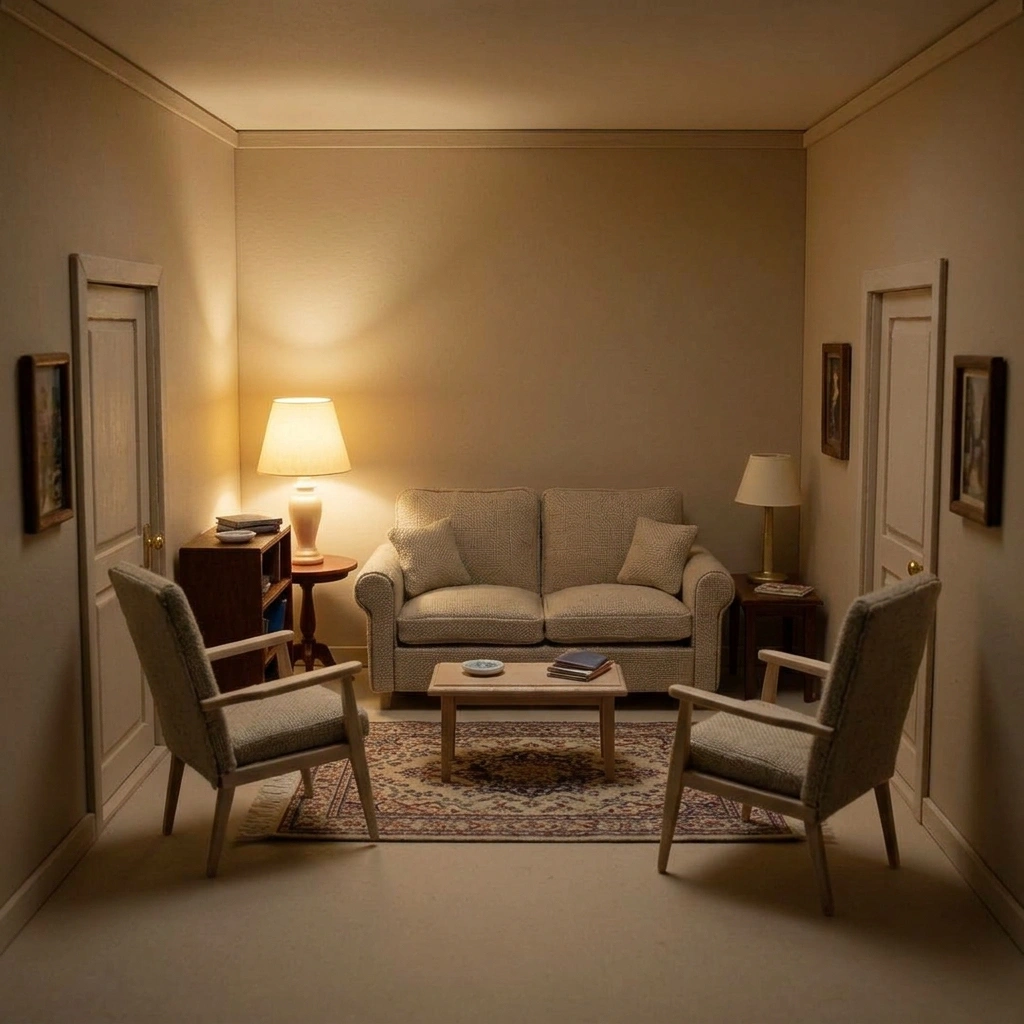
A common mistake is filling a small room with tiny furniture. While it seems logical, it often makes the apartment look like a dollhouse.
Instead, choose a few larger, statement pieces—like one plush sofa rather than two tiny, uncomfortable chairs. A bold piece of art or a generous rug can anchor the room and make it feel more intentional and luxurious.
9. Utilize Rugs to Define Zones
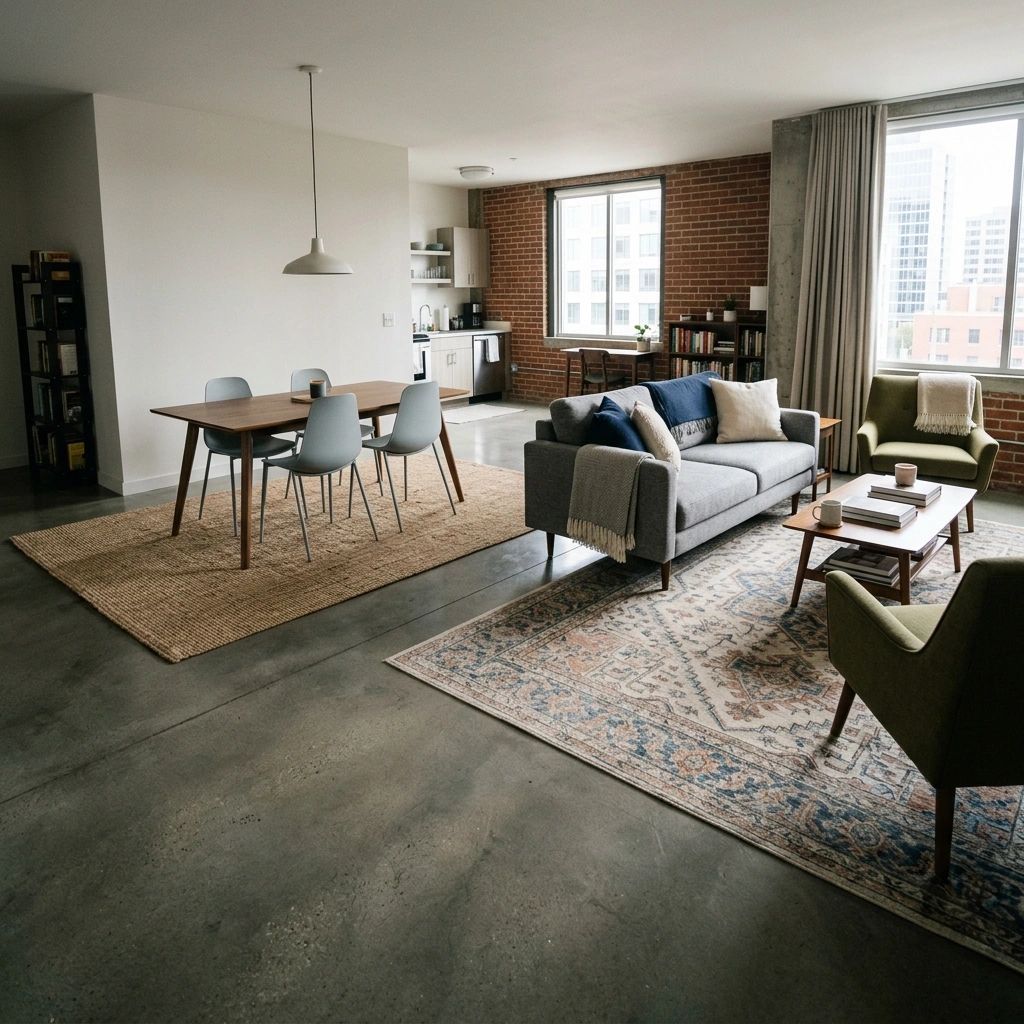
In an open-concept studio, defining different areas is crucial. Use area rugs to “zone” your space without building physical walls.
A rug under your dining table separates the eating area from the living space, while another rug defines the relaxation zone. Keep the colors and textures somewhat complementary to ensure the flow remains smooth.
10. Clear the Clutter
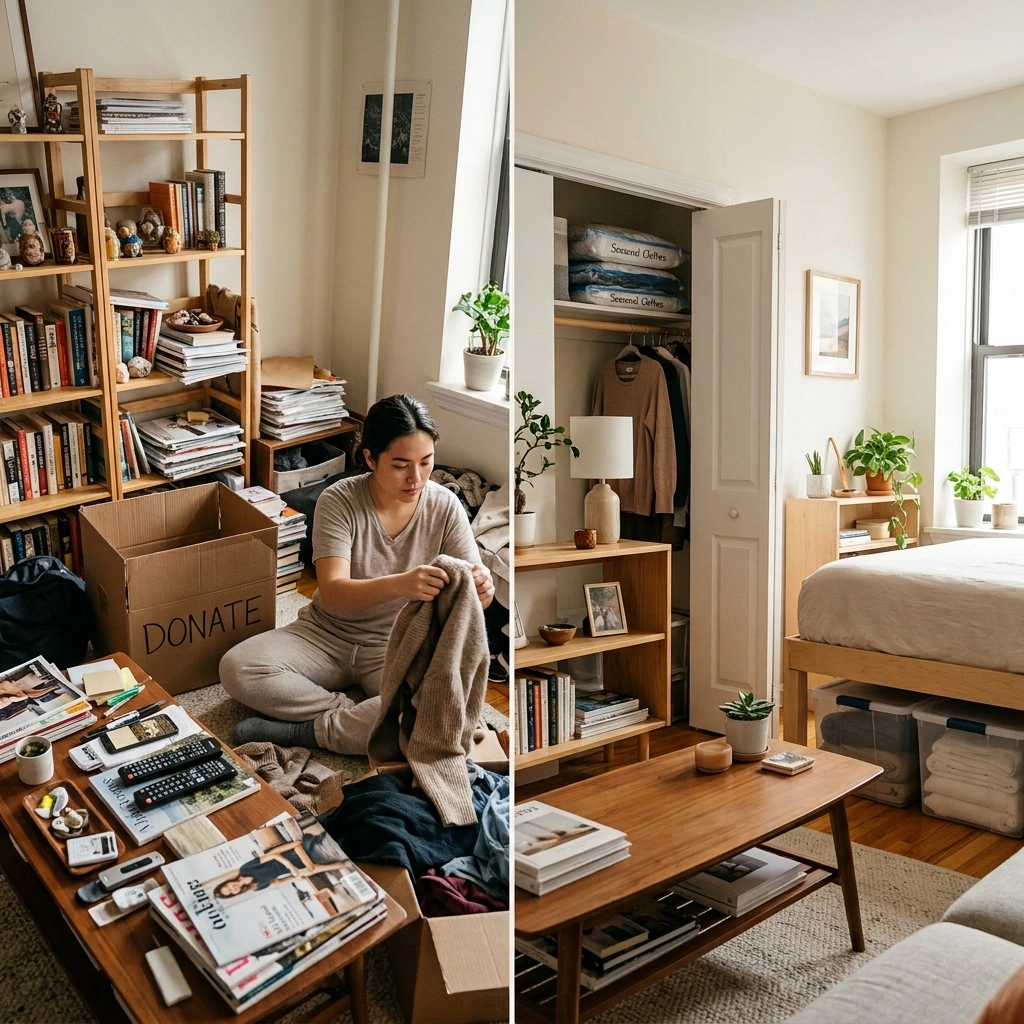
It’s impossible to feel relaxed in a cramped space if every surface is covered in “stuff.” Practice aggressive editing.
If you haven’t used it in a year, donate it. In a small apartment, your belongings should be either functional or meaningful. Store seasonal items under the bed or in vacuum-sealed bags in the closet to keep your primary living areas breathable.
11. Add Hidden Storage Everywhere
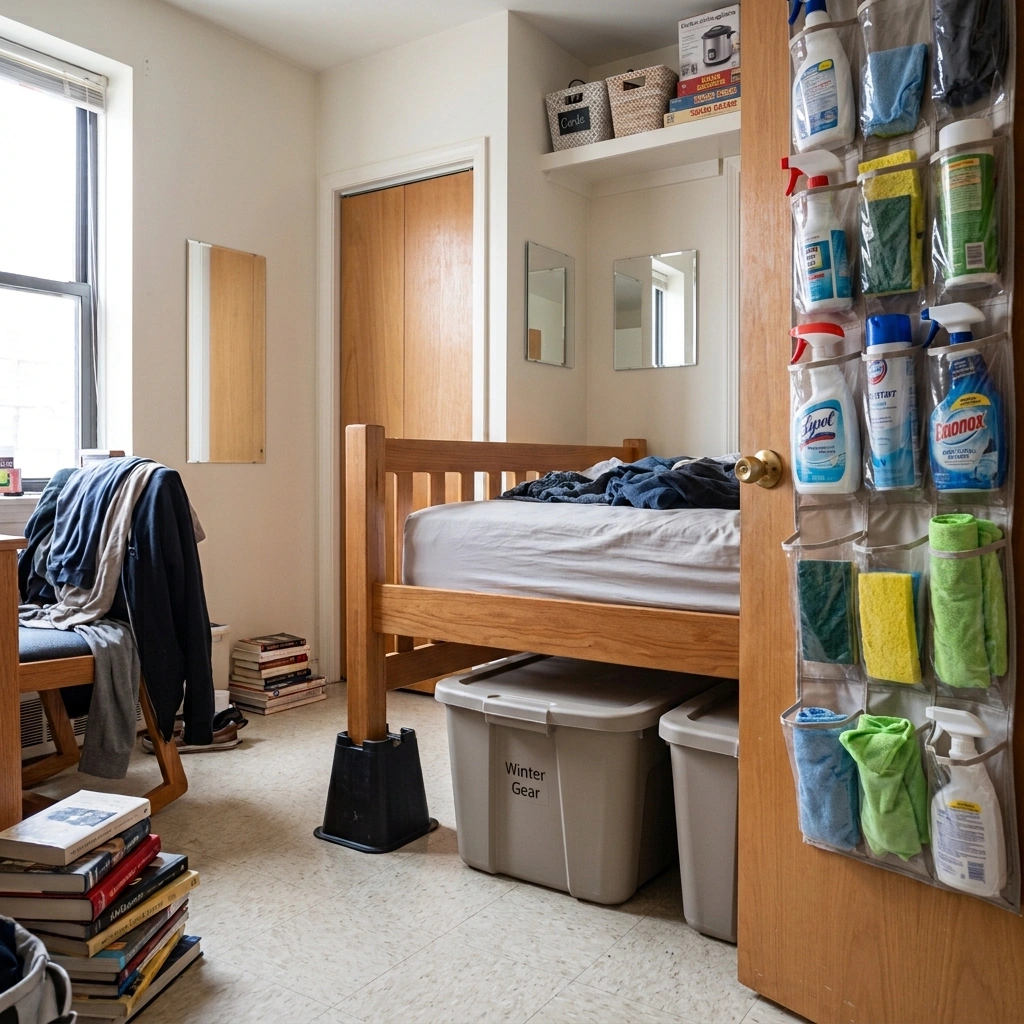
Look for dead space—the area above door frames, under the bed, or behind closet doors. Over-the-door organizers are perfect for shoes, cleaning supplies, or pantry items.
Bed risers can give you enough clearance to slide plastic bins underneath, essentially turning your bedroom into a secondary storage unit.
12. Use Transparent Materials
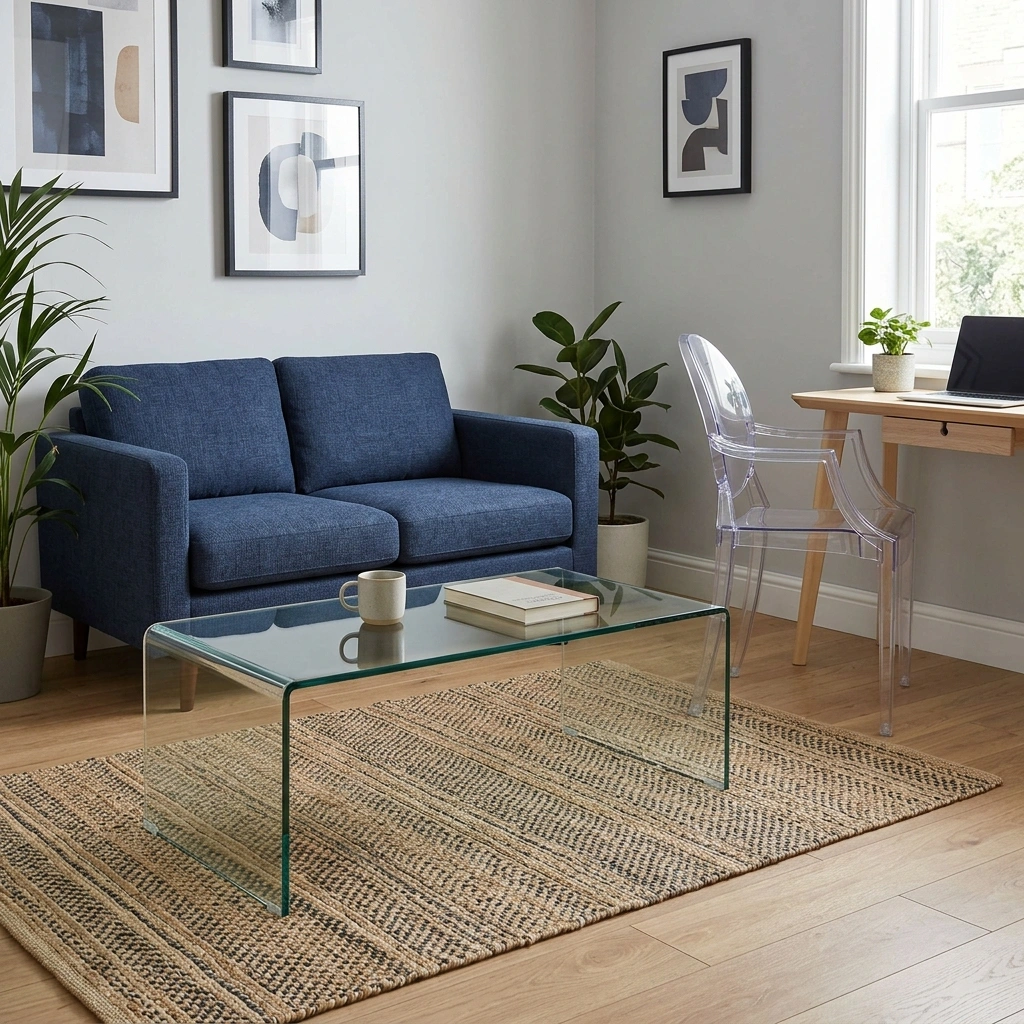
If you need a coffee table or dining chair but don’t want it to “take up” visual space, go invisible. Acrylic or glass furniture—often called “ghost” furniture—is incredibly effective in small apartments.
These pieces provide the functionality you need without adding physical bulk to your line of sight.
13. Create a Focal Point
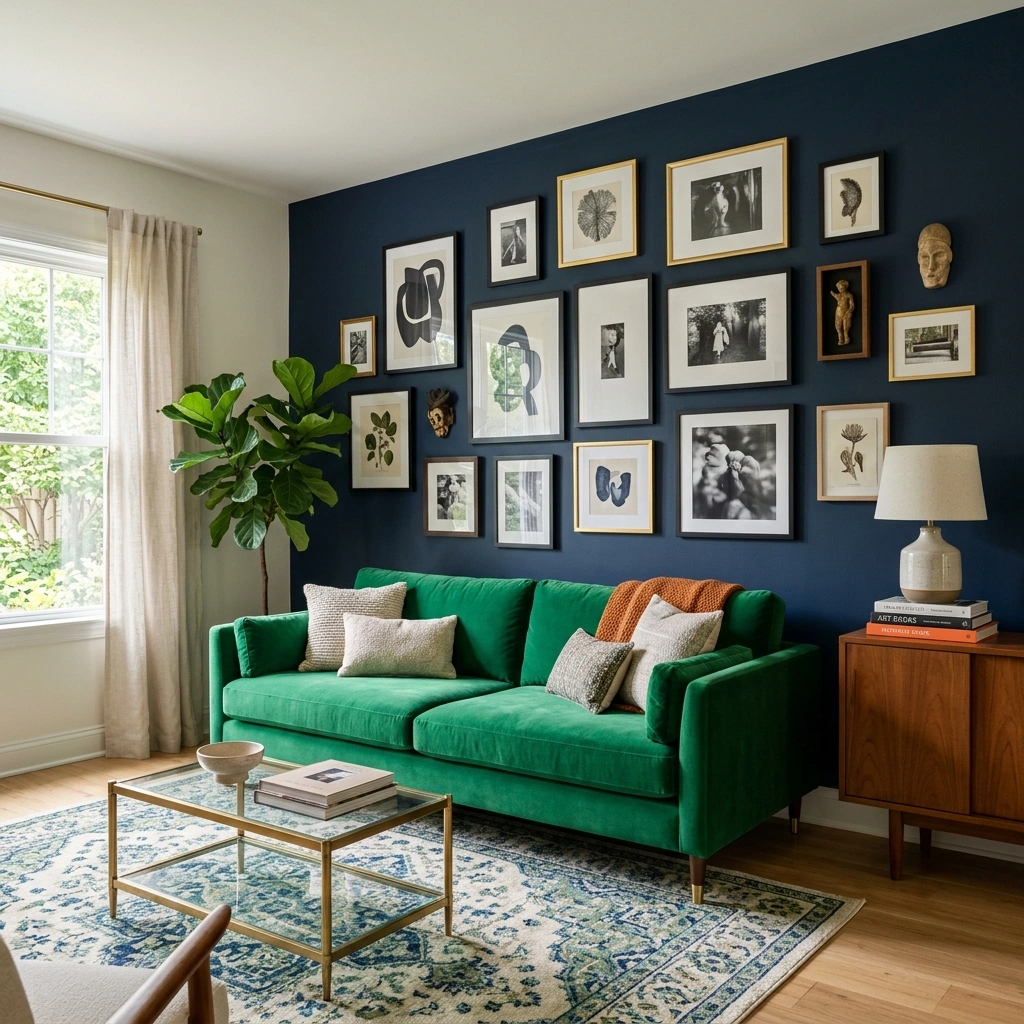
Every room needs a “hero.” Without a focal point, the eye wanders and becomes overwhelmed by the smallness of the room.
This could be a dramatic accent wall, a gallery wall of art, or even just a vibrant statement sofa. By giving the eye somewhere specific to land, you make the design feel curated rather than just “filled.”
14. Keep Flooring Consistent
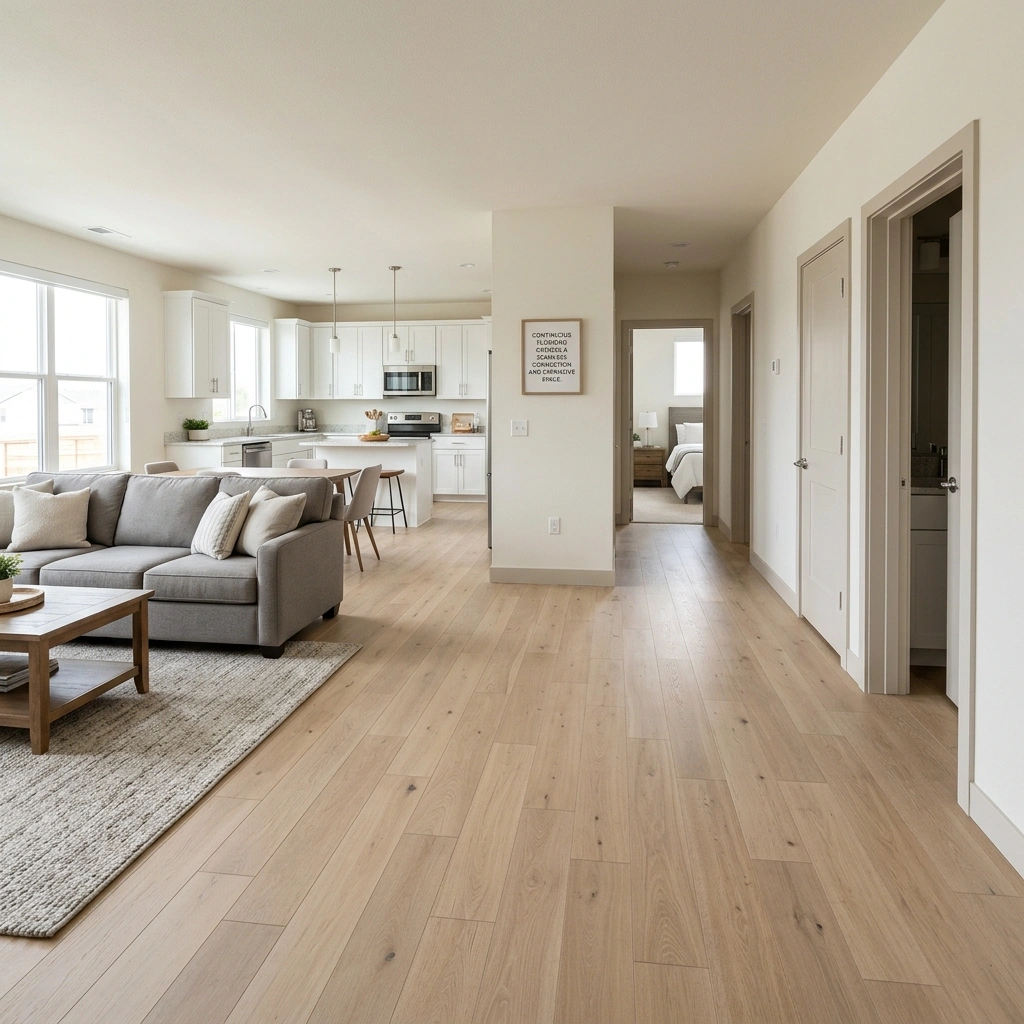
If possible, use the same flooring throughout the entire apartment. Transitions between different carpet, wood, and tile styles act as visual speed bumps that break up the flow of the floor.
A continuous, uniform floor treatment creates a seamless connection between rooms, making the entire apartment feel like one expansive unit.
15. Leverage Wall-Mounted Tech
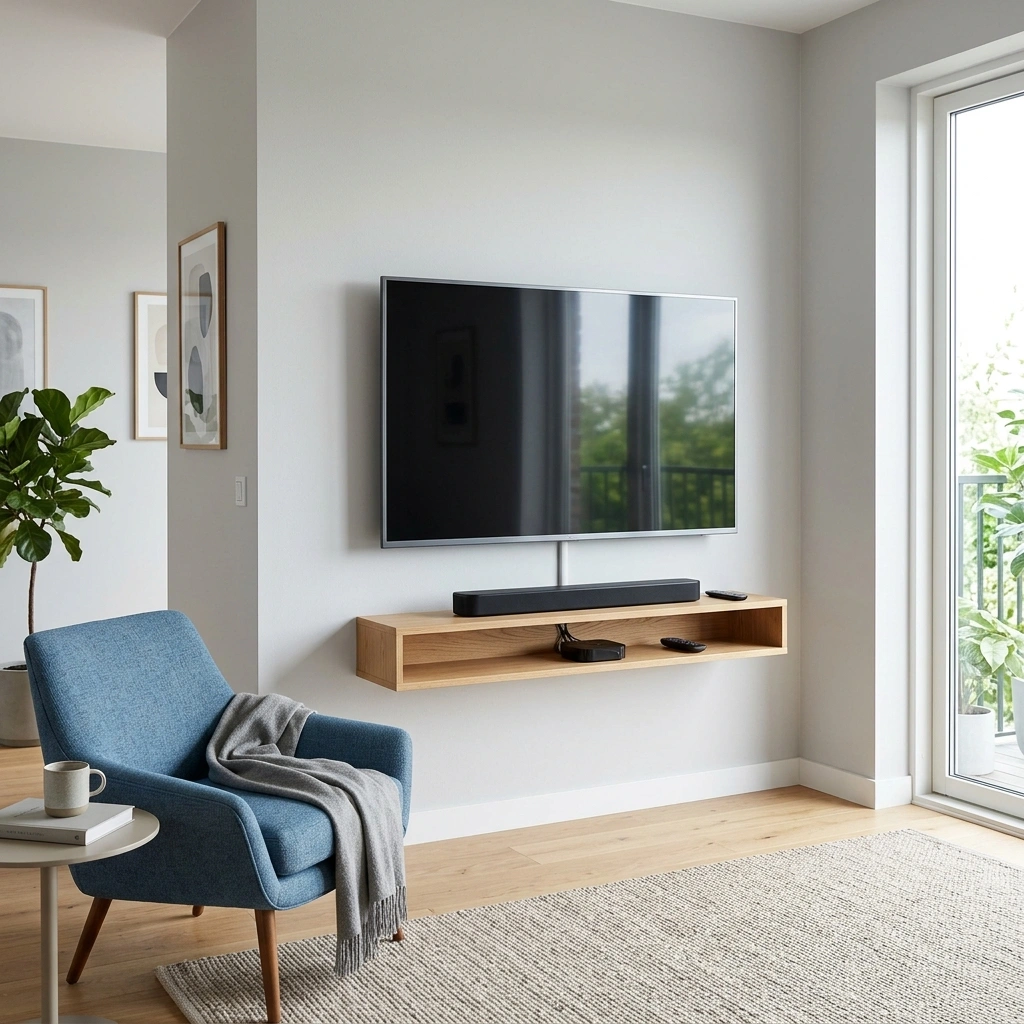
Floor space is precious; don’t waste it on a bulky media console. Mounting your TV to the wall frees up your floor and allows for cleaner lines.
You can add a floating shelf beneath the TV for your streaming devices, keeping the look modern, minimalist, and incredibly efficient.
16. Install Sliding or Pocket Doors
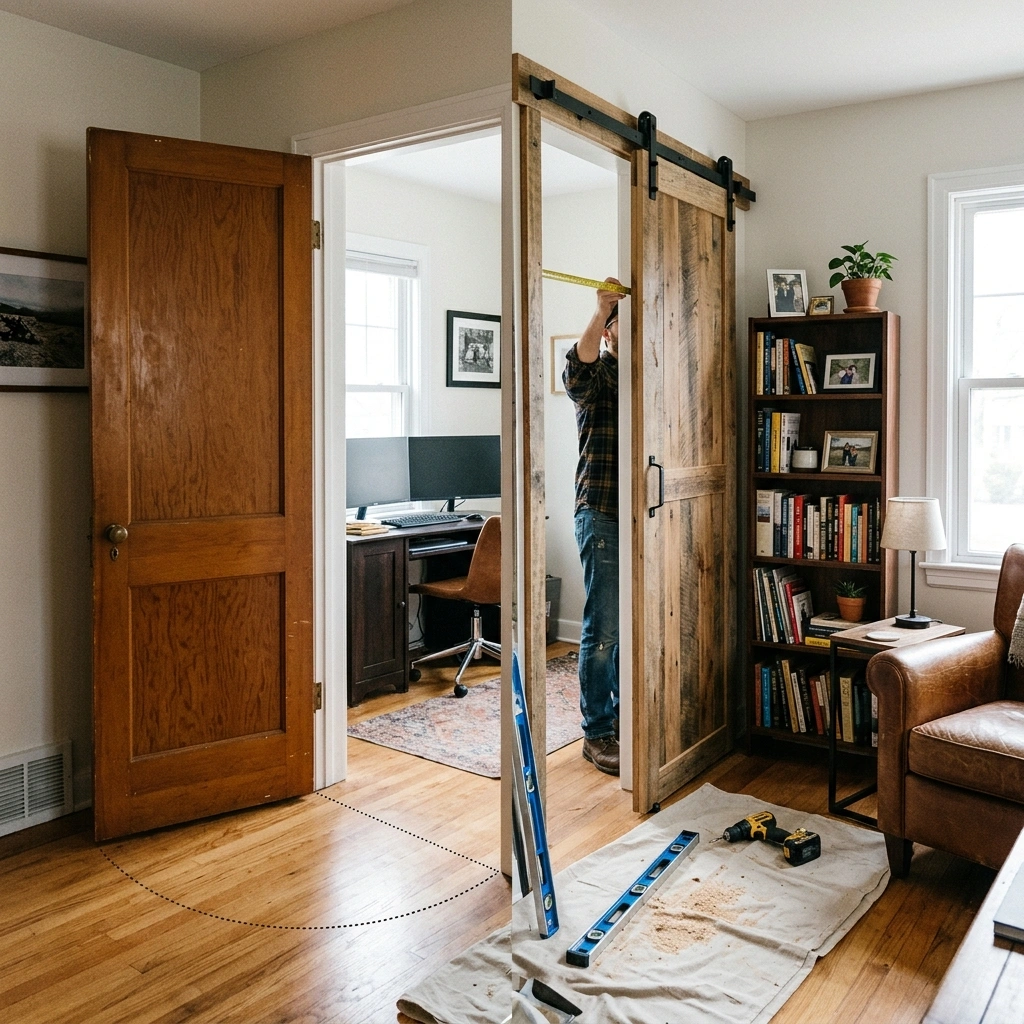
If you’re lucky enough to be in a position to renovate, replace swinging doors with sliding barn doors or pocket doors. A standard door requires a “swing zone” that you can’t use for anything else. Removing that requirement unlocks square footage that you can reclaim for a bookshelf, a chair, or better foot traffic.
17. Add Greenery Strategically
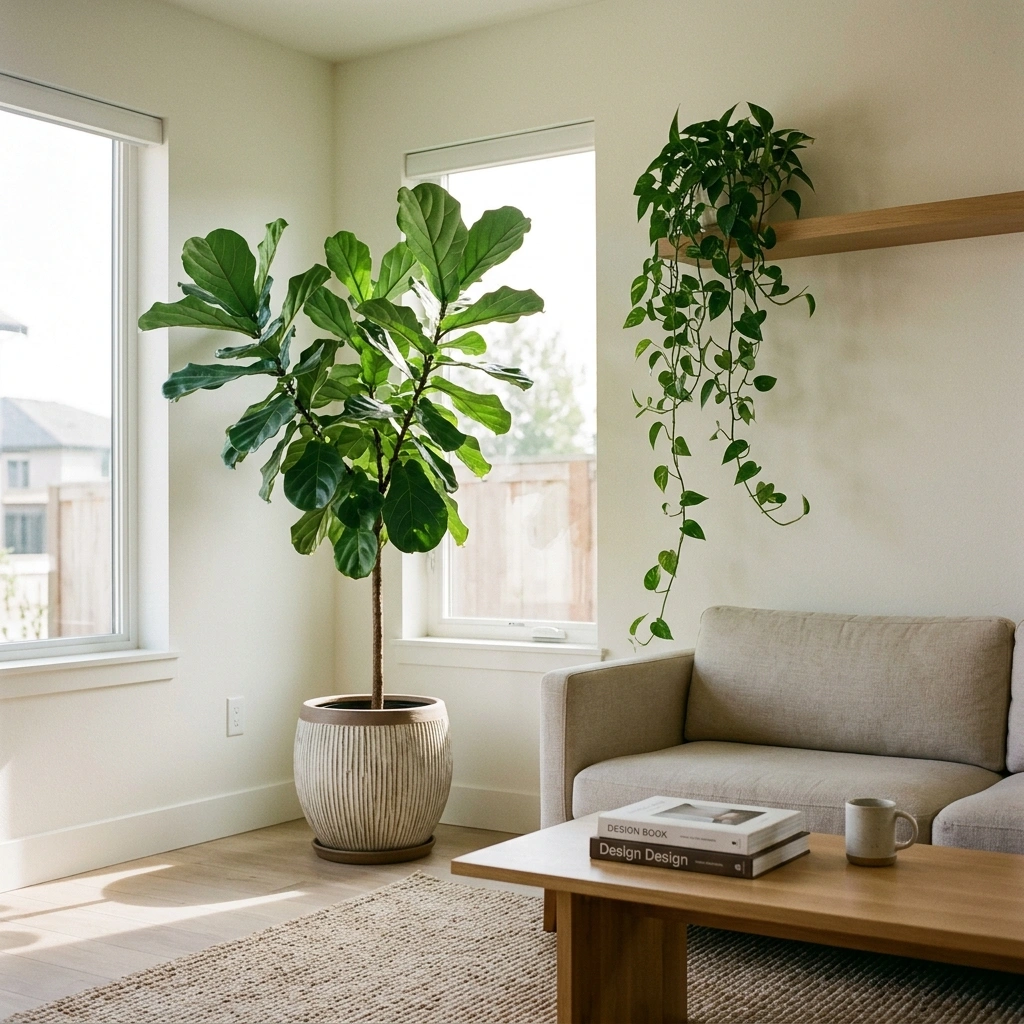
Plants breathe life into a home, but they can quickly turn into clutter. Choose one or two large, floor-based plants rather than a collection of tiny pots scattered on every surface.
A trailing plant on a high shelf adds greenery without occupying floor space, bringing the organic, soothing touch of nature into your apartment.
Designing Your Way to More Space
Small apartment decorating is less about shrinking your needs and more about optimizing your habits. By choosing multifunctional pieces, keeping your surfaces tidy, and being strategic with light and scale, you can transform even the tightest quarters into a stylish retreat. Start by tackling one zone—like your living area—and watch how these small shifts create a big impact. Remember, the best-designed homes aren’t measured in square feet; they’re measured by how much they feel like you.
What area of your apartment is currently giving you the most design trouble?