1. The Power of “Lived-In” Minimal
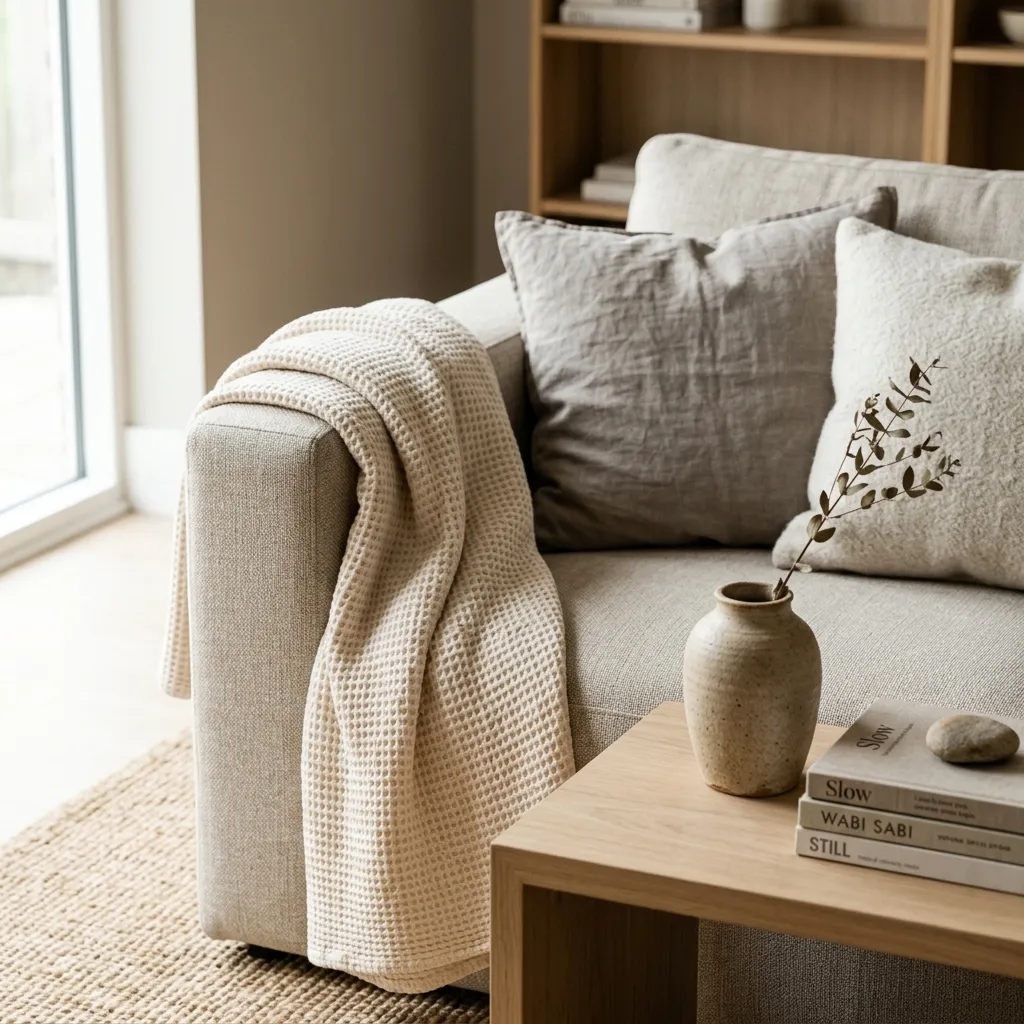
Minimalism used to feel cold, like a doctor’s waiting room. Not anymore. This vibe is all about keeping the clutter away while embracing textures that feel warm. Think soft linens and chunky knits.
- Declutter surfaces until only three items remain.
- Swap sleek metals for matte wood finishes.
- Drape a waffle-knit throw over the arm of your sofa.
Quick Tip: Stick to a “tonal” palette—using different shades of the same color—to keep it interesting but calm.
2. Biophilic Bliss
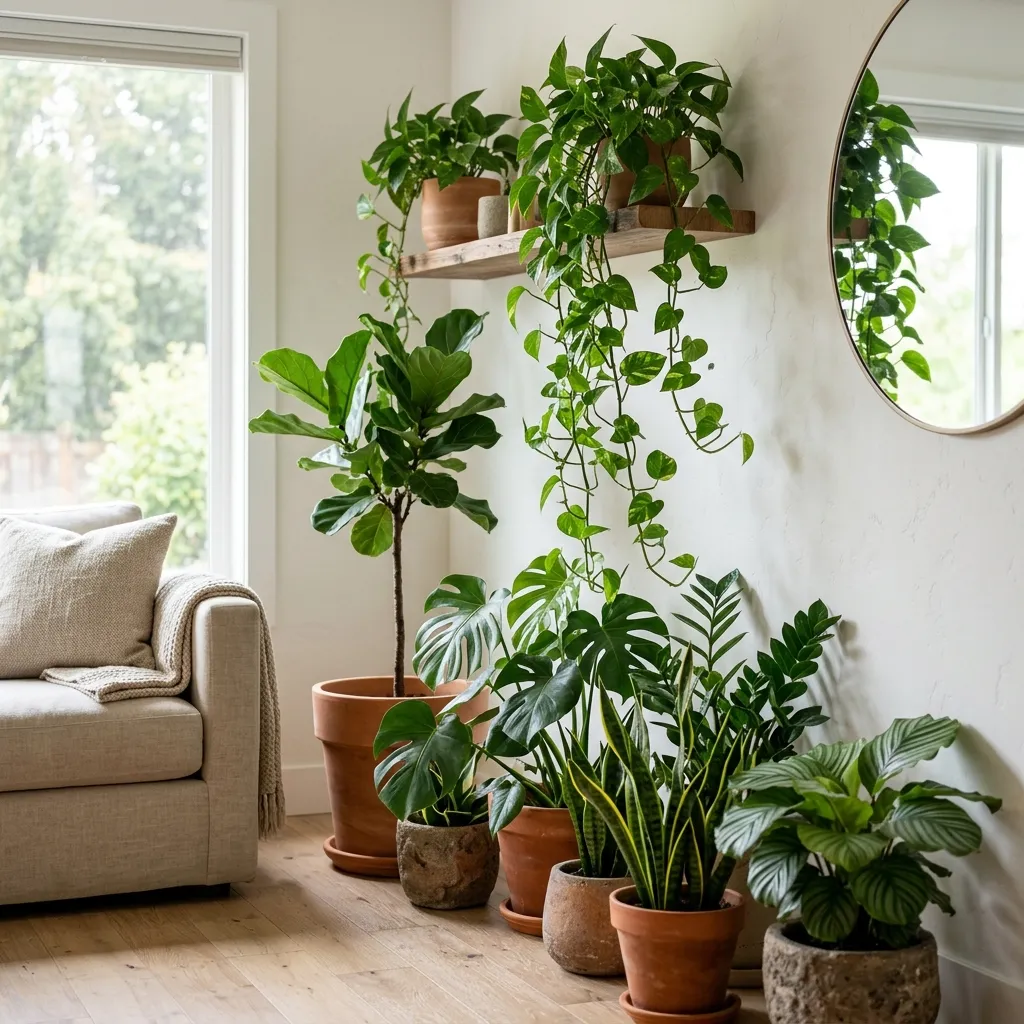
Bringing the outdoors in isn’t just about sticking a cactus in the corner. It’s about creating a flow between your window view and your coffee table. It makes a room feel alive.
- Group plants of varying heights in one corner.
- Use terracotta or stone pots for an earthy feel.
- Position a mirror opposite a window to reflect garden views.
Quick Tip: If you’re a “black thumb,” start with a Pothos; they are practically impossible to kill and look great trailing off shelves.
3. The “Statement” Dark Wall
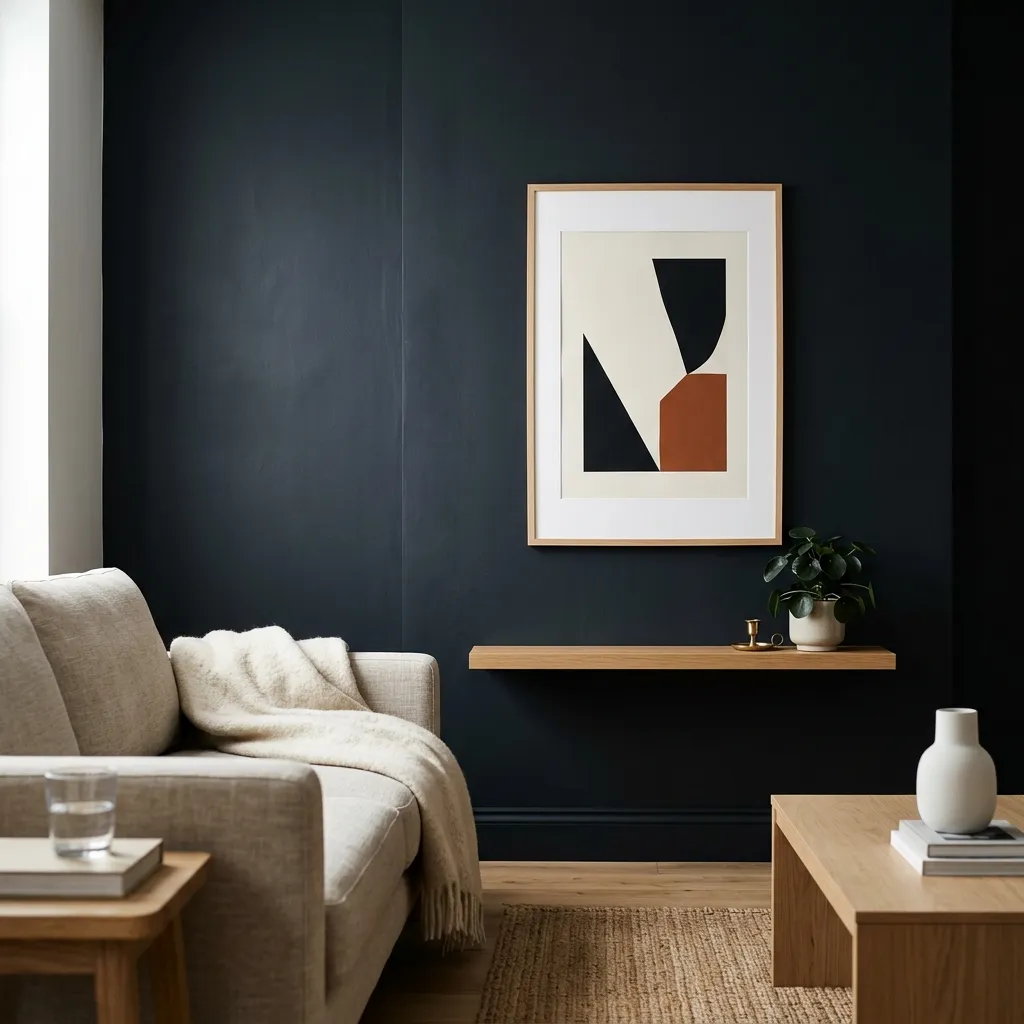
Everyone is terrified of black paint, but it’s actually a secret weapon. A dark, moody accent wall can make a small room feel infinite and incredibly high-end.
- Pick a wall with good natural light.
- Choose a “near-black” like charcoal or deep navy.
- Contrast the dark paint with light-colored frames or art.
Quick Tip: Use a matte finish for the paint to hide wall imperfections and prevent weird glares.
4. Vintage Soul in a Modern World
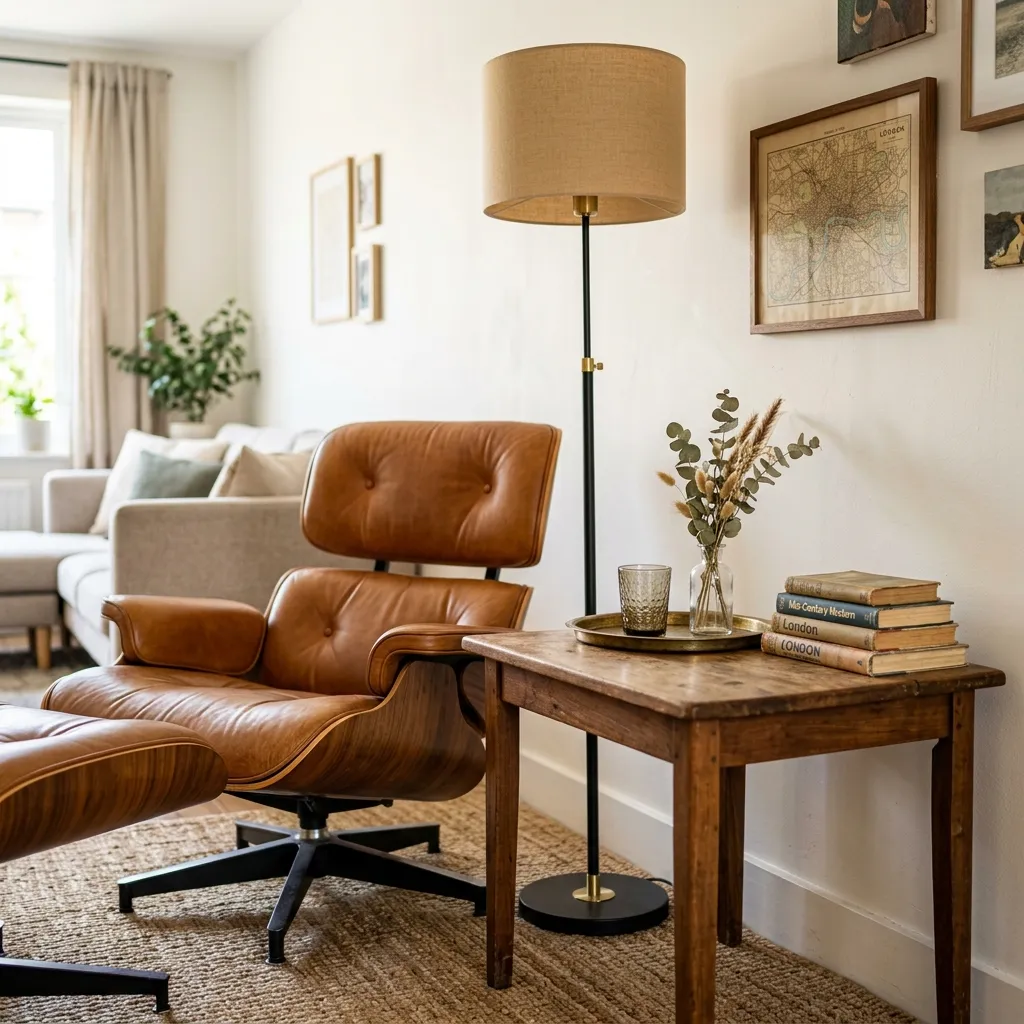
Mixing eras is how you avoid the “big box furniture store” look. A mid-century chair next to a contemporary lamp creates a conversation. It’s about the tension between old and new.
- Scour local thrift shops for solid wood side tables.
- Mix sleek glass surfaces with weathered brass.
- Frame an old map or vintage postcard for the gallery wall.
Quick Tip: Keep the “80/20” rule: 80% modern, 20% vintage (or vice versa) to keep it cohesive.
5. Texture-First Lighting
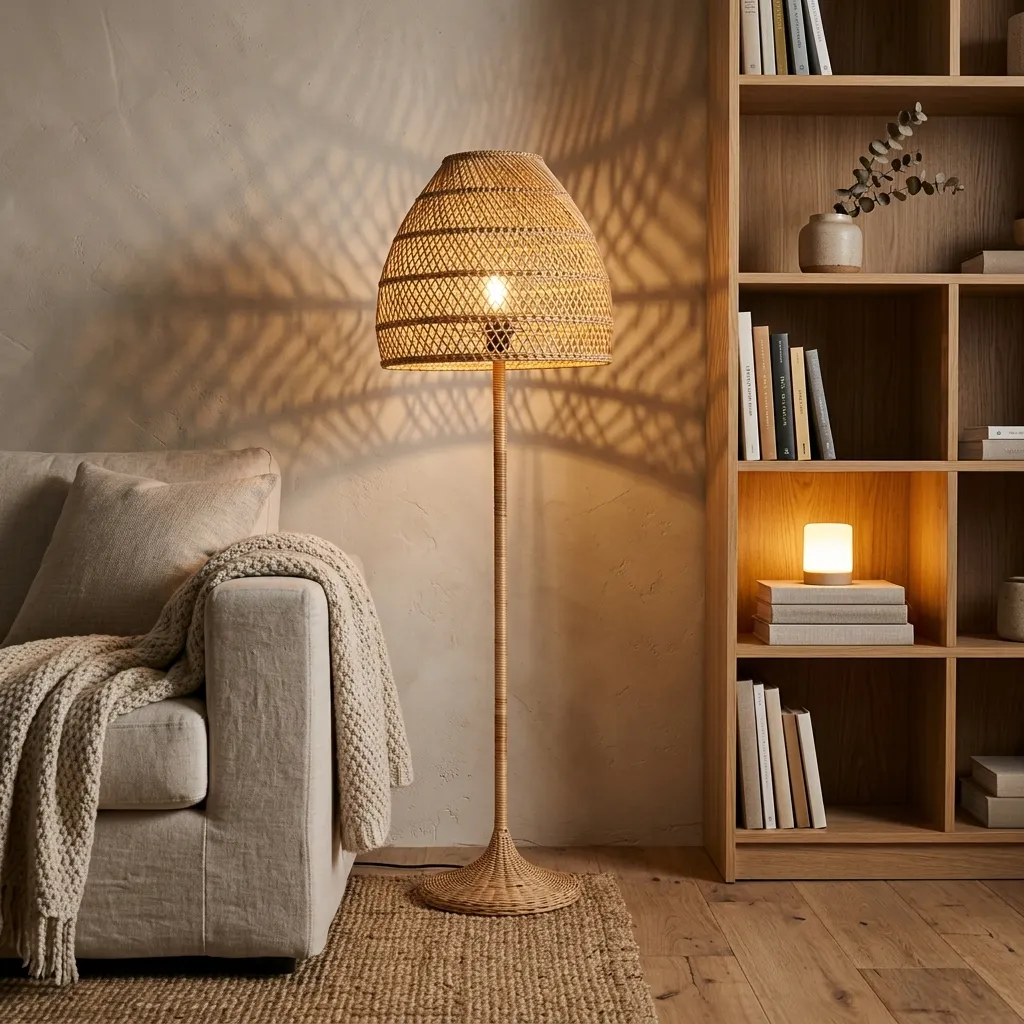
Lighting changes everything. If you’re still using the “big light” (the overhead fixture), stop. Layered lighting with textured shades creates a cozy, Pinterest-worthy glow.
- Add a rattan floor lamp for organic shadows.
- Use warm-toned LED bulbs (2700K is the sweet spot).
- Place a small lamp inside a bookshelf for unexpected depth.
Quick Tip: Switch your wall plates to dimmers; being able to control light levels is the ultimate luxury.
6. The Sophisticated Scandi-Boho Mix
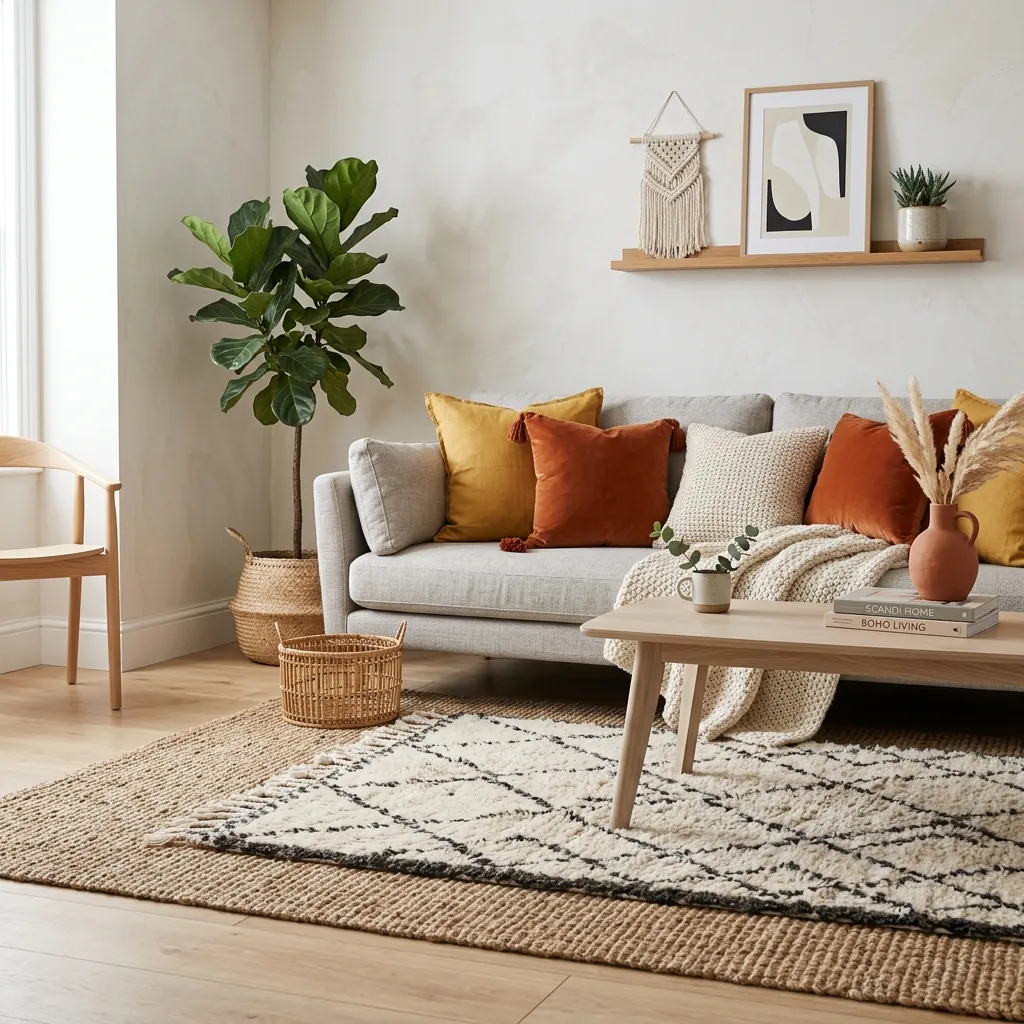
This style is the ultimate crowd-pleaser. It takes the clean lines of Scandinavia and tosses in the cozy, messy warmth of Bohemian style. It’s practical yet totally dreamy.
- Layer two rugs: a flat-weave jute under a smaller, plush one.
- Incorporate light-toned woods like ash or birch.
- Add pops of mustard yellow or burnt orange through pillows.
Quick Tip: Keep your walls white or light grey to let the textures do the heavy lifting.
7. Kitchen Hardware Glow-Up
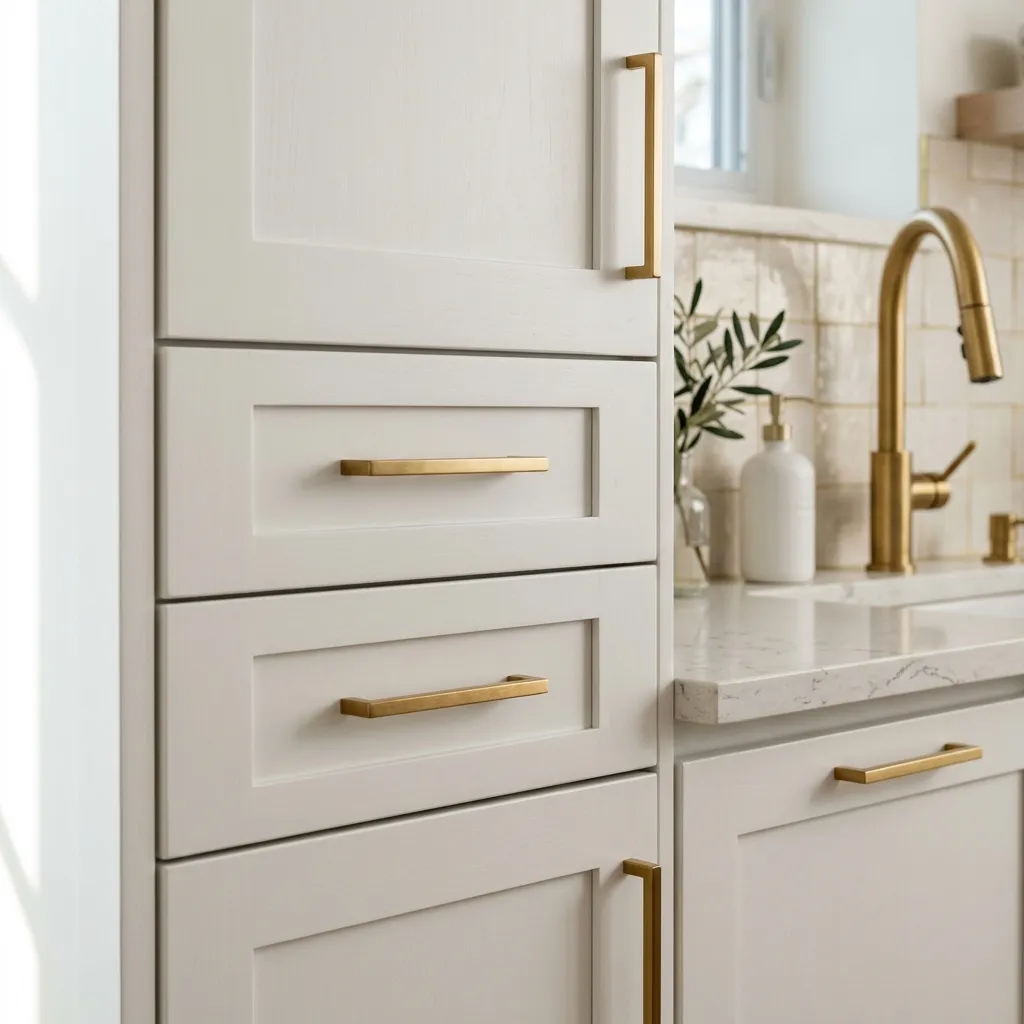
You don’t need a full renovation to have a designer kitchen. Sometimes, the magic is in the details you touch every day. Hardware is the “jewelry” of the home.
- Unscrew old, dated cabinet knobs.
- Replace them with brushed gold or matte black handles.
- Match your faucet finish to your new hardware for a “custom” look.
Quick Tip: Measure the “center-to-center” distance between holes before buying new pulls so you don’t have to drill new ones.
8. The “Gallery” Hallway
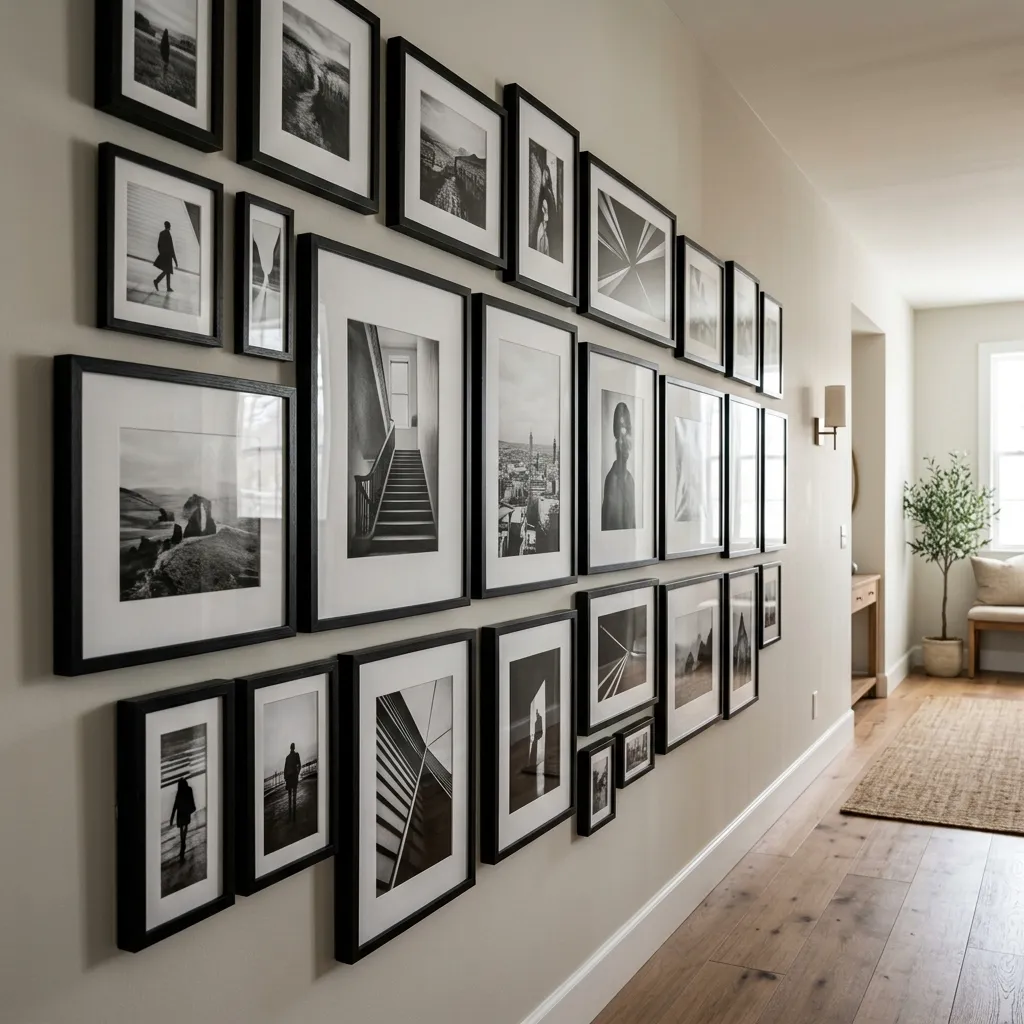
Hallways are often neglected, but they are the arteries of your home. Turning a narrow passage into an art gallery makes the transition between rooms feel intentional.
- Choose frames of the same color but different sizes.
- Map out your layout on the floor before hammering nails.
- Use “command strips” if you’re worried about damaging the walls.
Quick Tip: Black and white photos always look more sophisticated and cohesive in a gallery setting.
9. Monochromatic Master Suites
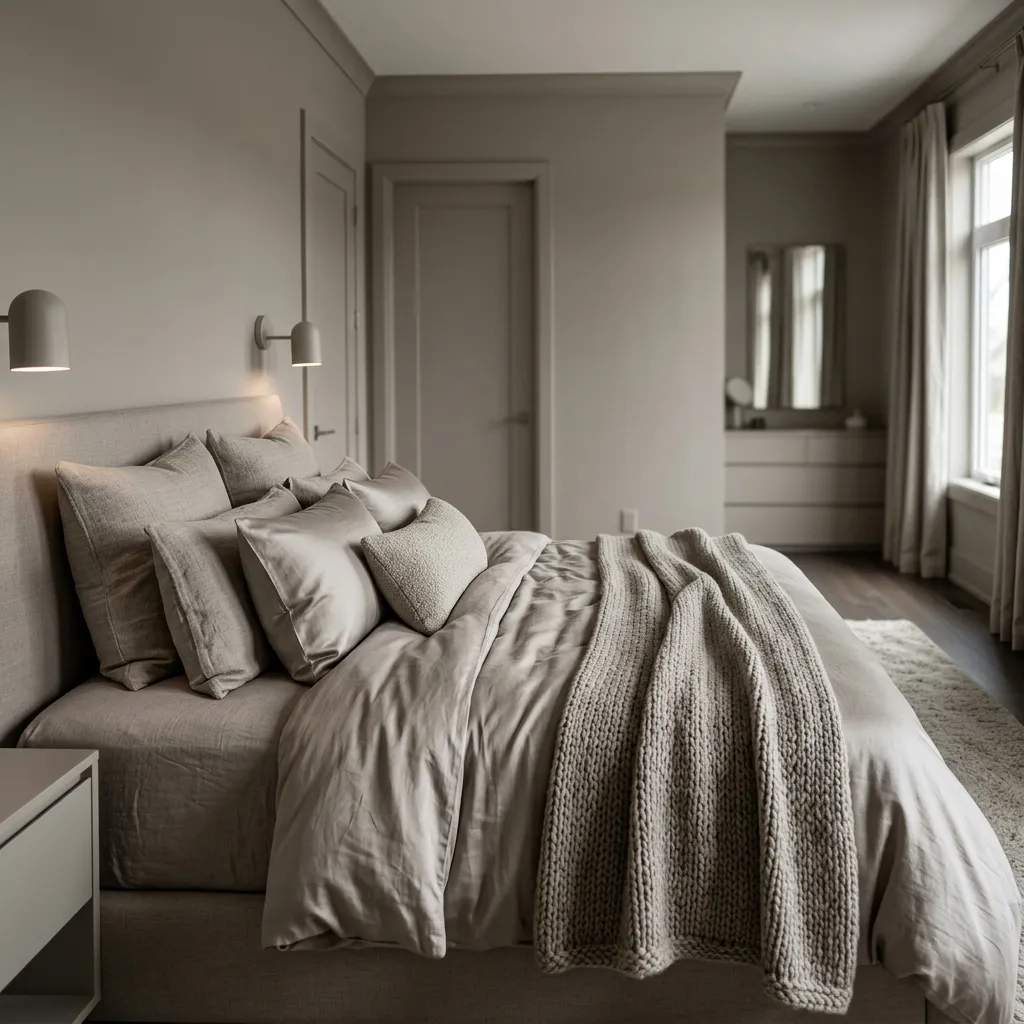
Your bedroom should be a sanctuary, not a sensory overload. Using one color in varying textures creates a hotel-like atmosphere that promotes actual sleep.
- Layer a silk duvet with a wool blanket in the same hue.
- Paint the trim and doors the same color as the walls.
- Choose bedside lamps that blend into the wall color.
Quick Tip: Use different fabrics (velvet, linen, cotton) to stop a single-color room from looking flat.
10. The Floating Shelf Refresh
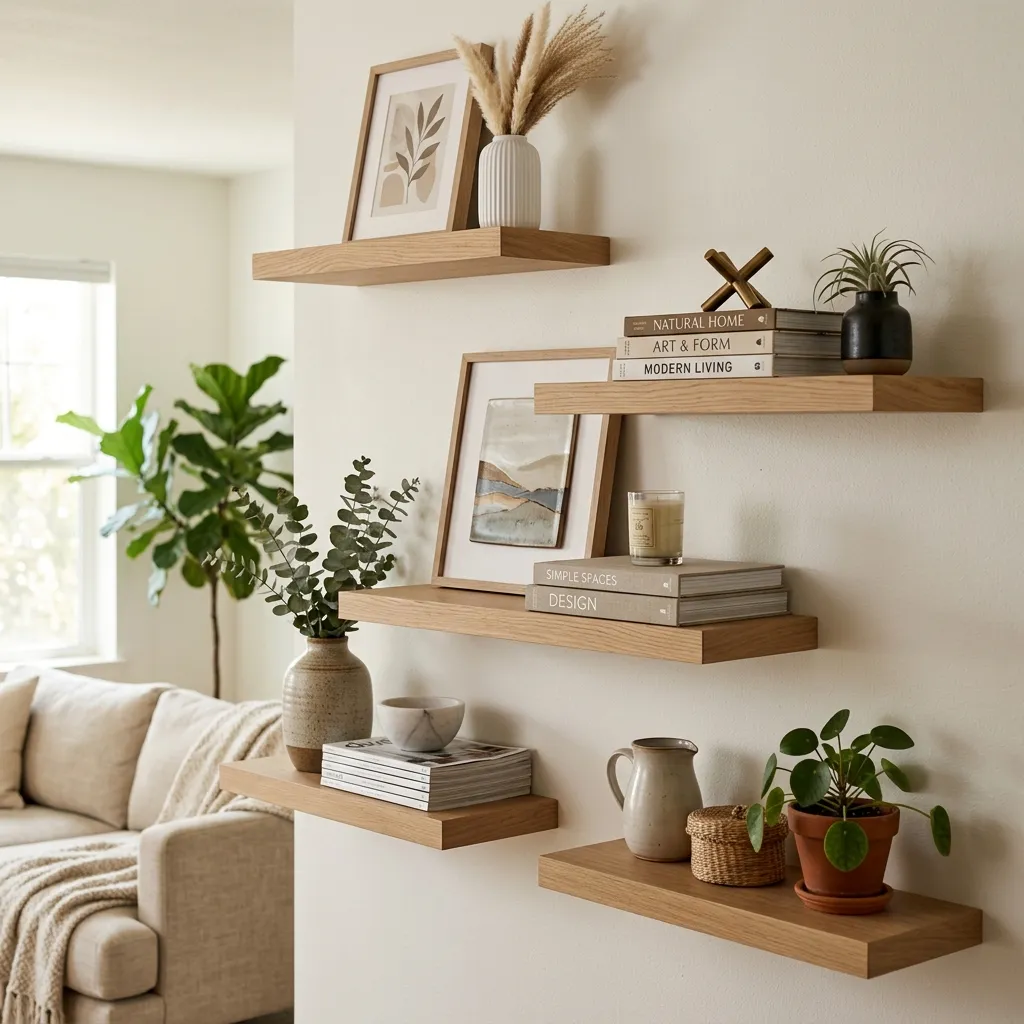
Shelves shouldn’t just hold books; they should tell a story. Floating shelves give you a place to rotate your decor without taking up any precious floor space.
- Stagger the heights of the shelves for visual interest.
- Lean art against the wall instead of hanging it.
- Mix “vertical” items (vases) with “horizontal” items (stacked books).
Quick Tip: Leave some “white space” on the shelves so they don’t look cluttered or heavy.
11. Entryway Impact
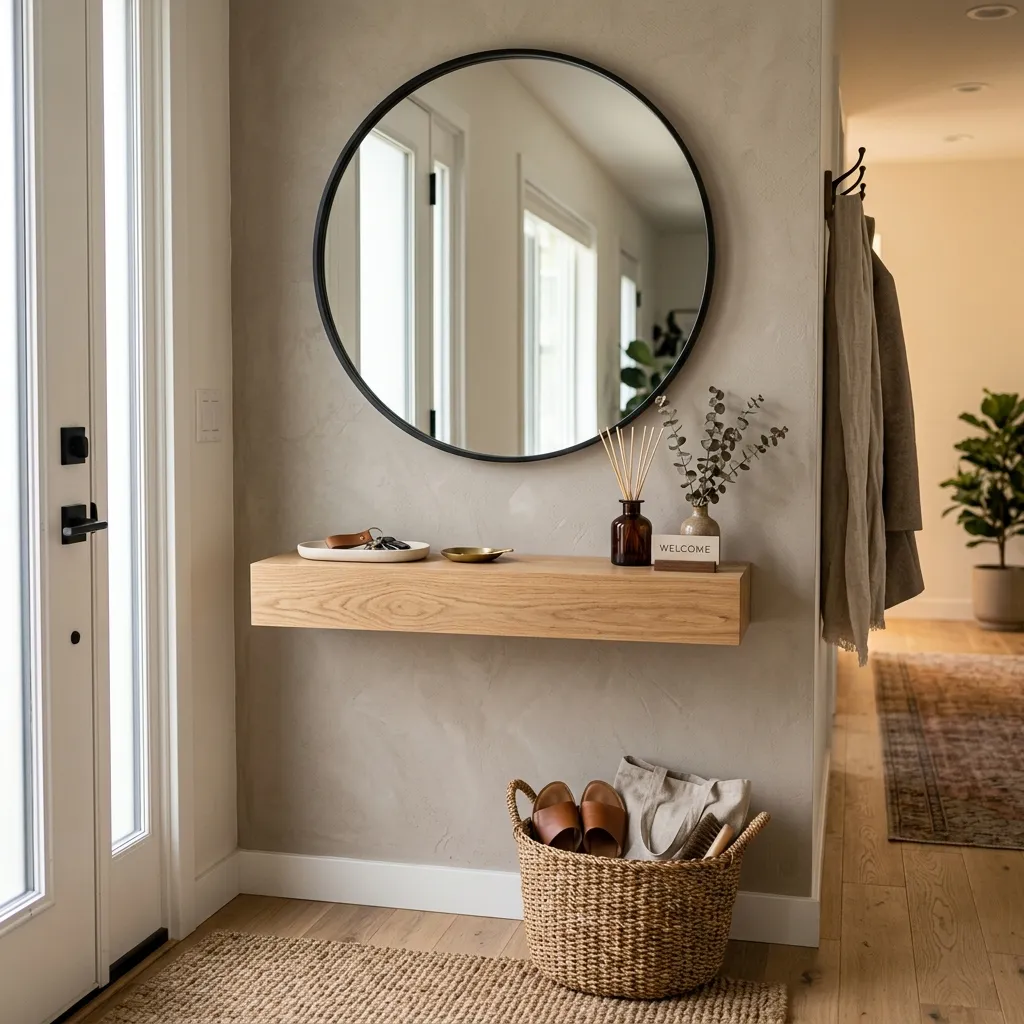
First impressions are everything. Even if you only have a tiny sliver of wall by the door, you can create an entryway that feels like an invitation.
- Mount a small shelf or “floating” console.
- Add a large round mirror to open up the space.
- Place a basket underneath for shoes or “out-the-door” essentials.
Quick Tip: A scented candle or diffuser near the entrance makes the “homecoming” experience even better.
12. Curves and Arches
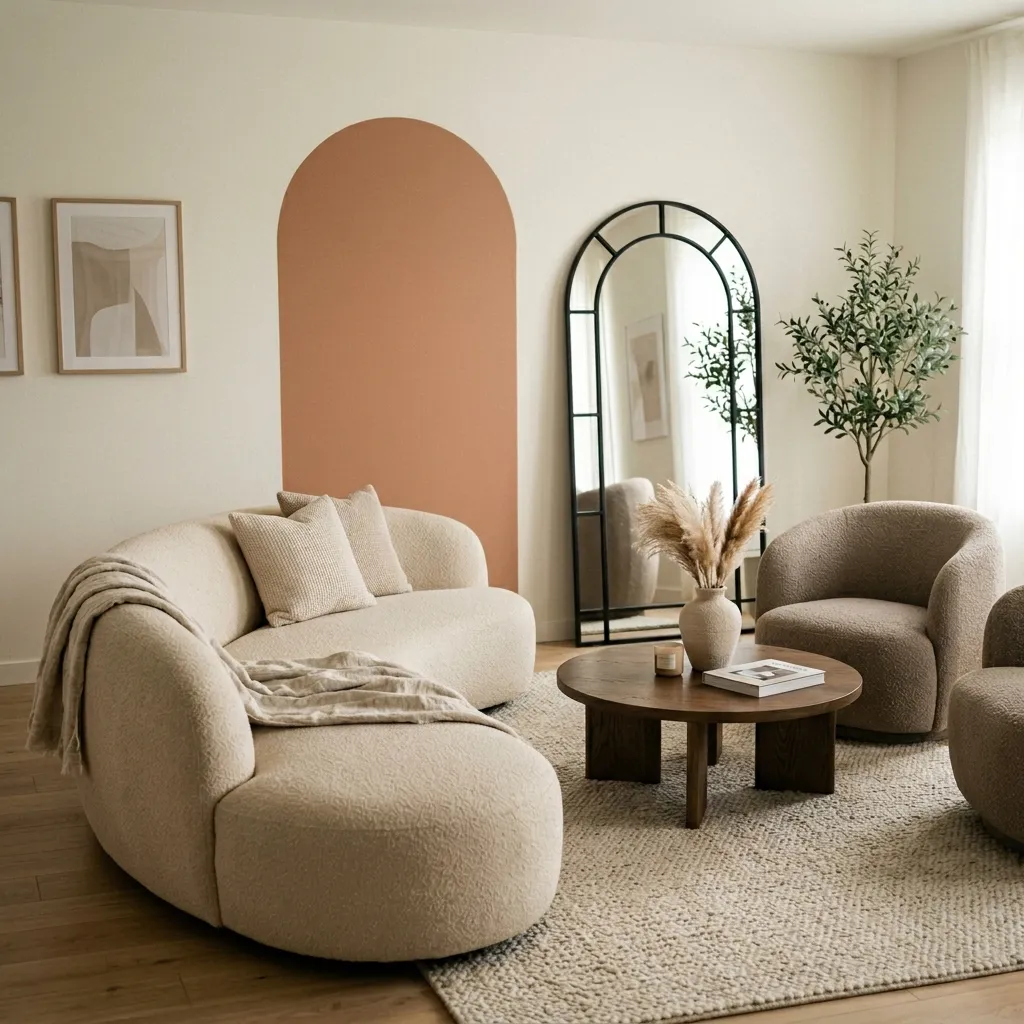
Soft edges are trending for a reason—they break up the boxy feeling of modern architecture. Introducing curves makes a room feel more fluid and expensive.
- Look for a curved “bean” sofa or rounded armchairs.
- Use an arched floor mirror to add height.
- Incorporate round coffee tables to improve room flow.
Quick Tip: If furniture is too pricey, try an “arch” wall decal or paint a DIY arch behind a headboard.
13. The Functional Mudroom Nook
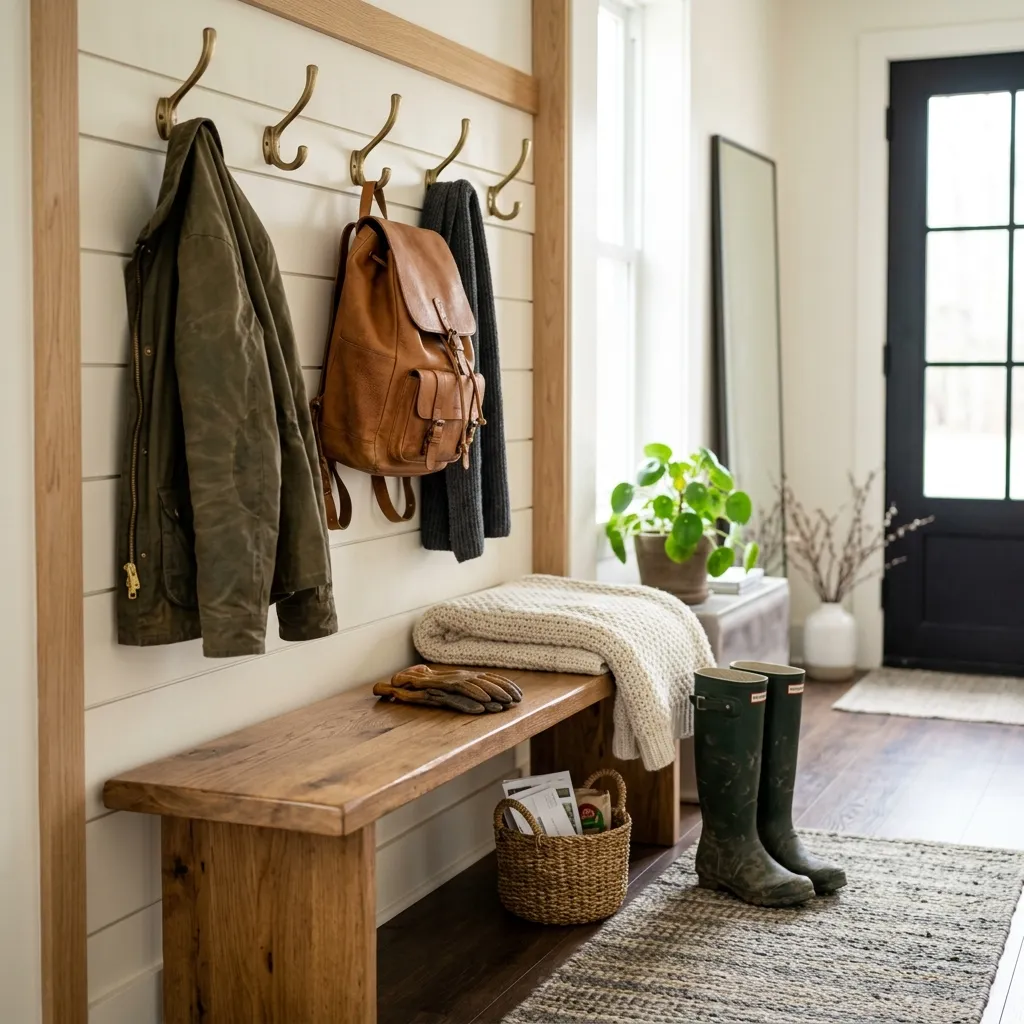
Even if you don’t have a dedicated mudroom, you can “fudge” one. Organization is the ultimate interior design hack because a tidy home always looks better.
- Install a row of sturdy brass hooks for bags and coats.
- Add a wooden bench for putting on shoes.
- Use a washable rug to catch dirt before it hits the hardwood.
Quick Tip: Assign one hook per family member to keep the morning “where is my bag?” chaos at bay.
Final Thoughts
A home makeover doesn’t have to happen all at once. Often, the most stylish homes are those that were put together slowly, piece by piece. Start with one room—or even just one corner—and see how a few intentional changes shift the energy of your space. Interior design isn’t about following every trend; it’s about finding the elements that make you feel at peace when you walk through the door. Pick two ideas from this list, try them out this weekend, and watch your space transform. You’ve got this!
What’s the one area in your home that currently feels the most “stuck”?